
High TDS Water Pour Over: Flow & Extraction Guide
By Kai Nakamura • 31st Mar
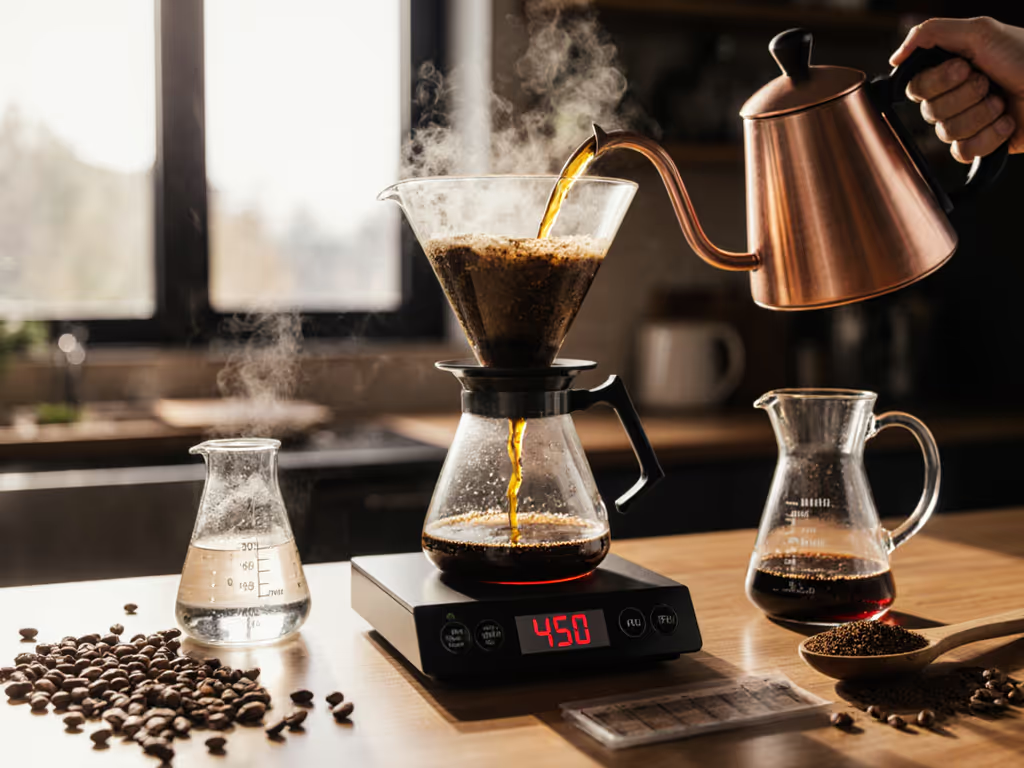
Brewing high TDS water pour over coffee presents a distinct problem: mineral-heavy water slows extraction, flattens acidity, and amplifies bitterness. This guide examines how mineral-heavy water coffee brewing affects your cup, then walks through concrete adjustments to dial in flavor when your tap water reads above 150 ppm (parts per million), a constraint millions face worldwide, especially in cities with alkaline municipal supplies.
What Happens When TDS Is Too High?
Water at high TDS (over 200 ppm) contains dissolved minerals (primarily calcium and magnesium) that occupy the solvent space where coffee solids should travel.[1] Think of it as a crowded channel: the existing minerals compete with coffee compounds for extraction. The result is underextraction on a brewing timeline that would work perfectly with balanced water.[3] High TDS also tends to mute acidity, overemphasize bitterness, and produce a flat, chalky taste.[3]
The SCA (Specialty Coffee Association) recommends a target water TDS of 150 ppm, with an acceptable range of 75-250 ppm for brewing water.[4] To ensure the best results with your local water, review our pour-over water guide. Above 250 ppm, most home brewers encounter significant flavor loss. Below 50 ppm, the water pulls too aggressively, producing sour, underextracted cups with harsh vegetable notes.[1]
Does Pour Technique Matter More Than Water Minerals?
Yes, measurably. Research comparing identical brews in controlled coffee devices shows that brewing variability (how you pour, your flow rate, your timing) generates larger TDS swings in the final cup than adjusting mineral concentration alone.[2] This is crucial: on a Tuesday before my commute, I measured our tap hardness at 180 ppm, ground 20 grams on a mid-tier burr, and timed three pours. The plastic flat-bottom dripper won by two points on TDS and by taste: cleaner sweetness, less astringency. The consistency of that pour, not the water minerals alone, made the difference. Log it, repeat it.
The implication is practical: if your tap TDS is elevated, don't assume you must install a reverse-osmosis (RO) system before tasting improvements. First, lock down your flow rate and pour profile. Master a repeatable pour with our step-by-step pouring technique guide.
Should You Filter High-TDS Water?
Not always. Start with measurement and adjustment:
Test your tap: Buy a TDS meter (under $30).[1] If your water sits between 100-200 ppm, pour-over extraction often works acceptably if you dial variables correctly. If it exceeds 250 ppm, filtering becomes worthwhile.
Cartridge filters: These are the simplest first step for home use. They reduce unwanted minerals (especially chlorides and excess calcium) and are simpler to maintain than RO systems.[1] They also cost less upfront. Most home brewers see meaningful clarity gains with a basic cartridge filter and remain within budget.
Reverse osmosis (RO): This process strips water nearly clean (TDS near 0). The trade-off: RO removes all minerals, and pure water under-extracts.[1] If you choose RO, you'll need remineralization (adding back targeted minerals in precise amounts) to reach the 150 ppm target. This adds complexity and cost but delivers consistency across any brew method. If you go this route, use our distilled/RO mineral balance guide to rebuild water for optimal extraction.
Remineralization kits: After RO or cartridge filtering, these mineral sachets restore calcium, magnesium, and sodium to balanced levels.[1] They're useful if your starting water is either extremely hard or extremely soft.
Control the variable you can taste. For most weekday brewers with 150-200 ppm tap water, a cartridge filter + tight pour discipline will yield cleaner cups than filtering alone.
How Do You Adjust Grind and Dose for High-TDS Water?
High TDS suppresses extraction, so you must compensate. Start here:
Grind finer (within reason). Finer particles increase surface area and total contact time, offsetting the mineral barrier.[7] Shift one notch finer on your grinder; taste, log the result, then adjust again if needed. Stay within your grinder's reliable range; don't chase espresso-fine unless your burr is designed for it.
Increase dose slightly (17-21 grams for a 250 ml cup instead of the standard 16 grams).[5] More coffee solids compensate for slower extraction. This is easier to repeat than fiddling with grind endlessly.
Slow your pour and extend brew time (3:30-4:30 total brew time instead of 3:00-3:30). High-TDS water needs extra contact time to pull the flavor out. This isn't rushing; it's working with your water's chemistry.
Raise water temperature (about 2-3 degrees higher than your normal target, so 202-205 F instead of 200 F if starting high-TDS brew) to push extraction. Only shift temperature if grind and dose don't yield results; temperature is a cruder lever.
What Extraction Percentage Should You Target?
The SCA Golden Cup standard specifies 18-22% extraction (solubles yield), resulting in a brewed TDS of 1.15-1.35%.[5] Below 18%, coffee tastes sour and underdeveloped; above 22%, bitter and ashy.
With high-TDS water (200+ ppm), you may need to aim for the upper end of that extraction window (20-22%) to achieve balanced sweetness, because the mineral-heavy starting water naturally suppresses extraction kinetics. This means longer brew times and finer grinds than you'd use with soft water.
To verify: use a refractometer to measure TDS in your brewed cup. This is the only tool that removes guesswork. Measure three identical brews, log the numbers, then adjust one variable at a time. Flow first, then grind, then water; log it, repeat it.
What About Scaling and Equipment Damage?
High-TDS water deposits mineral buildup (limescale) inside kettles, drippers, and, if using an espresso machine, inside boilers.[4] This reduces heat transfer and accelerates wear. Our brewer care guide outlines descaling routines and stain prevention for every common material.
For drippers and kettles: Rinse aggressively after each brew and descale monthly using citric acid or white vinegar (1:1 ratio with water, soak 20 minutes, then flush thoroughly). This extends equipment life significantly.
For espresso machines: Consult the manufacturer; many require specialized descaling protocols. If you use high-TDS water regularly with an espresso machine, consider RO + remineralization to reduce scaling risk.
For pour-over alone, descaling is less urgent but still wise. A mineral-heavy kettle heats slower and unevenly, and an internally fouled dripper narrows water channels, causing channeling and producing uneven extraction.
Can You Achieve Café-Quality Flavor With High-TDS Tap Water?
Yes. Café-level clarity requires two things: consistent water chemistry and locked-down brew mechanics. If your tap TDS is stable (measure it weekly for a month), you can build a repeatable recipe around it. Most specialty coffee enthusiasts with 150-180 ppm water produce excellent cups once they dial grind, dose, and pour timing to those minerals.
The caveat: if your tap TDS swings wildly (180 ppm one week, 220 the next), consistency suffers. In this case, a cartridge filter or RO + remineralization system pays dividends by removing month-to-month noise.
Practical Next Steps
Begin by testing your water TDS. If it's below 150 ppm, adjust grind and pour alone, no filtering needed. If it's 150-200 ppm, lock your pour technique first, then consider a cartridge filter if cups still taste flat or bitter. If it's above 200 ppm, either filter + remineralize or commit to extended brew times and finer grinds as routine.
Log three brews at each adjustment. TDS in the brewed cup, measured by refractometer, is your ground truth. If it falls between 1.15% and 1.35%, taste is likely balanced. If it's lower, you're underextracting; if higher, overextracting. From there, you own the dial.
Your weekday brew can be café-standard, even with mineral-heavy water, once you measure it, repeat it, and treat variables as levers, not mysteries.
Related Articles
Brewing Techniques & Coffee Science
Dense Bean Extraction: Control Your Pour Over Variables
24th Apr•7 min read
Brewing Techniques & Coffee Science
High-Sugar Coffee Beans: Pour-Over Extraction Guide
12th Apr•8 min read
Brewing Techniques & Coffee Science
Coffee Bean Size for Pour-Over: Identify & Adjust
11th Mar•9 min read