Distilled Water Pour Over Clarity: Mineral Balance Guide
By Maya Patel • 5th Nov
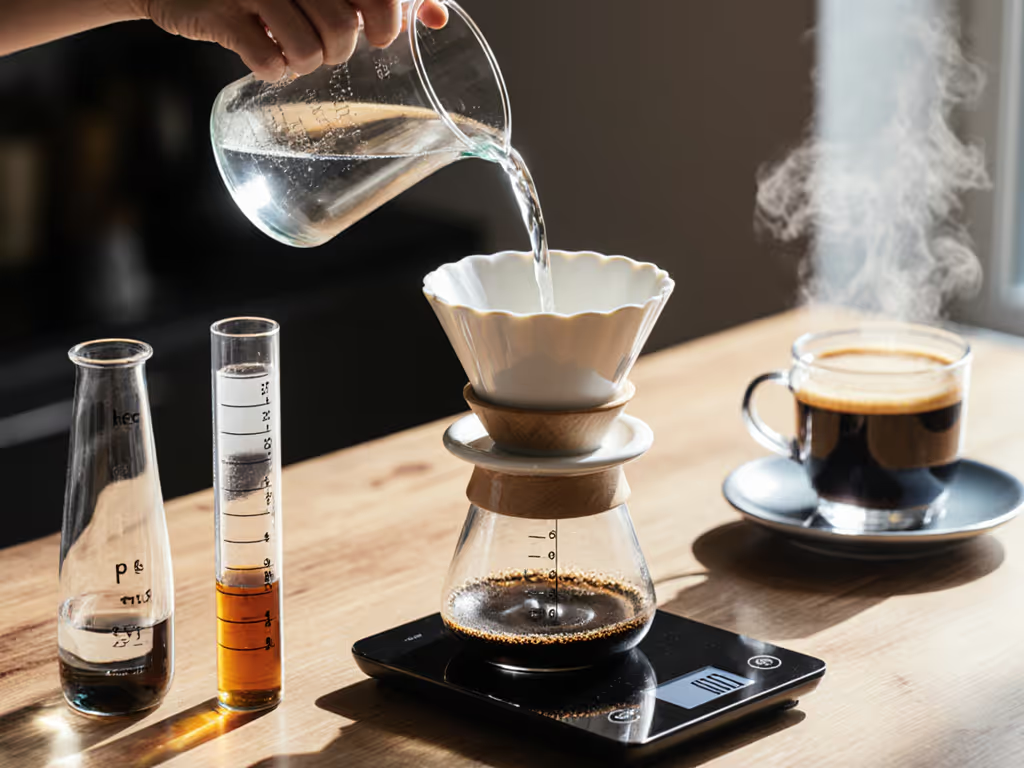
If you've ever tried distilled water pour over only to get a bitter, flat cup that lacks the sweetness you crave, you're not alone. Many beginners reach for distilled water thinking it's the purest choice, but without the right mineral balanced pour over water, those delicate coffee flavors stay locked away. Let's untangle this together (no chemistry degree required). Because mastery really does start with one controllable change and honest tasting.
Confidence brews consistency.
Why Does My Distilled Water Pour-Over Taste Bitter or Hollow?
Here's what happens: distilled water lacks minerals like calcium and magnesium that gently pull flavors from coffee grounds. Think of minerals as tiny flavor carriers (without them, water becomes overly aggressive during extraction). It's like trying to carry groceries without bags; everything gets crushed (over-extracted) and bitter. The Specialty Coffee Association confirms ideal water has 150 ppm minerals. Distilled water sits near 0-10 ppm, leaving your coffee one-note and harsh. If you're fighting sour or bitter cups, use our troubleshooting guide to pinpoint whether water or technique is to blame.
At a community workshop I ran, someone brought grocery-store beans and a hand grinder, using distilled water from their humidifier. Their first sip? 'Why does it taste like ash?' We swapped in filtered tap water, and suddenly (lightbulb moment) they tasted caramel notes they'd never noticed. That's when we realized: control beats gadgets every single time.
The Tap Water Trap (And Why Filters Often Fall Short)
Most tap water fails coffee two ways:
- Too hard (high calcium/magnesium): Mutes brightness, creates chalky mouthfeel
- Too alkaline (high buffering capacity): Flattens acidity, makes coffee taste dull
Standard charcoal filters (like Brita) tackle chlorine and sediment but don't fix mineral balance. For practical tap fixes and mineral targets, see our pour-over water guide. They might even make things worse by stripping just enough minerals to create that frustrating 'almost-good' cup that never quite sings. If your tap water leaves limescale on kettles, it's likely over-extracting your coffee's bitter compounds while under-extracting sweet ones.
Simple Fixes That Actually Work (No Lab Required)
You don't need a $2,000 water analyzer. Dial in heat with our temperature control guide to complement better water. Try these beginner-friendly tweaks:
🌧️ Option 1: The 10-Minute Bottled Water Hack
Mix 10 parts affordable bottled water (Smartwater, Dasani) with 1.6 parts hard spring water (like Montclair). Why? Smartwater has added magnesium (boosts sweetness) while spring water adds balanced minerals. This 'third wave water recipe' lands near SCA's 150 ppm sweet spot.
💧 Option 2: Remineralization Drops (The Forgiving Shortcut)
For RO water coffee brewing or distilled water, products like Third Wave Water make this idiot-proof. Just drop one stick into a gallon of distilled water (no measuring). Each stick creates water dialed for specific roast profiles (medium roast sticks balance chocolate notes; light roast enhances brightness).
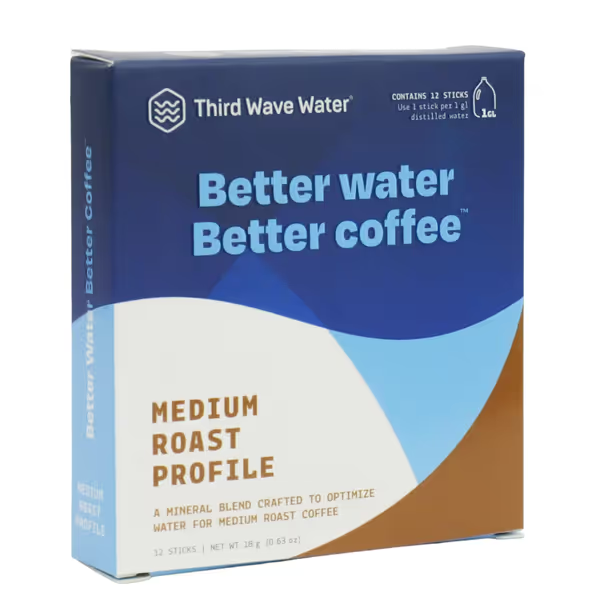
Third Wave Water Medium Roast
Transform tap water into optimal coffee brewing water for superior flavor.
$17
Yield12 Gallons
Yield12 Gallons
Pros
Enhances coffee flavor, sweetness, and body.
Ensures consistent brew quality regardless of tap water.
Cons
Value for money is a mixed opinion.
Not for those with magnesium sulfate hypersensitivities.
Customers find that the water makes coffee taste better, with flavors popping in pour-overs. Moreover, the product works well in espresso machines, and customers appreciate its smoothness and ease of application.
Customers find that the water makes coffee taste better, with flavors popping in pour-overs. Moreover, the product works well in espresso machines, and customers appreciate its smoothness and ease of application.
Why it fits beginner needs: No math, fits your existing routine, and costs less than two specialty coffees a month. Plus, it prevents scaling better than plain distilled water by adding just enough minerals to protect equipment.
🚫 Skip the Stress: What Not to Do
- Don't use straight distilled water daily (it corrodes metal components over time, yes, even in your kettle spout!)
- Don't obsess over perfect ppm numbers. Start where you are; one variable, one win, then another.
- Avoid 'water experiments' that waste $25 bags of beans. Test changes over three brews, not one.
How to Taste Your Way to Better Water
Follow this 2-minute check before you grind:
- Brew two cups: Same coffee, same grind (only water differs) (e.g., tap vs bottled blend)
- Swirl gently: Does the aroma remind you of brown sugar (sweetness) or cardboard (stale)?
- Sip quietly: Notice where flavor lands: front of tongue (acidity), middle (sweetness), back (bitterness)
If your pour over clarity with distilled water feels thin or 'hollow,' you're likely missing the mineral 'cushion' that carries body. A balanced cup should have all three elements in harmony, not one shouting over others.
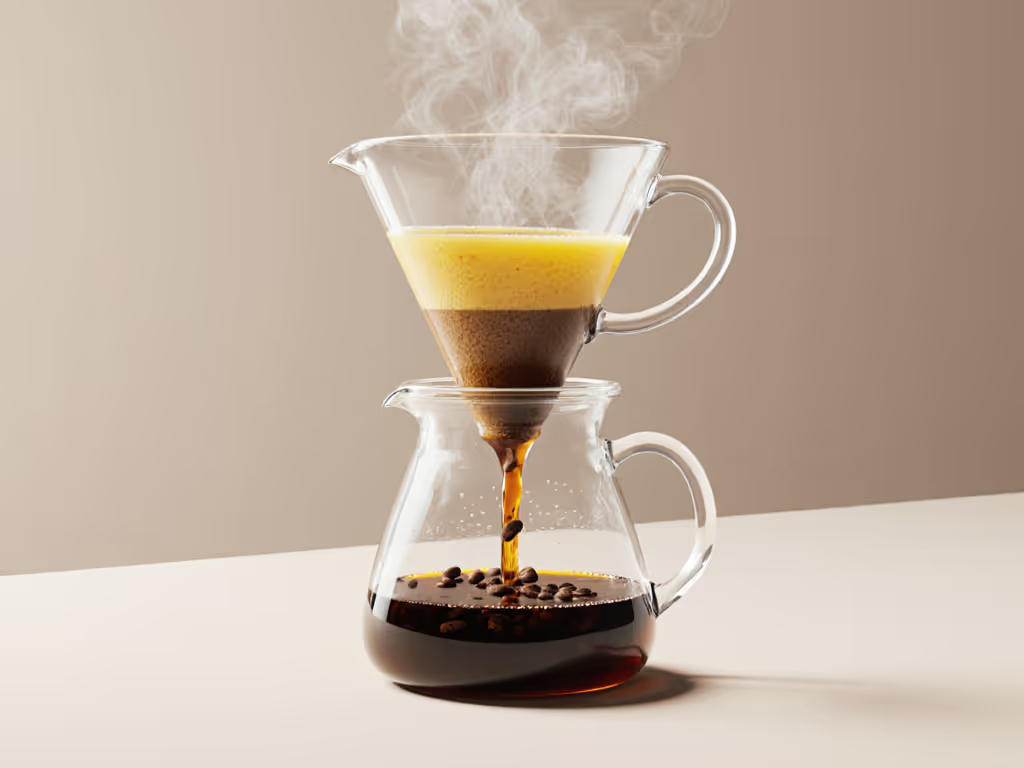
One Last Truth: Your Water Doesn't Need to Be Perfect
I've seen beginners chase 'ideal' water while ignoring their grinder's uneven particles (a far bigger culprit for muddy cups). Mineral balanced pour over water is just one lever in your control. Start with rinsing filters (removes paper taste), then adjust water. If you taste more sweetness in Week 2 than Week 1? That's mastery building.
At that library workshop, we mapped changes one at a time: rinsed filter, finer grind, steadier bloom. Faces lit up when sweetness appeared. That's the magic: when beginners realize control beats gadgets, every single time.
Ready to Go Deeper?
Related Articles
Brewing Techniques & Coffee Science
Dense Bean Extraction: Control Your Pour Over Variables
24th Apr•7 min read
Brewing Techniques & Coffee Science
High-Sugar Coffee Beans: Pour-Over Extraction Guide
12th Apr•8 min read
Brewing Techniques & Coffee Science
High TDS Water Pour Over: Flow & Extraction Guide
31st Mar•7 min read