TDS for Pour-Over Coffee: Measure Then Repeat
By Kai Nakamura • 11th Dec
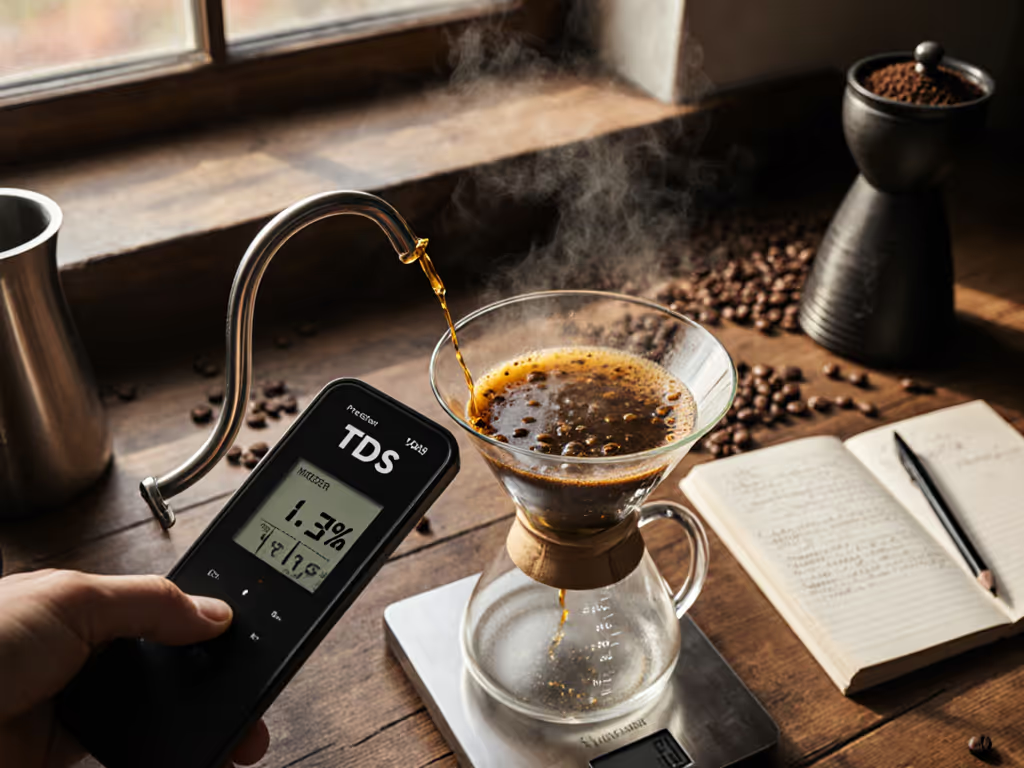
Pour-over coffee rewards precision, and TDS (Total Dissolved Solids) is your measurable key to unlocking cafe-level consistency at home. By quantifying what's in your cup (typically 1.15% to 1.55% dissolved coffee solids for optimal pour-over), you turn guesswork into repeatable results. This guide cuts through the noise with a data-backed framework for dialing in your brew, tackling water variability, grinder quirks, and weekday time constraints head-on. Control the variable you can taste: measure, log, then repeat. Here's how to leverage TDS for precision brewing without overhauling your routine.
FAQ: TDS for Pour-Over Coffee
What is TDS and why does it matter for pour-over?
TDS measures the concentration of dissolved coffee solids in your brew, expressed as a percentage. For example, a TDS of 1.3% means 1.3% of your cup is coffee compounds, while the rest is water. This metric directly impacts strength and balance:
- Low TDS (under 1.15%): Weak, sour, or hollow cups from underextraction
- High TDS (over 1.55%): Bitter, astringent flavors from overextraction
- Optimal range (1.15-1.55%): Balanced sweetness and clarity
For pour-over, TDS matters because it quantifies what your palate detects. When your tap water hardness shifts or grind consistency wavers, TDS readings can flag inconsistencies before taste does. For a deeper dive into how variables drive extraction, see our pour-over extraction science guide.
How do I measure TDS accurately at home?
You'll need a refractometer (≈$100-$200) and a disciplined process:
- Calibrate: Use distilled water to zero the device before each session.
- Prepare your sample: Cool brewed coffee to 20°C (68°F). Stir vigorously to homogenize.
- Measure: Place 3-4 drops on the prism. Close the lid, wait 10 seconds, then read TDS. Repeat 3x for reliability.
- Clean: Wipe with an alcohol swab immediately after use.
Pro tip: Log TDS alongside brew variables (grind size, water temp, pour time). After 5 brews, patterns emerge (for example, a 10 µm finer grind raises TDS by ≈0.08%).
What’s the ideal TDS range for pour-over?
Target 1.15-1.55% TDS for balanced extraction. This sweet spot adapts to your preferences:
| Brew Style | Target TDS | Flavor Profile |
|---|---|---|
| Light Nordic roasts | 1.15-1.35% | Highlight acidity, floral notes |
| Medium roast | 1.3-1.45% | Balanced sweetness/body |
| Bold/dark roasts | 1.4-1.55% | Enhance body, mute bitterness |
Why this range? It syncs with the Specialty Coffee Association's pour-over water standard (75-250 ppm minerals), which enables extraction without scaling equipment or muddying clarity. If your tap water misses that range, use our pour-over water quality guide to fix minerals fast.
How do I adjust my brew to hit target TDS?
Fix off-target TDS by manipulating one variable per brew. Hold others constant:
- TDS too low (<1.15%): Increase extraction via finer grind (+10-20 µm), hotter water (+2-4°C), or extended bloom (15-30 s longer).
- TDS too high (>1.55%): Reduce extraction with coarser grind, cooler water (88-92°C), or faster pours to shorten contact time.
Weekday shortcut: When TDS drifts, adjust grind size first (it impacts extraction most directly). Dial in one reliable bean/roast combo, then log settings for 5-minute reproducibility. To refine grind precisely by brewer, see our grind size dialing guide.
What common TDS pitfalls sabotage pour-over?
- Inconsistent water: Tap TDS swings daily. Measure yours monthly; if >250 ppm, use a filter. If <75 ppm, add minerals (e.g., 10-20 ppm Epsom salt).
- Ignoring extraction yield (EY): TDS alone is incomplete. Calculate EY for full context: EY (%) = (TDS × Brewed Coffee Weight) / Coffee Dose × 100. Aim for 18-22% EY.
- Chasing "perfect" numbers: TDS is a compass, not the destination. If a 1.45% TDS brew tastes stellar but misses your 1.5% target by 0.05%, trust your palate.
Can I improve TDS consistency without expensive gear?
Yes. Prioritize these low-cost controls:
- Use a gooseneck kettle: Steady pours minimize channeling, stabilizing extraction. Not sure which kettle to pick? Start with our gooseneck kettle comparison for precise pouring control.
- Weigh everything: Dose (±0.1 g) and water (±1 g) variance skews TDS.
- Fix water first: Test tap TDS with a $20 meter. If outside 75-250 ppm, use Third Wave Water or a Brita filter.
Legacy solution: No refractometer? Stick to a tight recipe: 15 g coffee, 250 g water, 93°C, 3:00 total brew time. Adjust grind by taste only.
TDS mastery turns pour-over into a repeatable ritual (not a daily experiment). Measure your baseline, tweak deliberately, and log to lock in gains. Control the variable you can taste, and your weekday cup will mirror your weekend best.
Related Articles
Brewing Techniques & Coffee Science
Dense Bean Extraction: Control Your Pour Over Variables
24th Apr•7 min read
Brewing Techniques & Coffee Science
High-Sugar Coffee Beans: Pour-Over Extraction Guide
12th Apr•8 min read
Brewing Techniques & Coffee Science
High TDS Water Pour Over: Flow & Extraction Guide
31st Mar•7 min read