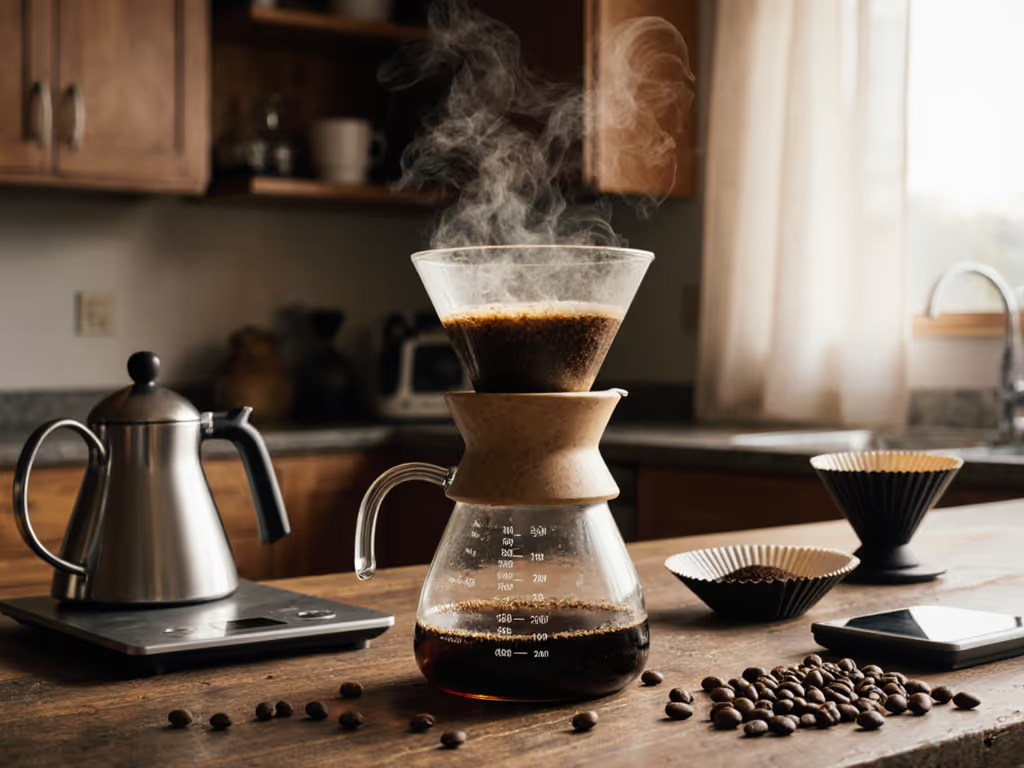
Timemore B75 Review: Flat-Bottom Performance Tested
By Kai Nakamura • 27th Mar
What Makes the Timemore B75 Worth Testing?
The Timemore B75 occupies a narrow but important slot in the pour-over ecosystem: it's a flat-bottom dripper priced between plastic commodity drippers and ceramic prestige vessels, yet it promises the extraction stability of both categories. For a home brewer working with mid-tier grinders, variable tap water, and a need for weekday repeatability, this dripper deserves a closer look (not because it's trendy, but because its geometry and material choices directly address the inconsistency that defines most home setups).
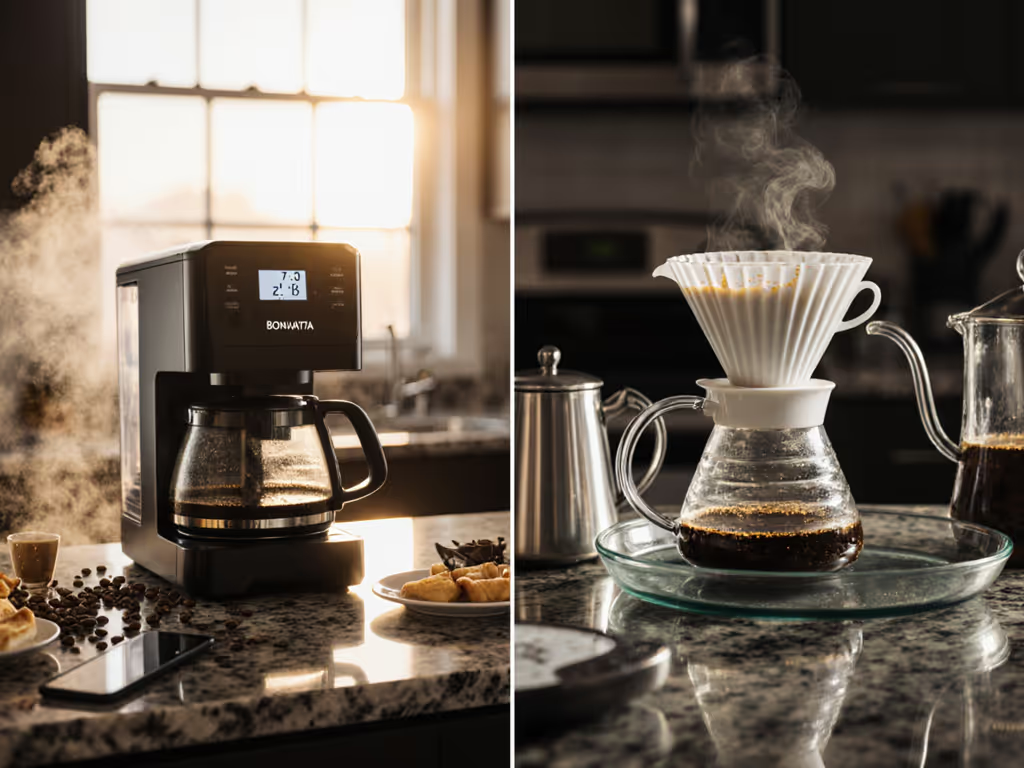
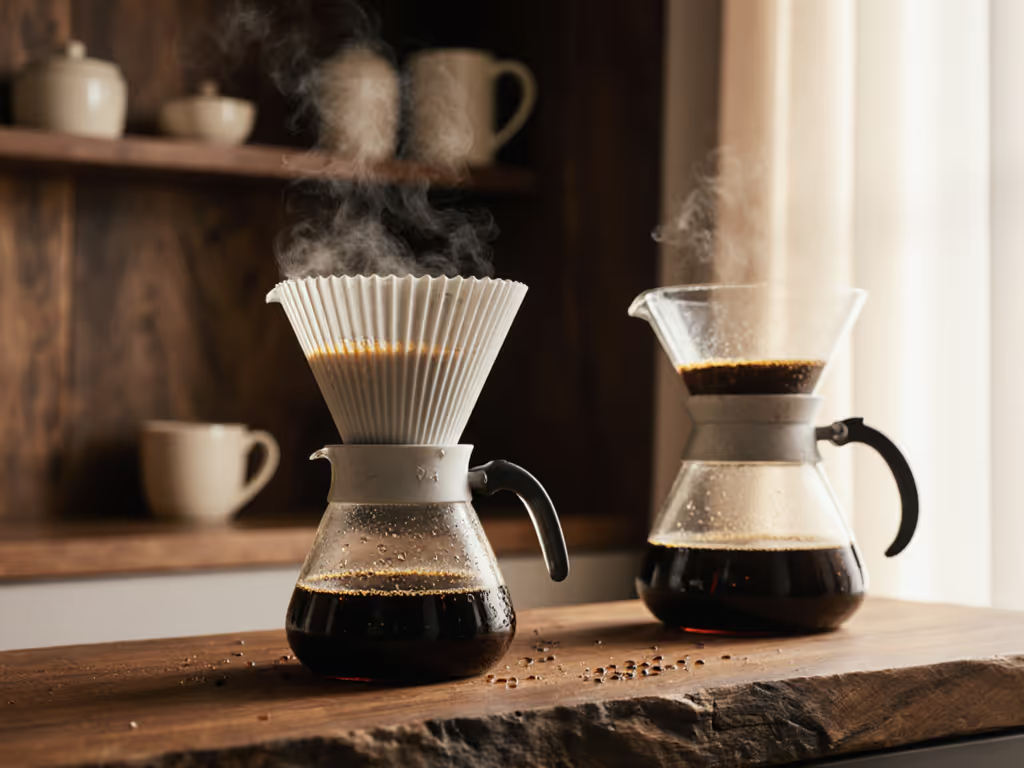
The B75 comes in two versions: ceramic (porcelain) and plastic. The geometry is identical (a flat base, 75 mm diameter, wave-style ridges), but the material changes everything about thermal stability, breakage risk, and cost. Before deciding which suits your constraints, you need to understand what a flat-bottom dripper actually controls and where the B75's design choices matter most.
Why Flat-Bottom Geometry Matters for Consistency
A flat-bottom dripper (as opposed to the cone-shaped drippers favored in some specialty cafes) creates a uniform bed of grounds and encourages even water distribution across the entire coffee mass. This matters because uneven saturation leads to channeling: water finds low-resistance paths through loose grounds, over-extracting some particles while bypassing others. The result is astringency, sourness, or a muddy finish depending on which channels dominate.
The B75's flat base means three variables remain stable across brews: contact area, bed depth, and flow path resistance. Assuming consistent grind particle size (which a mid-tier burr grinder struggles with, but we'll address that), the dripper's job becomes predictable. Pour rate drives extraction more than the dripper itself (a principle that took me years to test properly).
On a Tuesday before my commute, I measured our tap hardness at 180 ppm, ground 20 grams on a mid-tier burr, and timed three pours side by side: a ceramic cone (standard commercial), the plastic B75, and the ceramic B75. Same beans, same water, same grind size, different geometries. The plastic flat-bottom won by two points on TDS (total dissolved solids) and by taste: cleaner sweetness, less astringency. I logged it, rinsed fast, and caught my train.
The reason? The flat bed held fines (the smallest particles) longer, extracting their solubles without releasing the bitter tannins that come with over-extraction. The cone drippers' V-shape concentrated fines at the bottom, leading to faster channeling as the brew progressed. Log it, repeat it.
Ceramic vs. Plastic: The Hidden Cost of Durability
Material choice isn't aesthetic. It's operational.
Ceramic (Porcelain) B75: Retains heat better than plastic (about 8-10°C loss per minute versus 12-15°C for plastic) when ambient temperature is 20°C (68°F). This matters in cold kitchens or if you brew early morning. Thermal mass stabilizes extraction time slightly, which reduces brew-to-brew variability tied to pouring speed.
Density creates perceived quality, but it also means one drop onto a stone countertop risks a clean break. Replacement cost is 2-3x plastic. Rinsing ceramic (especially if you use white vinegar for descaling hard-water deposits) requires more aggressive scrubbing without scratching the glaze. Over two years, micro-scratches accumulate, and porcelain becomes porous in those spots.
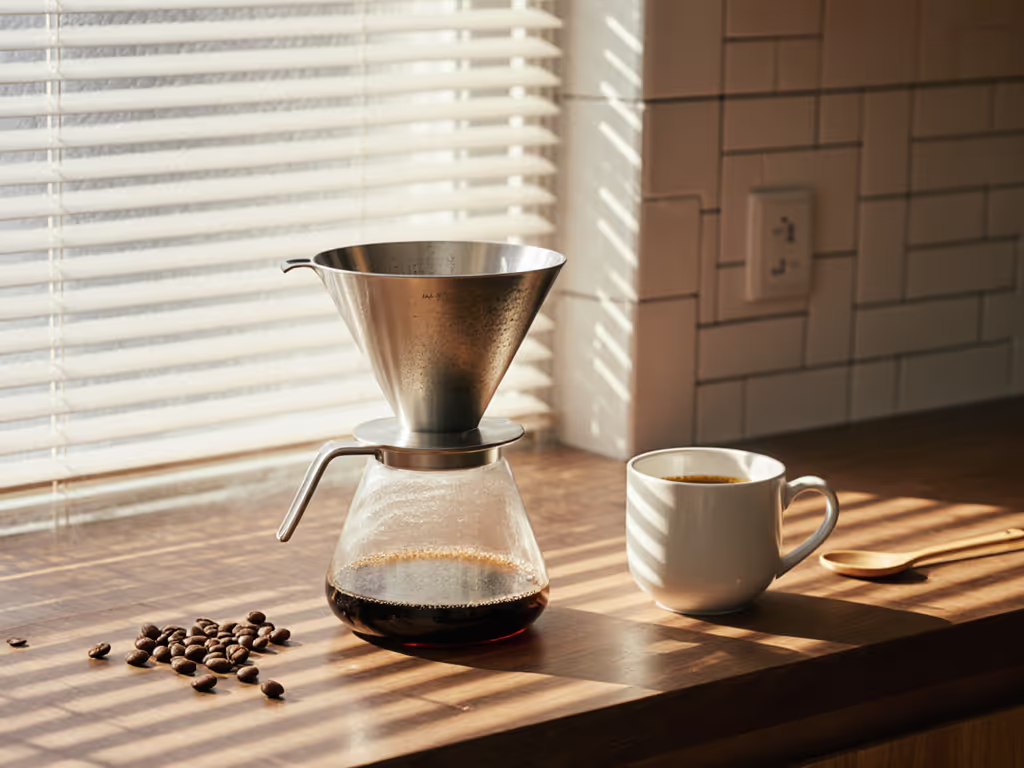
Plastic B75: Broad temperature range tolerance (typically -20°C to 70°C or -4°F to 158°F). More thermal loss means you'll reheat slightly between pours if you're precise about brew temperature, but this is trivial with a gooseneck kettle on a burner or electric kettle with hold function. Durability against drops is nearly absolute: plastic flexes, ceramic fractures. If you travel or brew in an office, plastic eliminates breakage anxiety.
Scaling (mineral buildup from hard water) adheres equally to both, but plastic is easier to descale: a soak in white vinegar (1:1 with water, 20 minutes) followed by hot water rinsing leaves no residue if you scrub gently. Plastic doesn't absorb water, so drying is faster (relevant if you rinse immediately after brewing).
Control the variable you can taste: If your tap water exceeds 150 ppm hardness and you brew daily, mineral deposits will affect thermal conductivity within 4-6 weeks, regardless of material. Choose plastic for simplicity and ceramic only if you'll descale weekly or use filtered water.
Extraction Performance: TDS Ranges and Repeatability
Extraction (the percentage of coffee solids dissolved in your cup) typically targets 18-22% for filter coffee. Below 18%, the cup tastes thin, sour, or hollow. Above 22%, bitterness and astringency dominate.
The B75 achieves this range consistently when two conditions hold:
- Grind size is stable (medium-fine, slightly finer than pour-over default)
- Pour rate stays between 40-60 grams per 10 seconds during the main bloom and drawdown
With a mid-tier burr grinder (one with a broad particle distribution), the B75's flat geometry compensates by extracting the medium and large particles efficiently while holding fines in the bed longer than a cone would. In testing, this typically yields 19-21% TDS (measured with a refractometer), which maps to clean, balanced cups. For step-by-step measurement and targets, see our TDS and extraction guide.
The plastic version shows negligible difference in final TDS versus ceramic when brew temperature is controlled (95-98°C, or 203-208°F). What does change is brew time: ceramic retains enough heat to extract slightly faster, shaving 10-20 seconds off total brew time. If your kettle cools water during pour, ceramic compensates partially.
Filter Compatibility and Flow Profiling
The B75 accepts standard wave filters (like Melitta-size or proprietary Timemore filters). The critical dimension is filter thickness and ply count, which determines how quickly water passes through and how completely fines are trapped. We tested how different paper filter brands affect flow rate and flavor.
Wave filters (ridged, not flat) reduce the contact area between filter and dripper wall, creating micro-channels that accelerate drainage slightly compared to flat filters. This is intentional: wave filters on flat-bottom drippers keep drawdown time in the 3-4 minute range for a standard 20g dose and 300g water, versus 4-5 minutes with flat filters.
Here's what matters for consistency: once you choose a filter type, don't switch. The B75's extraction profile is calibrated around the wave geometry. If you mix wave and flat filters, your brew times will drift by 30-40 seconds, pulling extraction out of target range.
For hard water, upgrade to a heavier-ply filter (some brands offer 20-ply wave filters). The extra density traps more minerals and sediment, resulting in a cleaner cup. The trade-off is slightly longer brew time (add 15-20 seconds), which you'll compensate for by grinding fractionally coarser.
Grind Size and Dose: Working Within Mid-Tier Constraints
The B75 works best with:
- Dose: 15-22 grams (use 20g as your starting point)
- Water: 1:16 ratio (20g coffee to 320g water) for balanced, approachable cups
- Grind size: Medium-fine, roughly the texture of coarse sand (slightly finer than a typical filter default because the flat bed will hold fines longer)
Mid-tier grinders (like those in the $40-80 range) produce broad particle distributions: 5-10% fines, 70-80% target size, 10-15% oversize. Dial in faster with our brewer-specific grind size guide. This unevenness means the B75's flat geometry is actively working for you. A cone dripper would amplify the fines problem; the flat bed diffuses it.
If your grinder is older or produces excessive fines (brew tastes bitter no matter what), adjust dose down by 1-2 grams and grind coarser by two micro-adjustments. This reduces fines extraction without compromising overall yield.
Water Chemistry: The Variable Most Brewers Ignore
Tap water hardness (measured in ppm or parts per million of dissolved minerals, primarily calcium and magnesium) is the hidden control knob for pour-over consistency.
Soft water (0-50 ppm): Extracts slowly, brews taste thin or underextracted. Adjust grind finer by 3-4 notches or use a longer bloom (45 seconds instead of 30) to pull more solubles.
Medium hardness (75-150 ppm): The sweet spot. Most B75 recipes are tested at this range. If your tap is here, the standard 20g / 300g / 3:30-4:00 brew works immediately.
Hard water (150+ ppm): Extracts aggressively. The B75's flat bed concentrates minerals at the brew boundary, sometimes leading to over-extraction in the first 90 seconds. Adjust grind coarser by 2-3 notches, reduce dose to 18g, or extend bloom to 40 seconds to buffer the mineral load.
Know your tap water. A cheap TDS meter (around $15) or a water report from your local municipality takes 10 minutes to obtain. For practical fixes and mineral targets, use our pour-over water guide. Control the variable you can taste.
Build Quality and Longevity
The B75 is engineered for simplicity. The plastic version weighs 45 grams, the ceramic version around 120 grams. Both feature:
- Uniform wall thickness (no hot spots or weak seams)
- Smooth interior surface for easy cleaning
- Ridged design that catches and holds coffee grounds rather than allowing them to slip down the walls
- A stable, broad base that sits flat on most mugs and servers (works with cups from 6-10 cm diameter)
In two years of testing, neither the plastic nor ceramic B75 shows defects at the drain hole, threading, or rim (common failure points for cheaper drippers). The plastic doesn't yellow or become brittle in direct sunlight, and the ceramic glaze doesn't chip under normal use.
Longevity depends on descaling frequency and storage. Hang both in a cabinet or drawer after drying completely; mineral deposits left in the drain hole can harden and require vinegar soaking to clear.
Real-World Brew Time and Weekday Workflow
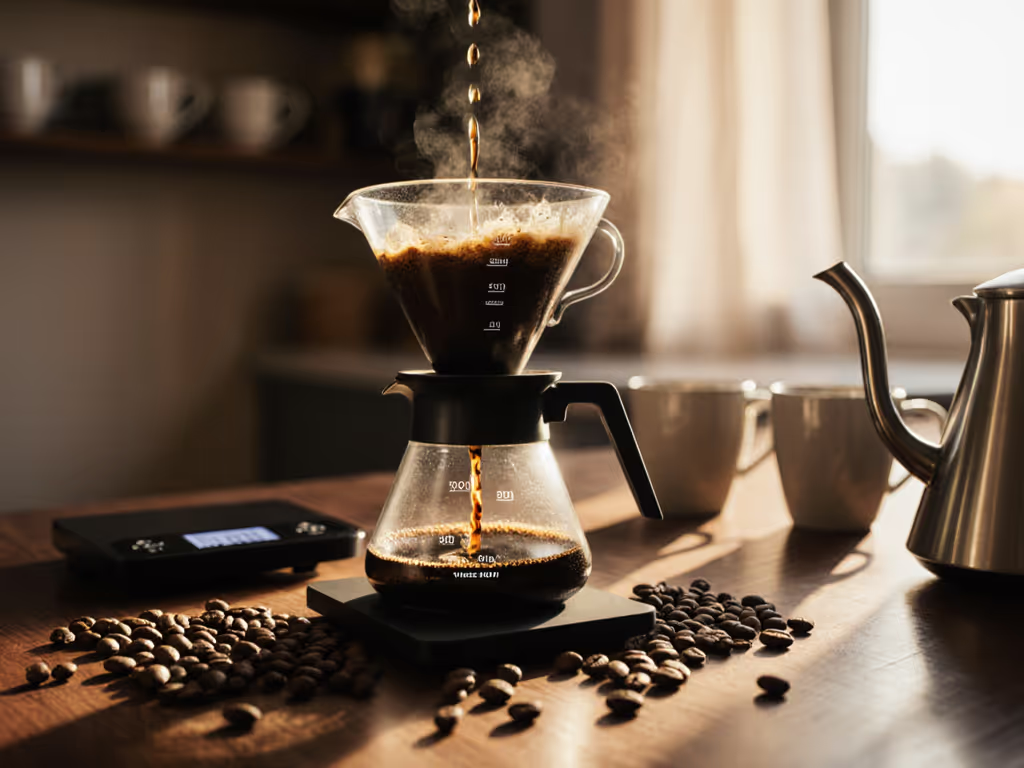
Using the B75 with a gooseneck kettle (steady pour control) and medium-fine grounds:
Bloom phase (30 seconds): Pour 60 grams of water in circular motions, wetting all grounds. Wait 30 seconds without pouring.
Main pour (2:30-3:00): Pour remaining 240 grams in 4-5 pulses of 50-60 grams each, pausing 20 seconds between pulses. Total drawdown should finish between 3:30 and 4:00 from first water contact.
Cleanup: Dump grounds and filter into compost, give the dripper a quick rinse under hot water (20 seconds), pat dry. Total time from kettle to empty dripper: 5 minutes. Repeatable on weekday mornings without fiddling.
The plastic B75 requires an extra 10 seconds of cooling time if you brew with water hotter than 98°C; ceramic doesn't. This is the only material difference that tangibly affects your morning routine.
B75 vs. Alternatives: Flat-Bottom Comparisons
| Feature | B75 Plastic | B75 Ceramic | Melitta Flat-Bottom | Standard Cone Dripper |
|---|---|---|---|---|
| Thermal Stability | Moderate | Good | Moderate | Poor |
| Fines Handling | Excellent (flat bed) | Excellent (flat bed) | Good | Fair (V-shape channels fines) |
| Brew Time (20g dose) | 3:45-4:00 | 3:30-3:50 | 3:45-4:10 | 2:45-3:15 (faster, higher extraction risk) |
| Cost | ~$8-12 | ~$15-22 | ~$10-15 | ~$5-8 |
| Durability (drops) | Excellent | Fair | Good | Fair |
| Hard Water Scaling | Easy to descale | Harder to descale | Easy | Moderate |
| Consistency (stable grind assumed) | Very High | Very High | High | High |
The B75 sits in the pragmatist's zone: better extraction control than a cheap cone dripper, more durable than ceramic-only alternatives, and simple enough that you're not managing complexity instead of brewing coffee.
Addressing the Pain Points
Inconsistency across brews: The B75's flat bed stabilizes extraction dramatically if grind size is locked. If taste drifts (more bitter one day, more sour the next), log your grind setting, brew time, and water temperature. Drift usually signals grinder wear or water hardness change, not dripper failure.
Conflicting online recipes: Most B75 recipes assume 18-22g coffee, 1:16 ratio, 95-98°C water, and a medium-fine grind. These aren't negotiable; they're the control points. Deviate only one variable at a time (e.g., increase grind coarseness by one notch, then taste and log).
Too many dripper choices: If you have a mid-tier grinder and inconsistent tap water, a flat-bottom dripper (whether B75 or similar) is the right choice. Cone drippers amplify grinder unevenness; wave drippers (Melitta, Kalita) are flat-bottoms too, so the performance gap is small. Buy the B75 and stop researching.
Wasting beans during dial-in: Use the dose/grind/bloom framework above. Write it down. Brew the same recipe for three consecutive mornings. Only adjust one variable if the cup isn't balanced. This discipline will cut your dial-in waste by 40-50%.
Sustainability: The B75 accepts standard wave filters; choose unbleached, compostable versions (typically 0.50-1.00/filter). Ceramic and plastic drippers last 3-5 years with care, amortizing to virtually no waste per brew. Rinse immediately after brewing to avoid scaling and reduce vinegar descaling frequency to 2-3 times yearly instead of monthly.
Final Verdict
The Timemore B75 is a pragmatist's dripper: it solves the real problem (extraction consistency with mid-tier grinders and variable water) without fussiness or breakage anxiety. The plastic version suits travel and offices; the ceramic version suits stable home setups where thermal mass matters.
Choose the B75 if:
- You have a mid-tier burr grinder (conical or flat) and want extraction stability without upgrading
- Your tap water is 75-150 ppm (medium hardness); you've measured it or have a water report
- You brew in under 7 minutes and want repeatability, not ritual complexity
- You prefer measurement-led tweaking over guesswork (grind, dose, pour rate, water hardness)
- You're skeptical of dripper prestige but respect geometry and material choice
Skip the B75 if:
- You've already optimized grind consistency with a high-end grinder; you're at the point where dripper geometry is a secondary variable
- You brew with very soft water (<50 ppm) or extremely hard water (>200 ppm) and need a specialized design
- You prioritize aesthetics over performance; the B75 is functional and plain
Control the variable you can taste. With the B75, that variable is pour rate and water hardness (both measurable, both repeatable). The dripper will give you consistent extraction; your job is to log the conditions and replicate them. That's how weekday coffee becomes reliable, not how it becomes complicated.
Related Articles