Dial In Pour Over Grind Size: Brewer-Specific Guide
By Maya Patel • 4th Nov
If your pour over coffee tastes inconsistent or off-balance, the culprit is usually that your pour over grind size needs refining, not your beans or technique. Learning to dial in grind for pour over is the single most impactful skill for beginners because it directly controls extraction. Forget chasing expensive gear; start where you are with one variable, one win, then another. Confidence brews consistency, and today we'll make grind size adjustments feel approachable for your specific dripper.
Why Grind Size Matters More Than You Think
Grind size isn't about "stronger" or "weaker" coffee. It is about how water interacts with coffee particles. Think of it like pouring water through sand versus gravel: finer grinds slow water flow, increasing extraction time, while coarser grinds speed it up.
Under-extracted coffee (too coarse) tastes sour, sharp, or hollow. Over-extracted coffee (too fine) turns bitter or astringent. Your grind size must match your dripper's design, not a generic chart.
This is where many beginners get stuck. They try recipes online that assume perfect lab water or a $500 grinder. But at a neighborhood library workshop I ran, we brewed with whatever attendees brought: tap water, grocery-store beans, and hand grinders from the 90s. The moment we rinsed filters first and adjusted just the grind, faces lit up. Sweetness appeared. That's when new brewers realize control beats gadgets, every single time.
Your Brewer-Specific Grind Cheat Sheet
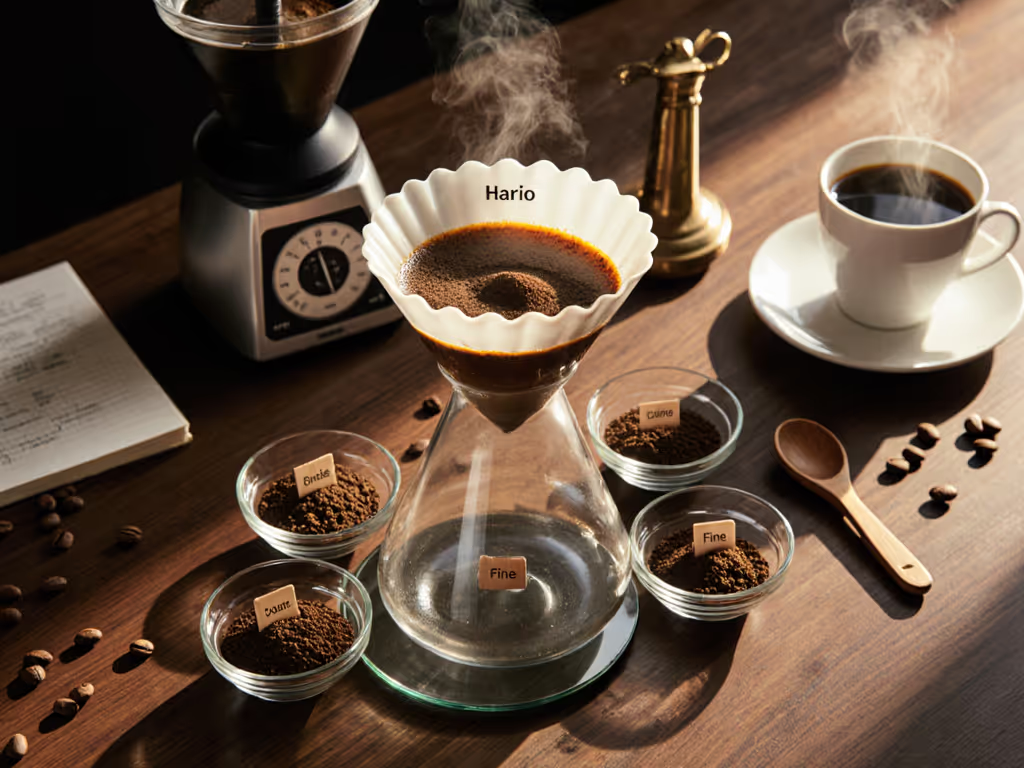
Forget memorizing microns or clicks. Focus on visual texture and flow behavior. Start with these beginner-friendly baselines, then tweak based on your taste:
V60: Salt Shaker Fine
For the V60, aim for medium-fine, like fine table salt. The cone shape drains fast, so a finer grind helps water linger. If your brew finishes in under 2:30, go finer (like caster sugar). If it's stalled over 3:30, go coarser (like sea salt). Sourness? Grind finer. Bitterness? Coarsen slightly. Beginners often grind too coarse here, missing the V60's bright clarity. If you're deciding between conical and flat-bottom brewers, see our V60 vs Kalita comparison.
Kalita Wave: Uniform Sand
The Kalita Wave grind setting should be medium, resembling wet sand. Its flat bottom naturally slows flow, so a medium grind prevents over-extraction. Pour steadily; no pulse pours needed. If coffee tastes flat or weak, grind finer (but never as fine as V60). If it's drying your mouth, go coarser. A pro tip: rinse Kalita filters thoroughly (they are thicker and can mute sweetness if not prepped). For a deeper look at how filter choice changes flow and flavor, read paper vs metal filters.
Chemex: Rough Beach Sand
Yes, Chemex grind is coarser than you'd expect! Aim for medium-coarse, like breadcrumbs or coarse sand. Chemex's thick filters restrict flow, so a finer grind causes stalling and bitterness. If water pools for more than 30 seconds during bloom, your grind is too fine. If it drains too fast (<4 minutes total), go finer. Sourness? Grind slightly finer. Weakness? Increase dose before adjusting grind.
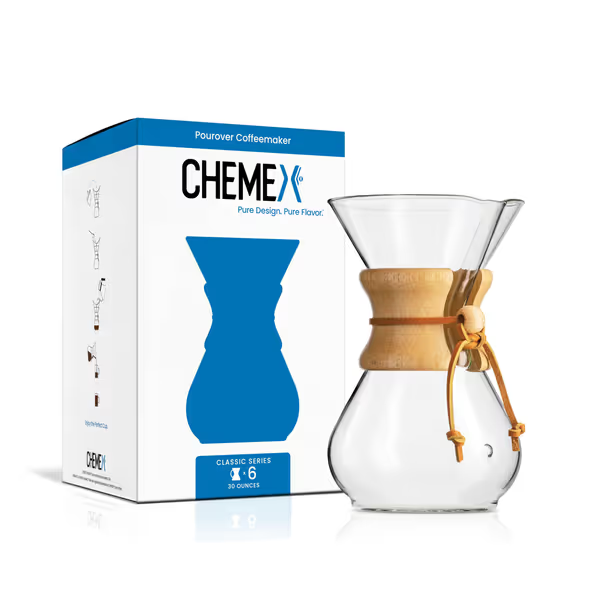
Chemex Classic Series 6-Cup Coffeemaker
Consistent, clean coffee flavor with elegant, timeless design and easy use.
$44.45
MaterialNon-porous Borosilicate Glass
MaterialNon-porous Borosilicate Glass
Pros
Delivers consistently clean, non-bitter coffee.
Elegant design, simple to use and clean.
Cons
Durability concerns reported by some users.
Requires specific CHEMEX bonded filters (not included).
Customers praise the coffee maker's ability to make great coffee and appreciate its taste, noting it's not bitter at all. They find it well-designed, easy to use and clean, and consider it worth the money. The durability receives mixed feedback - while some say it holds up well over time, others report bottom cracks after a few months of use.
Customers praise the coffee maker's ability to make great coffee and appreciate its taste, noting it's not bitter at all. They find it well-designed, easy to use and clean, and consider it worth the money. The durability receives mixed feedback - while some say it holds up well over time, others report bottom cracks after a few months of use.
Clever Dripper: The "Forgiving" Middle Ground
As a hybrid immersion-pour-over, the Clever Dripper thrives with a medium grind, like raw sugar. Since water saturates all grounds evenly, grind changes have subtler effects. Start here if you're new: it's the most tolerant of grinder inconsistencies. Adjust steep time first (3-4 minutes), then grind only if coffee tastes papery (go finer) or ashy (go coarser).
Troubleshooting Without Wasting Beans
"My grinder doesn't have precise settings!"
Most beginners use entry-level grinders with uneven particles. Try this: If you're ready to upgrade, these are the best pour-over grinders for consistent daily brewing.
- Tap your grinder 2-3 times after grinding to settle fines.
- Use medium roasts. They are more forgiving than light roasts with inconsistent grinds.
- Rinse your filter every time. Residual paper taste masks sweetness, especially with tap water.
At that library workshop, we mapped one change at a time: rinsed filter → finer grind → steadier bloom. No fancy gear. Just honest tasting.
How to Adjust Without Guessing
Track just two things:
- Brew time (start timer when water hits coffee)
- Taste notes (circle: sour/bitter/weak/sweet/balanced)
If your coffee's sour or too fast, grind finer just one notch. Retest. If bitter or stalled, coarsen one notch. Never adjust grind and ratio simultaneously, that's how beginners waste beans.
Water Matters (But Keep It Simple)
Hard water? Use a basic carbon filter (like Brita) instead of chasing remineralization. Soft water? Add a pinch of non-iodized salt to 1L of tap water (it boosts perceived sweetness). Test with one dripper first (like your Kalita Wave) before applying elsewhere. For water chemistry basics and easy fixes, see perfect pour-over water.
Your Next Small Win
Stop comparing your coffee to Instagram videos. That barista likely used lab-grade water and a $1,200 grinder. Your goal is consistent improvement with your tools.
Tomorrow's action: Pick one dripper you own. Brew it with your usual grind. Taste. Then, adjust only the grind one notch finer if sour, or coarser if bitter. Write down the change. That's mastery in motion.
Confidence brews consistency. And it starts not with new gear, but with one honest sip and one small adjustment.
Further Exploration: Track your grind adjustments for a week using this free template. You'll spot patterns faster, and taste your progress.
Related Articles
Brewing Techniques & Coffee Science
Dense Bean Extraction: Control Your Pour Over Variables
24th Apr•7 min read
Brewing Techniques & Coffee Science
High-Sugar Coffee Beans: Pour-Over Extraction Guide
12th Apr•8 min read
Brewing Techniques & Coffee Science
High TDS Water Pour Over: Flow & Extraction Guide
31st Mar•7 min read