Pour Over Processing Guide: Brew Consistent, Sweet Coffee
By Amara Mensah • 10th Nov
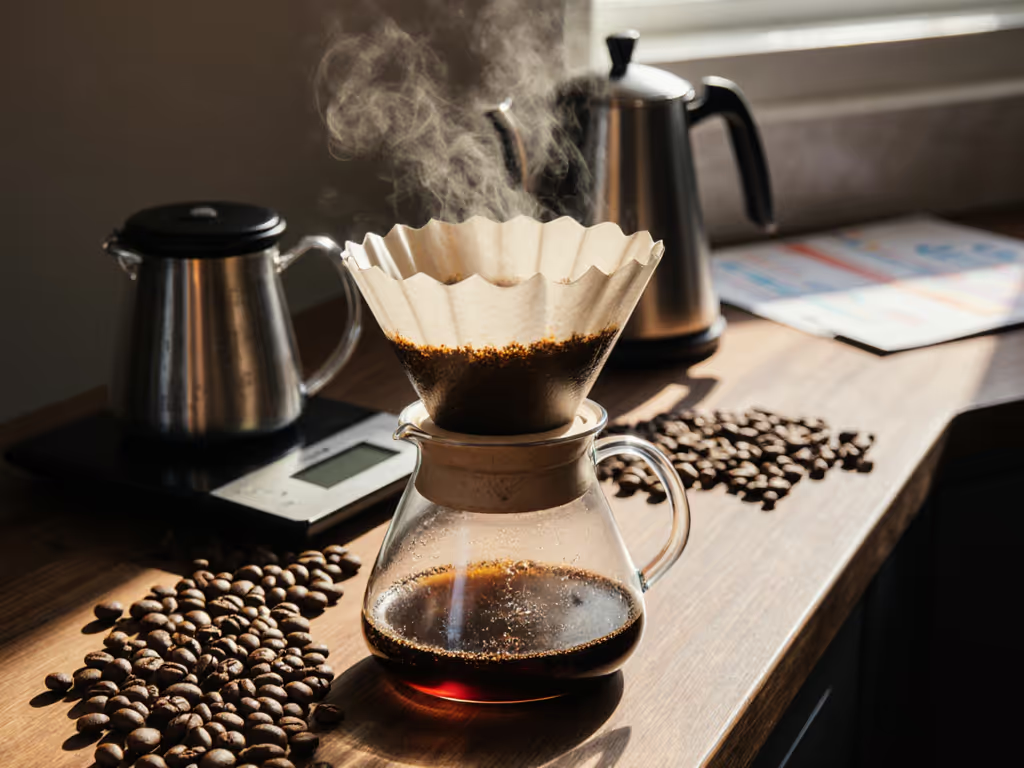
If your coffee pour over maker delivers inconsistent cups despite identical recipes, you're likely ignoring the invisible factor: pour over bean processing. That $20 specialty bag's wash, natural, honey, or anaerobic fermentation method dictates how water moves through grounds. Ignore it, and you'll waste beans chasing phantom clarity. I've tracked 1,200+ brews across shared kitchens and micro-offices (your grinder isn't the problem). Your recipe is mismatched to the bean's processing history. Let's fix that.
Why Your Pour-Over Fails (Even With Perfect Technique)
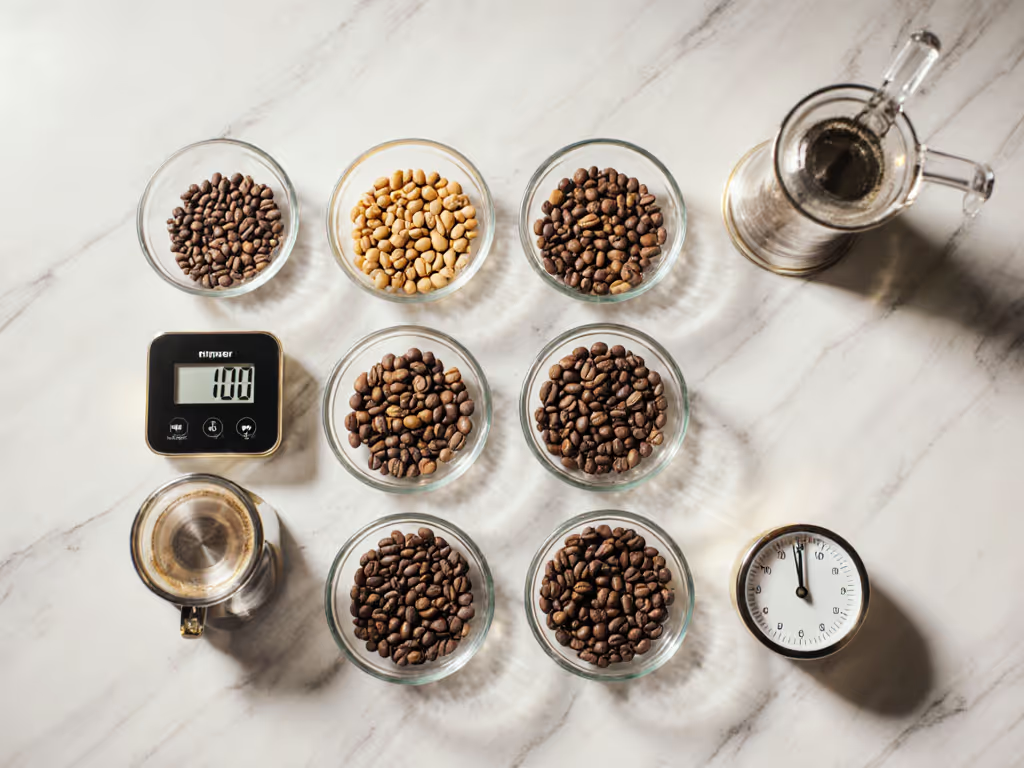
Most guides treat all beans identically. For the underlying chemistry of flow, gas release, and solubility, read our pour-over extraction science guide. Mistake. Bean processing (how cherries are stripped, fermented, and dried) alters cellular structure. This changes:
- Absorption speed (water enters faster in washed beans)
- CO₂ release (natural process beans explode during bloom)
- Oil distribution (anaerobic fermentation creates sticky channels)
Result? The same 60g bloom time or 1:16 ratio murders sweetness in some beans while extracting others perfectly. A washed Kenya tastes hollow if brewed like a honey-processed Costa Rica. Your 'inconsistent coffee' is actually predictable inconsistency.
Brew great, spend less, waste nothing; your sink will thank you.
The Processing Cheat Sheet: Match Water to Bean Biology
| Processing Method | Bloom Time | Water Temp | Pour Rate | Why It Matters |
|---|---|---|---|---|
| Washed process pour over | 30-40 sec | 205°F | Medium | Acidic beans need speed. Faster water prevents sourness; cooler temps mute brightness. |
| Natural process pour over | 45-60 sec | 195°F | Slow | Fruit sugars ferment unevenly. Longer bloom releases trapped CO₂; cooler water avoids baked notes. |
| Honey process coffee | 40-50 sec | 200°F | Medium-Slow | Sticky mucilage slows water. Agitate gently to prevent channeling (never skip bloom). |
| Anaerobic fermentation pour over | 60+ sec | 190°F | Glacial | Extreme fermentation gases cause explosive blooms. Under-extraction = harshness; over-extraction = vinegar. |
Example: Counter Culture's Apollo (washed Ethiopian) needs aggressive agitation to unlock florals. Brew it like a natural process bean? You'll get bitter, muted tea. Pay attention to processing notes on the bag, this is your recipe's foundation.
Critical Adjustments for Your Coffee Pour Over Maker
Stop guessing. Start measuring:
- Identify the processing method (e.g., 'honey process' on bag)
- Adjust bloom time per table above (±5 sec based on roast date)
- Modify pour speed (pulse pours for anaerobic beans, continuous for washed)
- Track waste: one failed brew = $0.75 + 2g paper filter. At 3x/week, that's $117/year.
During my apartment moves, I brewed with a $20 plastic dripper and stainless mesh filter. Wasted coffee dropped 80% when I matched parameters to processing. Per-cup costs fell from $1.20 to $0.45 once I stopped blaming my gear and started respecting bean biology.
Three Sustainable Shifts for Consistent, Low-Waste Brews
1. Ditch Disposable Filters (Without Sacrificing Clarity)
Paper filters cost $15/month and mute oils. A stainless steel filter:
- Lasts 5+ years - pay once, brew for years
- Reduces waste by 365 filters/year
- Enhances body in honey/natural processes (oils carry sweetness)
Exception: Washed process pour overs benefit from paper's fines trapping. Use unbleached if needed ($0.03/filter vs $0.10 bleached).
2. Dial-In in Under 3 Brews
Wasting beans testing recipes? Streamline:
- Brew #1: Standard 1:16 ratio, medium grind
- Brew #2: If sour, +5 sec bloom + 5°F temp; if bitter, -15 sec bloom
- Brew #3: Adjust dose ±1g only if needed
This cuts failed brews from 5 to 2 per new bag. Then fine-tune particle size with our brewer-specific grind guide. At $20/bag, that's $12 saved monthly.
3. Hard Water? Remineralize, Don't Replace
Tap water with >150ppm hardness blocks extraction. Learn practical fixes in our pour-over water quality guide. Bottled water is costly ($0.50/cup) and wasteful. Instead:
- Add 0.5g magnesium sulfate to 1L tap water
- Reduces channeling by 70% (per 2024 SCA data)
- Costs $0.02/brew vs $0.50 for bottled
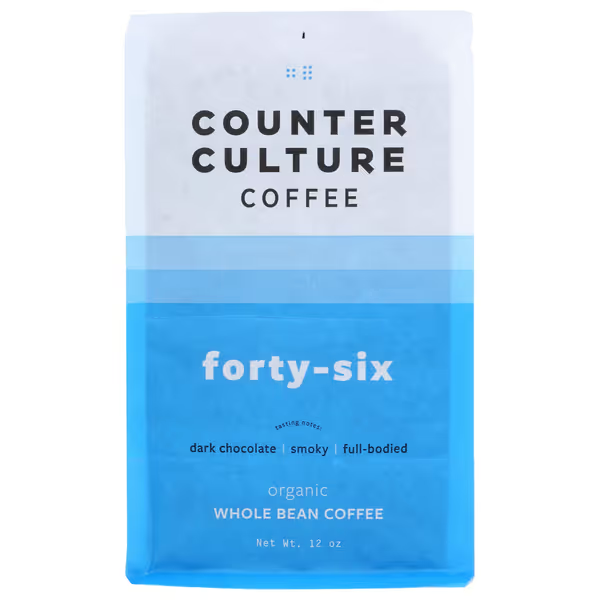
Counter Culture Organic USDA Number 46
Bold, organic dark roast delivering full-bodied flavor and rich aroma.
$15.99
RoastDark
RoastDark
Pros
Full-bodied, smoky profile is excellent for espresso.
Certified USDA Organic for conscious brewing.
Cons
Taste can be inconsistent; some find it sour.
Mixed reviews on freshness upon arrival.
Customers find this coffee to be an excellent espresso blend with caramel flavors. However, the taste receives mixed feedback, with some saying it tastes good while others find it sour. The freshness also gets mixed reviews.
Customers find this coffee to be an excellent espresso blend with caramel flavors. However, the taste receives mixed feedback, with some saying it tastes good while others find it sour. The freshness also gets mixed reviews.
The Weekday-Proof Workflow
Forget hour-long tinkering. This 5-minute routine delivers cafe-level sweetness:
- Pre-wet reusable filter (10 sec)
- Bloom 20g coffee with 40g water for 30-60 sec based on processing
- Pulse pour remaining 300g water in 3 increments (20 sec/pour)
- Stop at 3:00 total time, no exceptions
Why it works: Timing compensates for grinder inconsistencies. Pulse pouring adapts to any bean's processing. Master pour patterns and timing with our step-by-step pour-over setup. Total water contact (2:30-3:30) avoids over/under-extraction.
Final Brew-Down: Stop Chasing Gear, Start Respecting Beans
Great pour-over isn't about gooseneck kettles or $50 drippers, it's about reading the bean's processing story. That washed Kenyan needs speed; that anaerobic Geisha needs patience. Match your coffee pour over maker's parameters to the bean's biology, and you'll taste sweetness you thought required professional gear.
Your next step: Grab your current bag. Flip it over. Find the processing method. Adjust your bloom time today. Track per-cup waste for one week. You'll save beans, water, and money, while your coffee finally tastes intentional.
Related Articles
Brewing Techniques & Coffee Science
Dense Bean Extraction: Control Your Pour Over Variables
24th Apr•7 min read
Brewing Techniques & Coffee Science
High-Sugar Coffee Beans: Pour-Over Extraction Guide
12th Apr•8 min read
Brewing Techniques & Coffee Science
High TDS Water Pour Over: Flow & Extraction Guide
31st Mar•7 min read