
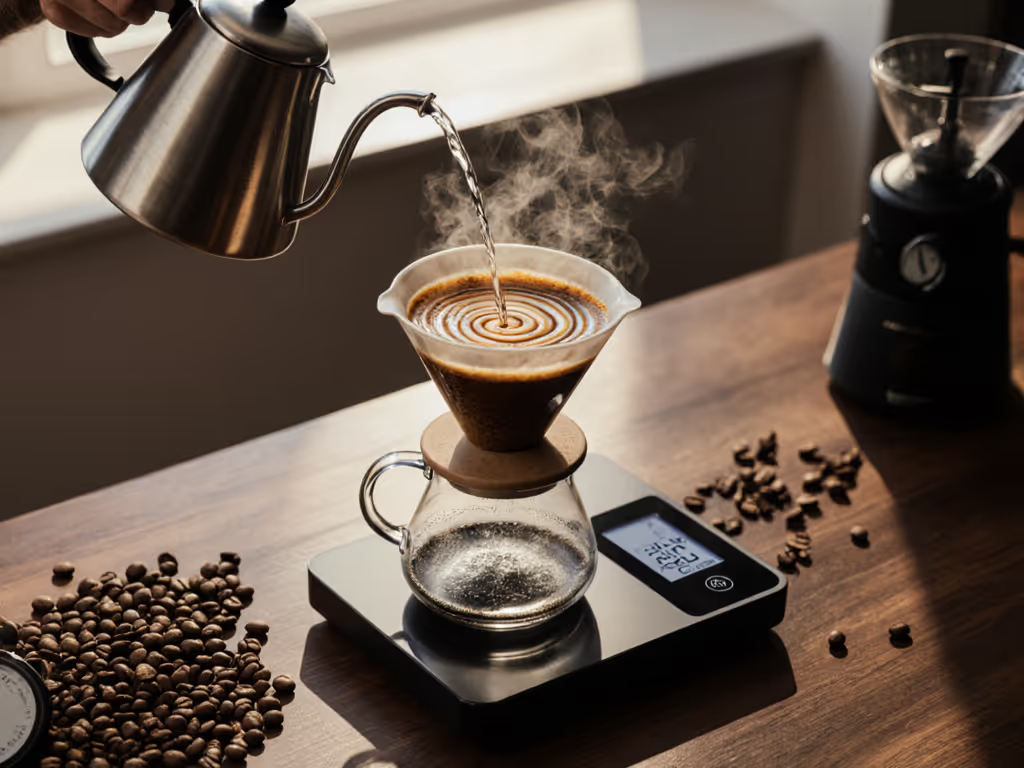
High-Sugar Coffee Beans: Pour-Over Extraction Guide
By Maya Patel • 12th Apr
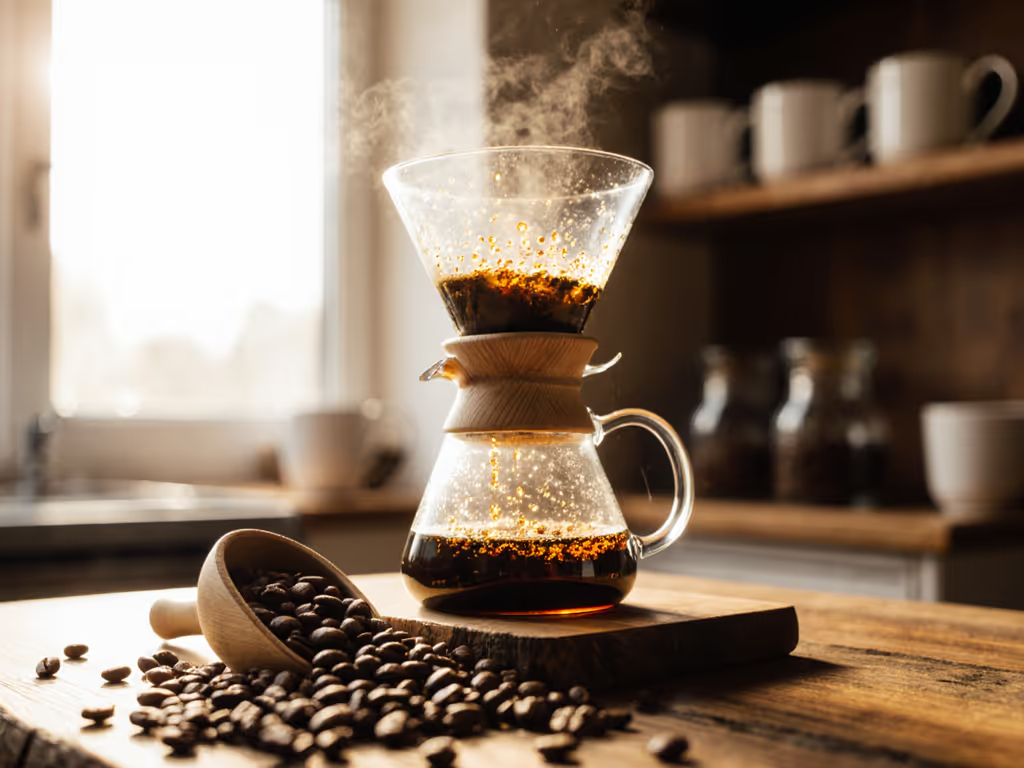
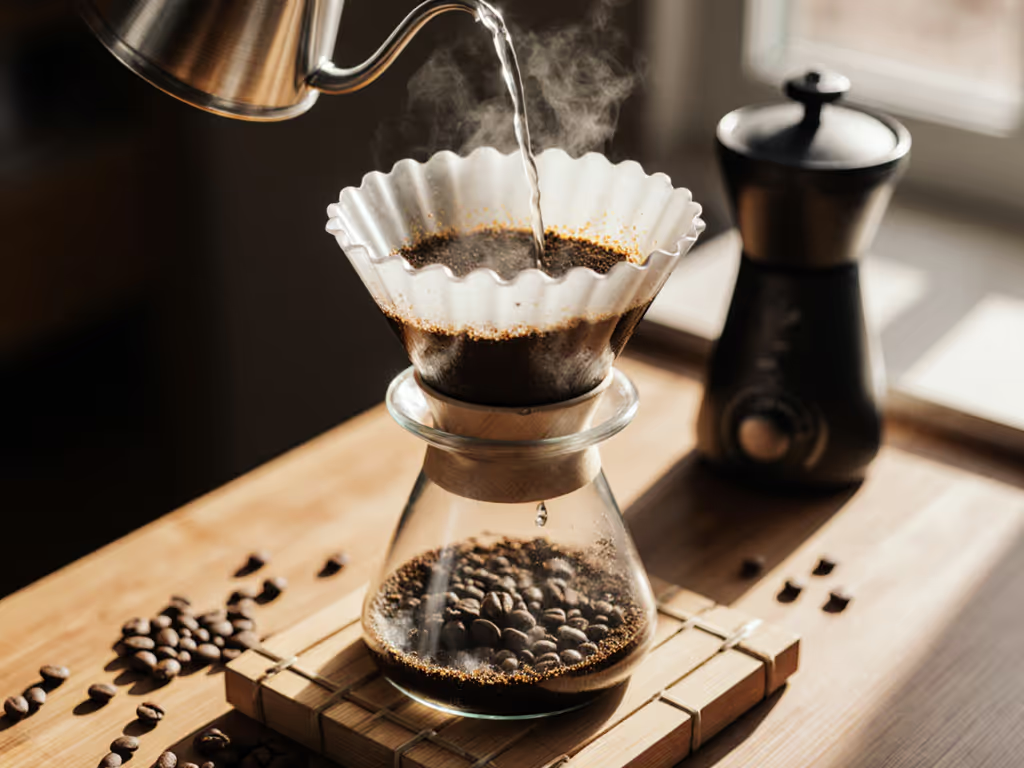
If you've ever wondered why some cups taste like caramel and honey while others feel flat and bitter, the answer often comes down to sugar (specifically how you're extracting it). High-sugar coffee beans pour-over brewing isn't about chasing exotic origins or expensive gear; it's about understanding what's already in your beans and coaxing out the sweetness that's waiting to shine. This guide walks you through the most common questions beginners ask when they start paying attention to sweetness in their daily brew.
What Makes a Coffee Bean High in Sugar?
The short answer: where and how the coffee is grown.
Coffee beans contain natural sugars (primarily sucrose, glucose, and fructose) that directly influence flavor[1][2]. Sucrose is the dominant form, making up 5-9% of the seed itself, and accounting for more than 90% of the total sugar content[1]. The amount of sucrose doesn't change based on how the bean is processed; instead, it depends on the growing conditions[1].
High-altitude, strictly high-grown (SHG) beans are your ticket to natural sweetness[2]. For a deeper dive into why altitude raises sugar density and how to brew for it, see our high-altitude beans guide. When coffee grows at higher elevations, the ripening process slows down, allowing beans to develop more sugars and complex flavors[2]. These beans tend to have brighter acidity, refined sweetness, and a smoother body, which is the exact foundation you need for a balanced cup at home[2].
Processing method does play a small role: natural processed green beans contain more fructose and glucose than fully washed beans, meaning they contain slightly more sugar overall[1]. However, the difference is modest compared to the impact of altitude and terroir.
How Does Roasting Affect Sweetness in My Beans?
A well-executed medium to medium-dark roast unlocks natural sugars and enhances sweetness without tipping into bitterness[2]. This is crucial: roasting degree directly influences how much sugar potential your beans deliver to the cup.
Understanding this matters because many brewers assume their beans are naturally sweet when the roast profile is actually fighting against them. A very light roast might preserve acidity but leave sweetness underdeveloped. A very dark roast can push beans past their sugar-forward window into char territory. The sweet spot for most palates (and the reason medium roasts appear consistently in specialty coffee) is that gentle roast level that coaxes complexity without overdoing it.
Does My Pour-Over Brewer Actually Matter for Sweetness?
Yes, but not how you might think.
Your dripper shape, filter material, and brewing time all influence how much sugar and other solids end up in your cup. The key isn't finding the "best" dripper; it's understanding what trade-offs each style makes.
Flat-bottomed drippers (like the Melitta or Kalita Wave) brew slower and are more forgiving of grind inconsistency, which means more time for sugars to dissolve into your water. Cone drippers (like the V60 or Chemex) brew faster and demand more precision, but they can highlight clarity and sweetness when dialed in. If you're choosing between shapes, our cone vs flat-bottom comparison explains how geometry changes extraction and perceived sweetness. Neither is "wrong"; they simply extract differently.
The real lever you control is grind size. For brewer-specific settings and troubleshooting, use our grind size dial-in guide. When your grind is too coarse, water rushes through without fully dissolving the sugars and solids you want. When it's too fine, water gets stuck, and you pull out bitter, astringent compounds instead. The middle ground (where sweetness lives) is found by adjusting your grind one small step at a time and tasting honestly.
How Can I Taste the Difference Between Well-Extracted and Under-Extracted Sweetness?
This is where confidence brews consistency. Instead of guessing, taste two brews side by side: one with a slightly coarser grind, one slightly finer.
A well-extracted cup (your goal) tastes sweet, balanced, and clear. You'll notice caramel, chocolate, or fruit notes depending on the bean. There's body, but it's clean, not muddy.
An under-extracted cup tastes sour, thin, and hollow. The acidity is sharp and unpleasant rather than bright. You're missing the sugars because water passed through too fast.
An over-extracted cup tastes bitter and harsh. You've pulled out too many bitter compounds and masked the sweetness under astringency.
Keep a simple notebook: grind size, brew time, water hardness if you know it, and one word for the taste (sweet, sour, bitter, hollow, clear). Over two weeks, patterns emerge. You'll see which small change moved the needle.
What About Water? Does Tap Water Hide Sweetness?
Absolutely. Hard tap water (especially high in alkalinity) can suppress the very sweetness you're trying to extract[1]. Learn practical fixes and water recipes in our pour-over water quality guide. Alkaline water neutralizes the acids in coffee, which means you lose brightness and the contrast that makes sweetness pop.
You don't need bottled water or expensive filters to start. One controllable change: if your tap water tastes mineral-heavy or your brews feel dull, try one brew with filtered water and compare. Listen to your taste buds, not marketing.
Many brewers find that a simple pitcher filter or a modest inline cartridge solves the problem without fuss. Others discover their tap water is actually pretty good once they dial in their grind. The point is to test and notice, not to assume.
Why Does the Same Recipe Taste Different Some Days?
Grinder variation is usually the culprit. Even a decent hand grinder or burr grinder produces an uneven particle size distribution (some fines, some larger pieces). On days when you get more fines, the brew over-extracts and tastes bitter. On days with more coarse particles, you under-extract and taste sour.
This is not a flaw in your technique; it's the reality of entry-level equipment. The fix: adjust your grind by half a step toward finer when your cup tastes hollow, or coarser when it tastes bitter. One change at a time.
Water hardness also shifts day to day if you're using tap water. Seasonal changes, local treatment adjustments, and even the time of day can nudge mineral content. This is why a simple water pitcher filter becomes such a reliable anchor for consistency.
When Should I Reach for High-Sugar Beans vs. Other Origins?
High-sugar beans (especially SHG coffees from Central America, Ethiopia, and parts of Colombia) shine when you want a sweeter, more forgiving cup. They're generous with their flavors and less likely to punish slight grind or pouring errors.
They're ideal if you're new to pour-over and learning to dial in. They're also your friend on weekday mornings when you have five minutes and want reliability, not a science experiment.
If you love bright, acidic, tea-like cups, you might reach for lower-altitude washed coffees instead. There's no "better" choice, only what matches your taste and your schedule.
How Do I Know if My Beans Are Actually High in Sugar?
Check the label. Look for:
- Altitude: 1,400+ meters (4,500+ feet) is the SHG sweet spot[2]
- Roast date: Fresh beans (within 2-4 weeks) extract more clearly than stale ones
- Processing notes: Natural-processed beans will have slightly more residual glucose and fructose, though the difference is small[1]
- Roast level: Medium or medium-dark typically unlocks more sweetness than light roasts[2]
When in doubt, ask the roaster directly. Good ones know their sourcing and roast philosophy and will tell you honestly.
What's the Simplest Way to Start?
Pick one high-SHG bean from a local roaster (ask them to recommend something forgiving). Use your current grinder, your current dripper, and your tap water. Brew it three days in a row with the exact same recipe: same grind size, same dose, same water temperature, same pour technique.
On day three, change one thing only (grind a half-step finer) and brew again. Taste both. Notice what shifted. Adjust again tomorrow.
This framework (one variable, one win, then another) is how you build real skill and stop feeling lost. You're not chasing perfect equipment; you're training your palate and proving to yourself that control beats gadgets, every single time.
Where to Go From Here
If sweetness remains elusive after dialing in grind and water, investigate your brew temperature (aim for 195-205°F), your pour-over filter type, and whether your beans were roasted more than a month ago. For exact targets by roast level and simple ways to stabilize heat, see our pour-over temperature control guide. Each of these is a next step, not a starting point.
Join a coffee community (online or local) where you can ask specific questions and see what others have discovered with their own gear and water. Share your notes, taste others' brews, and stay curious without judgment.
Remember: the goal is not a perfect cup every single morning. It's a predictable cup. A cup that tastes good, takes five minutes, and feels like a small win before your day starts. That's when confidence brews consistency, and consistency builds mastery.
Related Articles
Brewing Techniques & Coffee Science
Dense Bean Extraction: Control Your Pour Over Variables
24th Apr•7 min read
Brewing Techniques & Coffee Science
High TDS Water Pour Over: Flow & Extraction Guide
31st Mar•7 min read
Brewing Techniques & Coffee Science
Coffee Bean Size for Pour-Over: Identify & Adjust
11th Mar•9 min read