
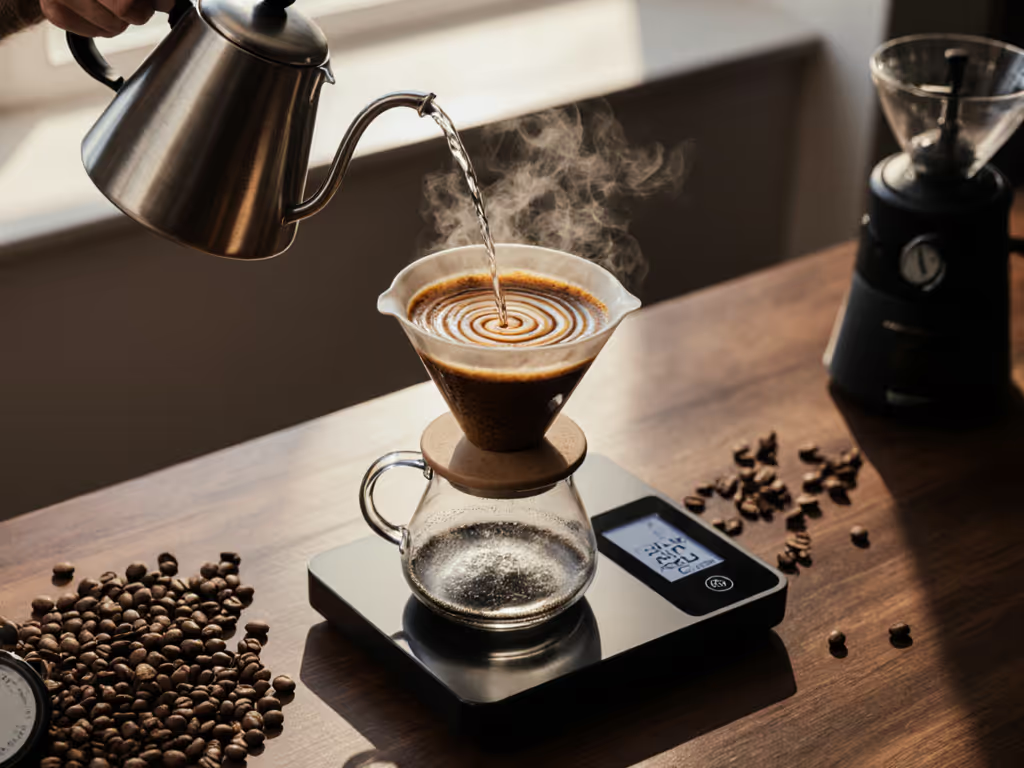
High-Moisture Coffee: Pour-Over Mastery
By Maya Patel • 23rd Mar
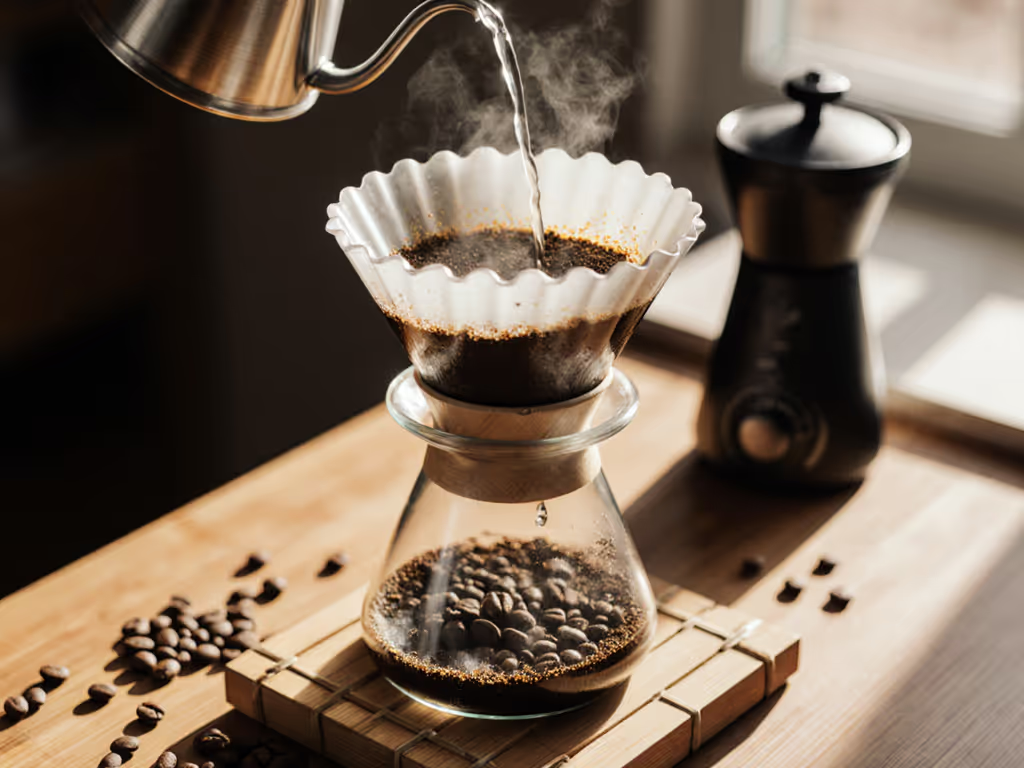
When you first encounter moist coffee beans in pour-over, your instinct might be to wonder whether these higher-moisture beans will behave differently in your dripper. The answer is reassuring: they absolutely can shine with pour-over, and once you understand one core principle, you'll find them forgiving and rewarding. High moisture coffee brewing is less about complex chemistry and more about small, deliberate adjustments that unlock clarity and sweetness.
Let me walk you through the questions I hear most often, built on honest tasting and one variable at a time.
What Exactly Is High-Moisture Coffee?
Coffee bean moisture content typically ranges from 10% to 13% by weight after drying. Standard specialty coffee sits around 10-11%, dried carefully to reach stability and shelf life. High-moisture coffees (sometimes called wet coffees) retain slightly more water, usually in the 11-13% range. This can happen naturally with certain origins, processing styles, or shorter resting periods after harvest. For how different processing methods change extraction, see our pour-over processing guide.
Why does this matter for your brewing? Moisture affects how water moves through the grounds and how quickly extraction happens. Think of it like the difference between fresh bread and day-old bread, the texture changes how liquid absorbs. With wet coffee beans, the bean structure is softer and more permeable, which means water reaches the flavor compounds faster than it might in very dry beans.
How Do I Know If My Beans Are High-Moisture?
You probably won't see "high moisture" printed on the bag. Instead, look for clues: beans that feel slightly sticky to the touch, that arrived recently from the roaster, or from roasteries known for shorter resting windows. African washed coffees and some honey-processed beans from Central America tend to have naturally higher moisture. A reputable roaster will list the roast date; if those beans are less than ten days old and feel slightly tacky, you're likely working with higher moisture content.
Honestly, the easiest way to know is to brew a test cup and observe the behavior. If extraction feels unusually fast (your brew finishes in under three minutes) and the cup tastes thin or hollow, high moisture (or a coarse grind) is often the culprit.
Why Should I Care About Moisture in Pour-Over?
High moisture coffee brewing requires just one mindset shift: these beans extract faster. That's not bad. It's just one controllable change.
When beans retain more water, their cell walls are softer and more permeable. Hot water races through them more quickly than it would through drier beans. Left unmanaged, this speed can under-extract (meaning the water escapes before pulling out the sweetness and complexity you want). Your cup tastes weak or sour. But once you make one small adjustment, noticeably better flavor appears.
What Single Change Do I Make First?
Start with your grind. For brewer-specific targets, use our grind size dialing guide.
If you're brewing high-moisture beans, shift one notch finer than you normally would. Not dramatically finer, just one setting on your grinder. The medium-coarse consistency that works beautifully for standard beans might need to become medium for higher-moisture coffee. Finer grounds slow the water's path through the bed, giving it more time to extract sweetness and complexity.
Why start here? Because grind is the variable you control most directly without changing your water, your dripper, or your brewing technique.
Will a Finer Grind Cause Bitterness?
Not if you're thoughtful. A common fear is that finer grounds automatically trigger over-extraction and bitterness. But that's only true if you grind too fine and ignore everything else. Here's the reality:
If grind is too fine, water takes too long to move through. Think of it like rush hour traffic, everything slows down, and bitterness emerges. Conversely, if grind is too coarse, water races through without picking up enough flavor, leaving your cup sour and weak.
For high-moisture beans, that one-notch shift toward medium, not powder, not espresso-fine, lands you in the sweet zone where extraction happens at the right pace.
What Water Temperature Should I Use?
Stay with the standard: 195-205°F (90-96°C). This is your anchor for nearly all pour-over brewing, regardless of bean moisture. Fresh boiling water, cooled slightly or used immediately, keeps your temperature stable and your extraction predictable.
High-moisture beans don't need cooler water. They need the same temperature but a slower path through the grounds, which your slightly finer grind provides.
Does My Coffee-to-Water Ratio Change?
No. Use the same ratio you always do. A solid starting point is 1:16 (one gram of coffee per sixteen grams of water), though ratios between 1:14 and 1:20 are all defensible. The ratio stays constant. What changes is the grind size and, if necessary, your pour speed.
How Should I Brew High-Moisture Beans Step-by-Step?
Follow the standard pour-over method, with one deliberate tweak:
- Heat water to a rolling boil.
- Rinse your paper filter with hot water to remove papery notes and preheat your dripper.
- Grind your beans one notch finer than your baseline, to medium or medium-coarse, immediately before brewing.
- Add grounds to the filter.
- Bloom (saturate all grounds with a small amount of water) for 8-12 seconds, using roughly double the grams of water as your coffee dose. This lets trapped gases escape.
- Pour the remaining water in slow, even circles, keeping the coffee bed between 1/2 and 2/3 full at all times.
- Aim for a total brew time of 3 to 4 minutes. If your pour-over finishes in under 3 minutes, grind slightly finer next time. If it stretches past 4.5 minutes, go one notch coarser.
That's it. One small change, noticeably better.
What If I Taste Sourness?
Sourness (a tangy, astringent bite) usually signals under-extraction. The water moved too quickly through the grounds, and you didn't pull out enough sweetness. This is common with high-moisture beans if you don't adjust grind. For a step-by-step fix beyond grind, use our pour-over troubleshooting guide.
Your fix: grind finer. Go one more notch toward medium. Taste again. If the sourness softens and sweetness appears, you've found your zone.
What If I Taste Bitterness?
Bitterness (harsh, burnt, or metallic) usually signals over-extraction. The water lingered too long, pulling out harsh compounds. This can happen if you grind too fine.
Your fix: grind coarser by one notch. Or check your brewing time; if it's stretching past 4.5 minutes, your grind is too fine for your water flow rate. Coarsen it slightly and try again.
Should I Use Fresh High-Moisture Beans?
Absolutely. Coffee freshness matters universally, but especially with higher-moisture beans. These coffees lose their advantage quickly. The extra moisture that makes them forgiving initially will eventually lead to staling and off-flavors if stored too long.
As roasted coffee naturally dries and settles after roasting, light and medium roasts should be brewed within 2-4 weeks of roast date. To time your brews perfectly, see our pour-over degassing timeline. If your high-moisture beans arrived very fresh and feel sticky, use them sooner rather than later.
Can I Brew High-Moisture Beans Without Adjusting Anything?
Technically yes, but you won't taste their best. Start where you are; one variable, one win, then another. If you have a working recipe and you want to brew high-moisture beans with zero changes, expect a thinner, sourer cup. You're leaving sweetness and clarity on the table.
Once you make that single grind adjustment, the confidence arrives fast. You taste the difference immediately. That's when beginners realize control beats gadgets, every single time.
Which Drippers Work Best for High-Moisture Coffee?
Any pour-over dripper works, Chemex, V60, Kalita Wave, or a simple cone. If you're choosing between brewers, our V60 vs Kalita Wave comparison highlights design differences that affect flow rate. The key is consistency, not the tool itself. What matters is that your dripper's flow rate pairs well with your medium grind. If you're using a very slow dripper (like a thick-filtered Chemex), your already fast extracting high-moisture beans might under-extract unless you grind even finer. If you use a faster dripper (like a V60), medium grind often works beautifully.
Start with the dripper you have. Adjust grind. Taste. That's mastery.
How Do I Dial In High-Moisture Beans Without Wasting Them?
Brew small batches (one or two cups) while you dial in. Use the same process every time: same water temperature, same bloom time, same pour pattern. Change only the grind. Taste honestly after each brew. Write down what you tasted and what you changed. After three to five brews, you'll find your grind zone, and every cup after that will be predictable.
This framework (one variable, one win) removes the guesswork and the waste. You're not flailing; you're learning by design.
The Path Forward
High-moisture beans aren't mysterious or risky. They're simply beans that extract faster, which means they ask for one thoughtful adjustment: a slightly finer grind. Everything else (water temperature, ratio, bloom time, pour pattern) stays the same.
Start where you are. Grind one notch finer. Brew. Taste honestly. If the cup is sweeter and clearer, you've arrived. If it still tastes hollow, grind finer again. One small change, noticeably better. That's the path to cafe-level clarity with the beans in front of you today.
The next time you pick up a fresh bag and it feels slightly sticky to the touch, smile. You know exactly what to do.
Related Articles
Brewing Techniques & Coffee Science
Dense Bean Extraction: Control Your Pour Over Variables
24th Apr•7 min read
Brewing Techniques & Coffee Science
High-Sugar Coffee Beans: Pour-Over Extraction Guide
12th Apr•8 min read
Brewing Techniques & Coffee Science
High TDS Water Pour Over: Flow & Extraction Guide
31st Mar•7 min read
Brewing Techniques & Coffee Science
Coffee Bean Size for Pour-Over: Identify & Adjust
11th Mar•9 min read