
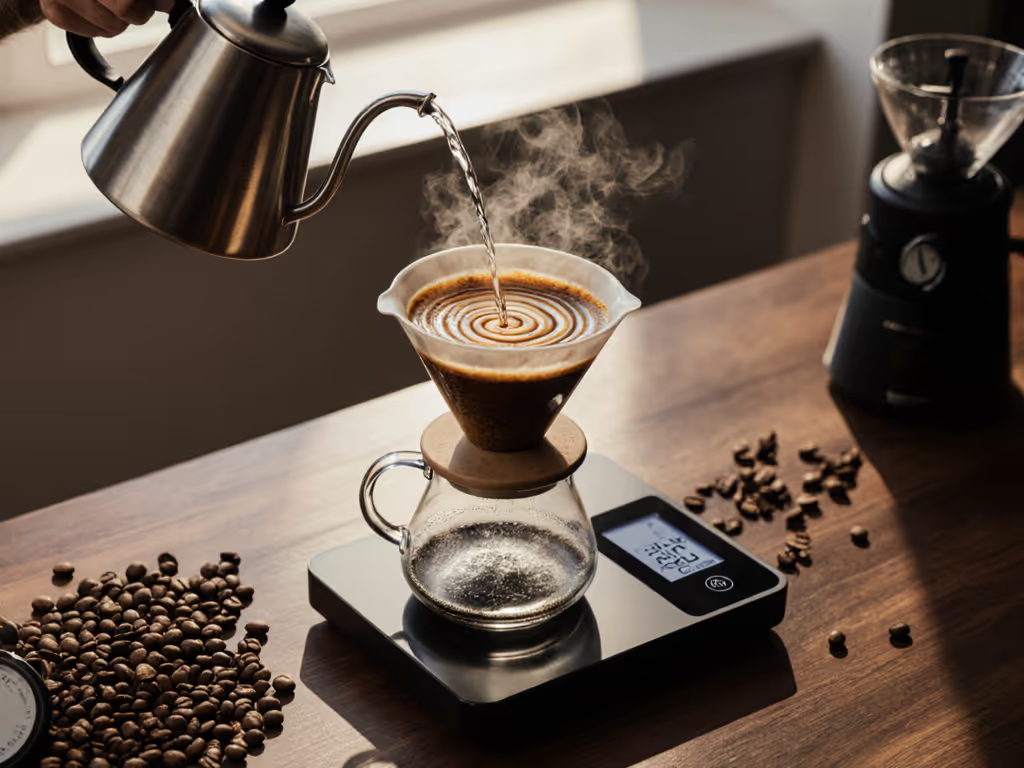
Dense Bean Extraction: Control Your Pour Over Variables
By Kai Nakamura • 24th Apr
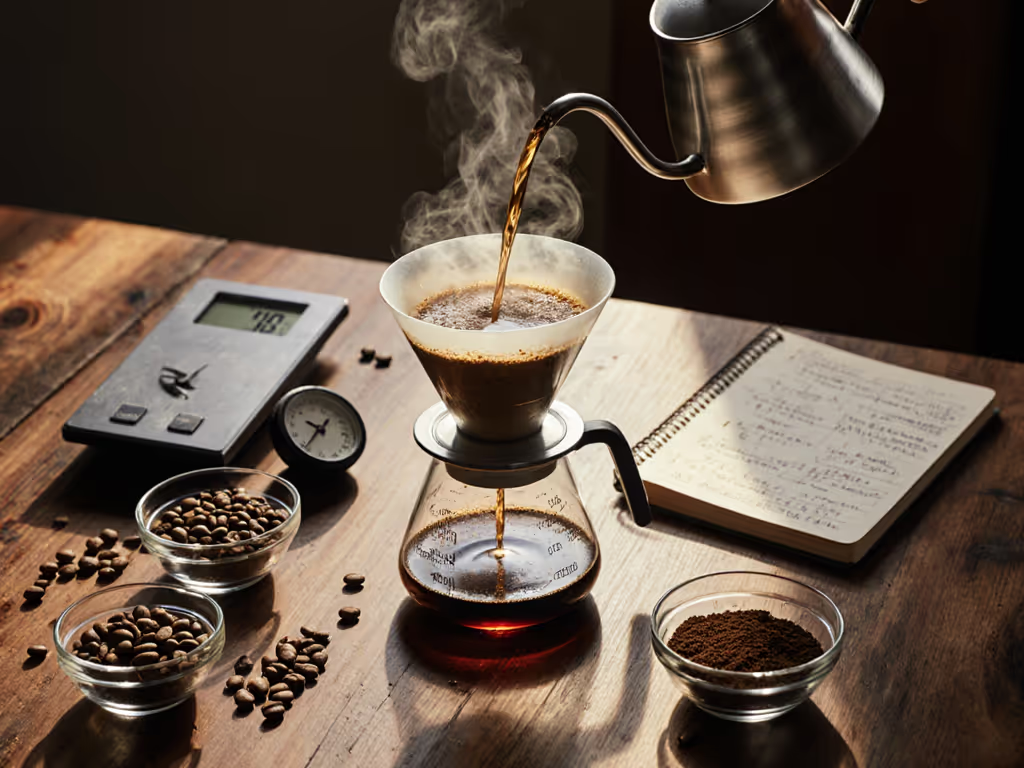
Dense bean extraction for pour over brewing hinges on one principle: the denser the bean, the longer the extraction window, and the finer you can grind without over-extracting. When you work with bean density, you're working with a fixed variable (altitude, processing, and roast level all lock in density before the bean reaches you). What you control is grind, flow rate, and water contact time. For weekday repeatability, that control matters more than bean origin hype.
Density isn't a marketing term. It's structure. A bean grown at 2,000 meters above sea level has a different cellular matrix than one grown at 800 meters.[4] Higher-density beans have tighter cell walls, more soluble compounds per unit volume, and slower water penetration. That means finer grinds don't spike bitterness as fast, but also that your brewing parameters shift. Control the variable you can taste: start by knowing what you're working with.
What exactly is bean density, and why does it change how I extract?
Extraction happens when hot water dissolves soluble compounds from ground coffee. Water temperature, grind size, and contact time all govern how much dissolves.[2] Bean density describes how tightly packed the cellular structure is (essentially, the mass compressed into the bean's volume).
Denser beans come from higher-altitude growing regions, where cooler temperatures force slower bean development.[4] That slower growth builds thicker cell walls and higher concentrations of certain flavor compounds. When you grind a dense bean, each particle exposes more soluble material per gram than a lower-density bean at the same grind size. This changes the extraction curve: what tastes balanced at 95°C (203°F) with a low-density bean might taste sour at the same temperature with a dense bean, because fewer solubles have dissolved.[2]
Roast level also affects perceived density. Dark roasts are more porous (the roasting process opens cell walls), so they extract faster than light roasts at identical grind sizes.[2] If you're working with a high-altitude, light-roast bean, you're managing both structural density and roast density (a narrower extraction window and faster flow-through).
How do I grind dense beans differently?
Dense beans tolerate finer grinds. Fine grinds increase surface area, speeding extraction; coarser grinds slow it.[2] With a low-density bean, a very fine grind might extract in 2:50 to 3:15 total brew time and taste hollow or harsh. The same fine grind on a dense bean might extract in 3:15 to 3:45 and taste clean and sweet, because the dense structure releases solubles more slowly.
Start 20-30% finer than your baseline. If your V60 recipe for a standard Brazilian is 0.75 mm, try 0.55-0.60 mm for a high-altitude Central American bean. Measure the result: aim for a total brew time (bloom + main pour) of 3:15 to 3:45.[4] Log it. If the cup is clean and balanced, you've found the window. If it tastes sour, grind 0.05 mm coarser next time. If it tastes bitter or astringent, grind finer and slow your pour rate (water temperature and flow rate are paired controls).
What's the relationship between altitude and bean density?
Higher elevations produce denser beans.[4] For a deeper dive into brewing high-altitude beans, see our high-altitude beans extraction guide. A bean from Ethiopia at 2,200 meters will have a tighter cell structure than a bean from Colombia at 1,400 meters. The correlation isn't perfect (processing method and variety also matter), but altitude is one of the strongest predictors of high altitude bean brewing outcomes.
For pour over brewing, this means single-origin beans labeled with altitude give you a clue to grinding strategy. If your bag says "2,100+ m," expect to grind finer and allow longer contact time than a "1,200-1,600 m" bean from the same region. The higher bean has more to give, so your water needs more time and surface area access to extract it fully.
How do I actually dial in for dense beans on my equipment?
Use this framework:
Step 1: Weigh and grind. Dose 18-20 grams into your dripper (V60, Chemex, flat-bottom cone). Start 15-20% finer than your standard recipe.
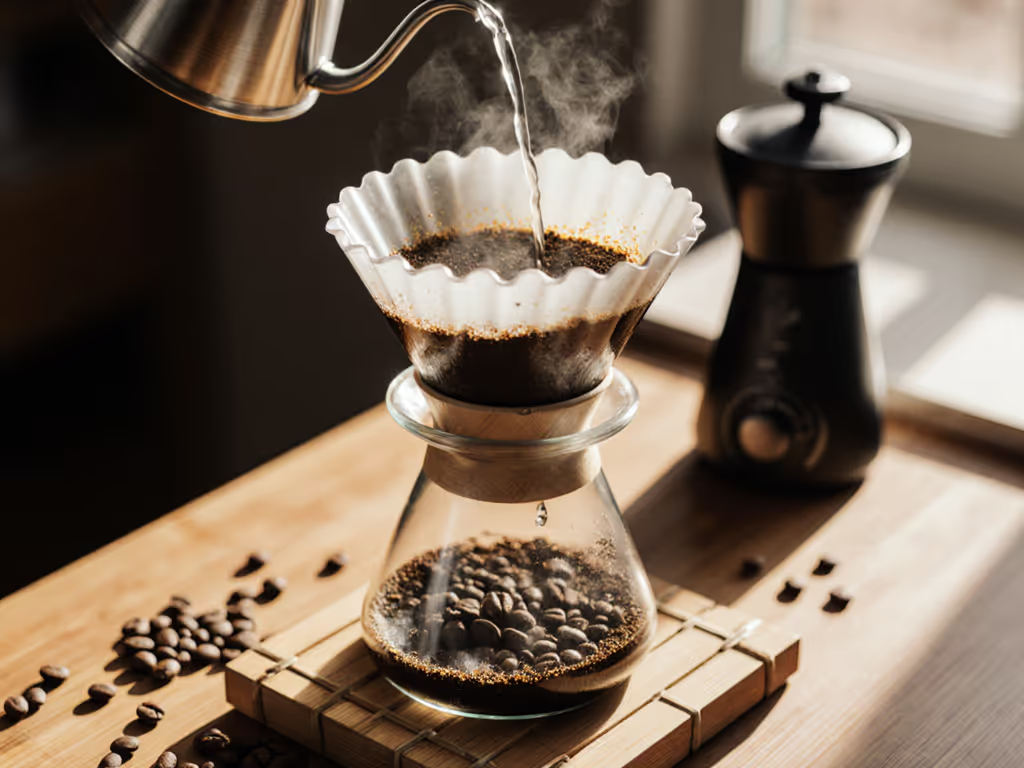
Step 2: Bloom for 30 seconds. Pour twice the bean weight in water (36-40 grams). Use water between 195-205°F (90-96°C).[1][2] Temperature sits here: hotter water extracts faster and can over-extract dense beans; cooler water under-extracts and leaves them sour.[2]
Step 3: Main pour - controlled, slow. Pour in 2-3 stages over 2:45 to 3:30 total time. Watch your pour rate; aim for 2-3 grams per second. Note your total time and taste.
Step 4: Log three variables. Grind fineness (e.g., "0.65 mm"), total brew time (e.g., "3:20"), and taste (e.g., "clean, slight citrus, balanced sweetness"). Taste is subjective, but pattern-matching across three or four brews teaches you fast.
Step 5: Adjust one variable. If the cup tastes sour or hollow, grind 0.05-0.10 mm finer next brew. If bitter or harsh, grind coarser or slow your pour rate. If muddy or heavy, use hotter water (up to 205°F) or pour faster. Temperature, grind, and flow rate are linked; changing one often requires adjusting another.
Flow first, then grind, then water; log it, repeat it.[2] On a Tuesday before my commute, I measured our tap hardness at 180 ppm, ground 20 grams on a mid-tier burr, and timed three pours on two drippers (a plastic flat-bottom and a ceramic cone). The plastic won by two points on TDS (Total Dissolved Solids) and by taste: cleaner sweetness, less astringency. The flat bottom's geometry held water longer, giving the dense Ethiopian beans the contact time they needed. I logged it and caught my train.
Does water chemistry affect dense bean extraction?
Yes.[2] Water hardness (the mineral content) changes how fast solubles dissolve and how many compounds stay in solution. Hard water (high in calcium and magnesium) can extract faster because minerals accelerate dissolution, but it also can mask acidity and mute clarity.[2] Soft water extracts slower and can taste thin.
If your tap water is above 150 ppm total hardness, dense beans may over-extract with standard pour-over timing. Try cooling water slightly (1-2°C below 200°F) or grinding coarser. If your tap is below 50 ppm, dense beans may under-extract; use 203-205°F and allow 3:30-3:45 brew time.
Use filtered or bottled water if your tap is consistently above 200 ppm or below 30 ppm.[2] Learn simple fixes and mineral targets in our pour-over water guide. This single variable often explains day-to-day inconsistency more than grinder variance.
What if my grinder struggles with very fine grinds?
Some mid-tier burr grinders can't reliably produce grinds finer than 0.70 mm without fines buildup (tiny dust particles that cause bitterness and channeling). If you hit that limit, two options exist:
Option 1: Adjust flow instead of grind. Use a slightly coarser grind but pour more slowly, reducing flow rate to 2-3 grams per second. This extends contact time without over-extracting the bean.
Option 2: Adjust water temperature. Raise it to 204-205°F to increase extraction speed slightly, compensating for the coarser grind. Monitor for bitterness; back off if you taste it.
How do I know if my beans are actually dense?
Ask your roaster for altitude and processing method. If they don't list it, assume medium density. Taste and weight help too: dense beans feel heavier per volume and often taste sharper (higher acidity) than their low-altitude cousins. After a few brews, you'll recognize the bean structure pour over profile.
Measurement as Ritual
Dense coffee extraction isn't complex; it's systematic. Measure grind fineness (in mm), brewing time (in seconds), and water temperature (in Celsius). To quantify extraction, use our TDS measurement guide. Taste and log the result. Adjust one variable. Repeat. Within three to five brews, your extraction window crystallizes, and your density-based grind adjustment becomes automatic.
The goal isn't perfection or prestige. It's a cup that tastes the same way (clean, sweet, balanced) every time you make it, using the constraints you have. That's repeatability. That's mastery on the weekday. Continue experimenting with different bean origins and altitudes; each teaches you how bean structure pour over behavior shifts across the range of beans you encounter.
Related Articles
Brewing Techniques & Coffee Science
High-Sugar Coffee Beans: Pour-Over Extraction Guide
12th Apr•8 min read
Brewing Techniques & Coffee Science
High TDS Water Pour Over: Flow & Extraction Guide
31st Mar•7 min read
Brewing Techniques & Coffee Science
Coffee Bean Size for Pour-Over: Identify & Adjust
11th Mar•9 min read