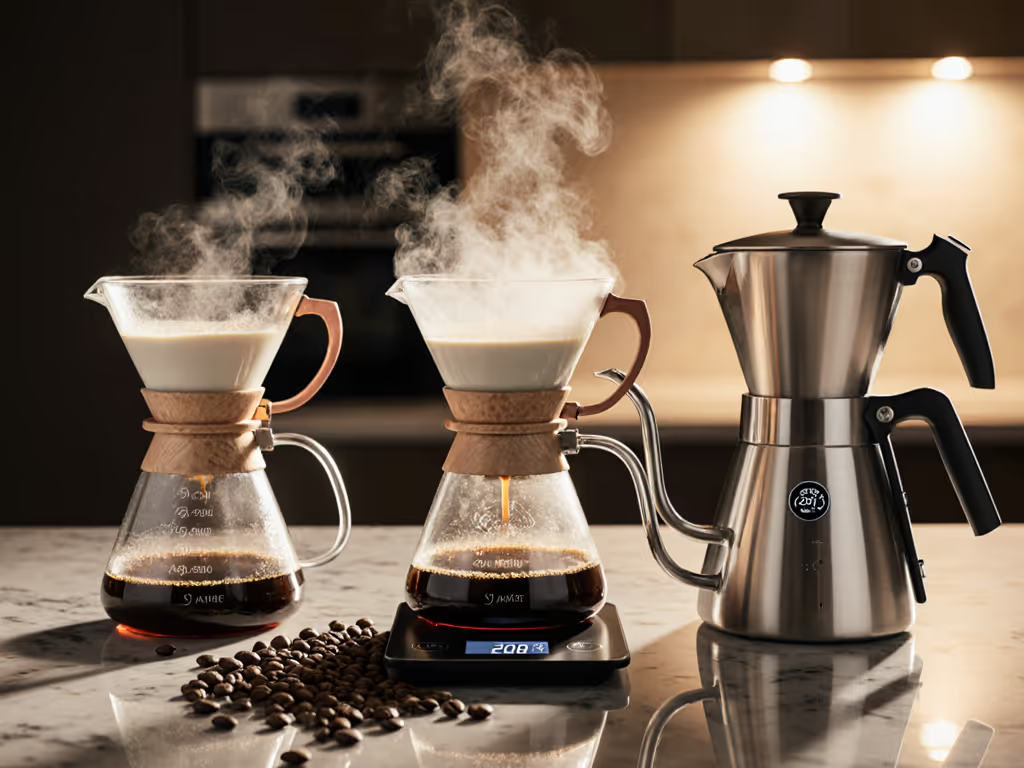
Pour Over vs Siphon: Science-Backed Brewing Clarity
By Luca Rinaldi • 31st Dec
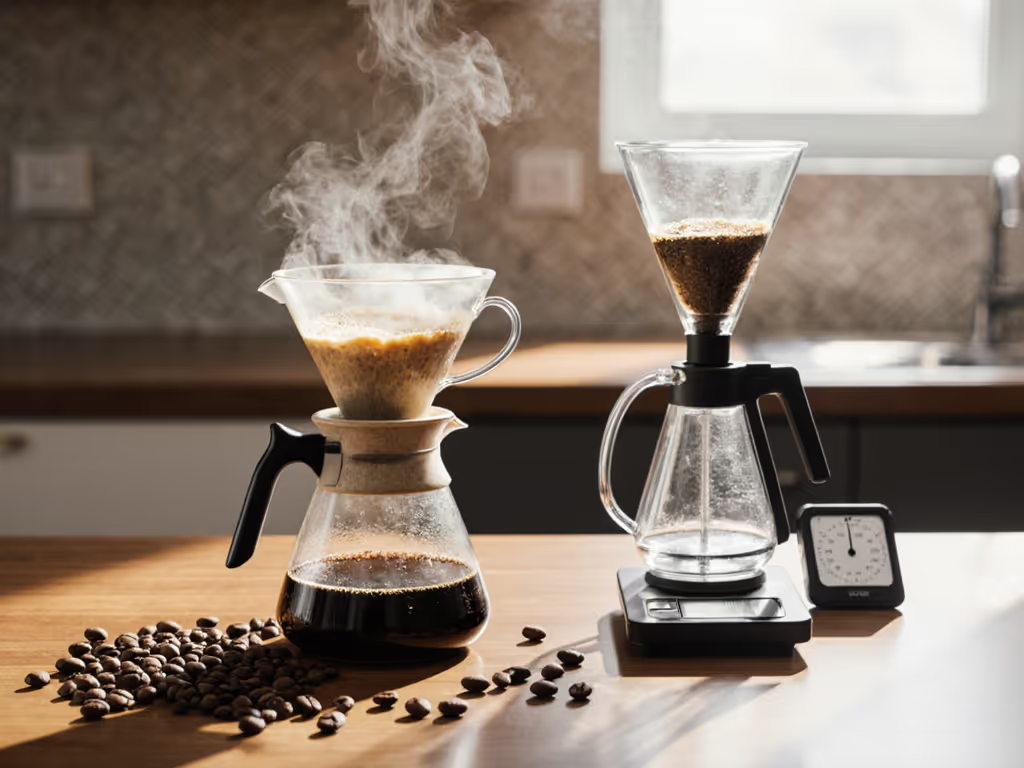
When you're weighing pour over vs siphon brewing methods, you're actually choosing between two fundamentally different extraction philosophies. Each offers distinct advantages for siphon coffee extraction versus gravity-driven pour-over methods, but which delivers consistent, cafe-level results in your actual weekday morning routine? For most home brewers juggling work, family, and limited time, the answer isn't just about flavor profiles but workflow efficiency. Fewer motions equal better coffee, and designing your morning ritual around reliable execution, not just recipe tweaking, is where real consistency begins.
Understanding the Extraction Mechanics: Beyond the Hype
Let's cut through the noise with science you can use before your morning shower. The core difference between these methods boils down to how water interacts with coffee grounds, which directly impacts your morning reality:
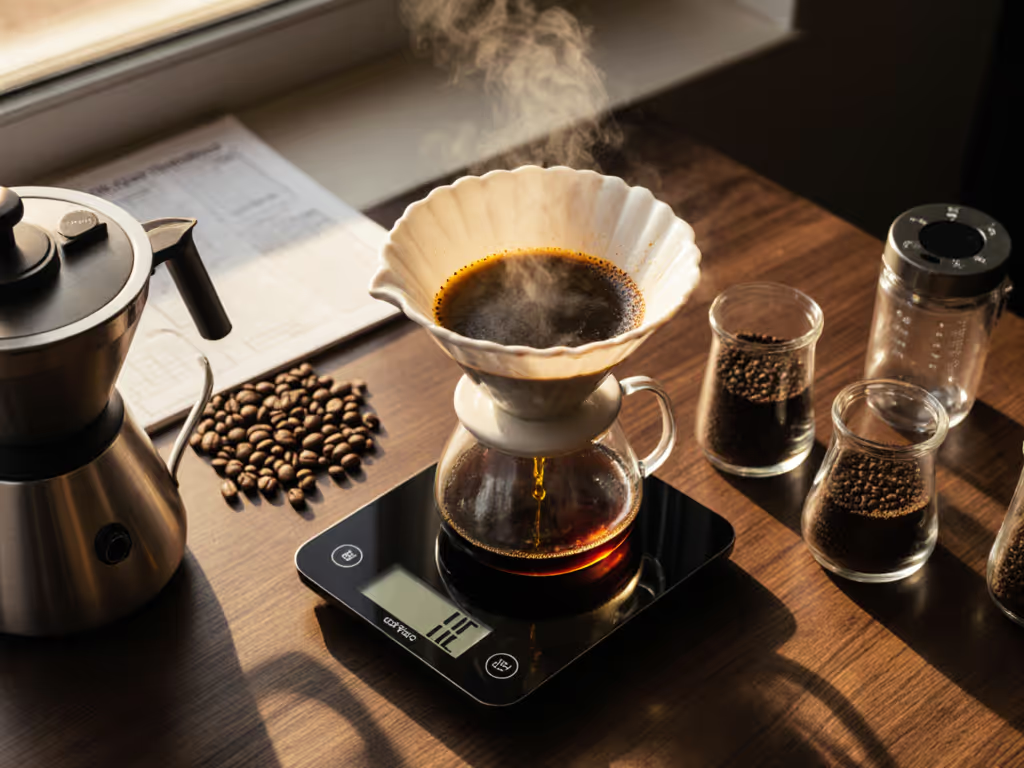
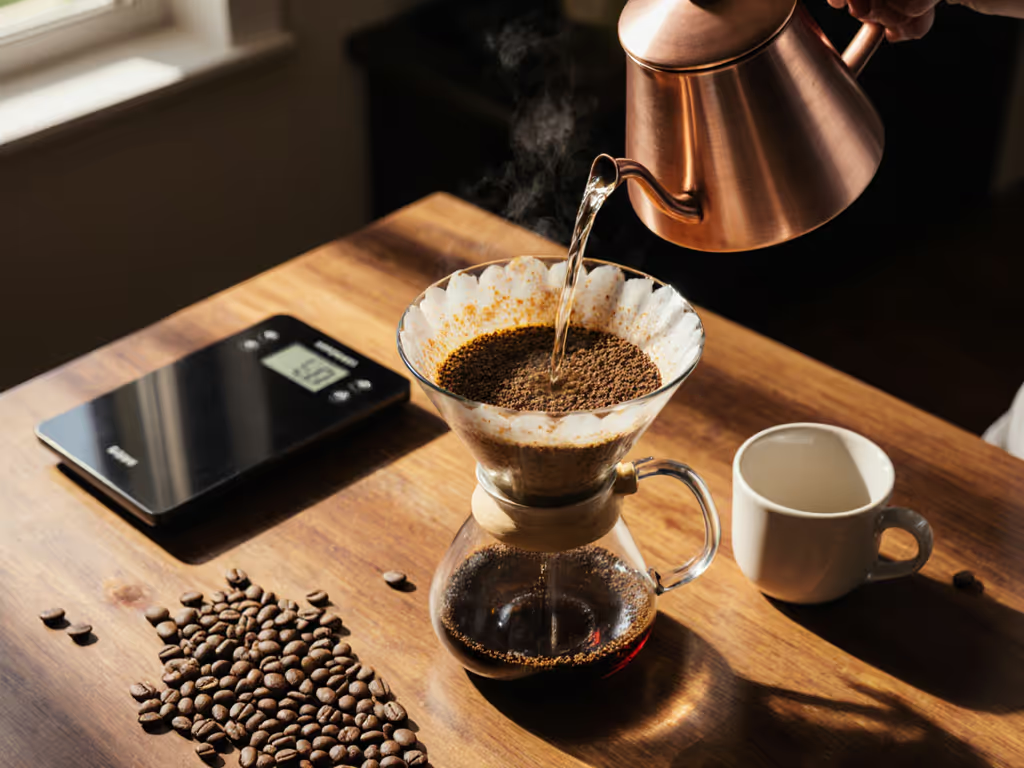
Pour-over relies on gravity alone: water passes through a bed of coffee grounds into your vessel below. This method requires precise manual control over water flow rate and temperature to prevent channeling or uneven extraction.
Siphon uses vacuum coffee brewing principles: heat creates pressure that forces water upward into the upper chamber where it immerses the grounds; cooling creates vacuum that pulls the brewed coffee back down through a filter.
The difference in extraction physics leads to tangible user experience differences: For a deeper dive into how variables like time, temperature, and grind shape extraction, see our pour-over extraction science guide.
- Pour-over typically takes 3-4 minutes with active involvement (pouring, timing)
- Siphon requires 6-8 minutes with constant monitoring of heat source and water transfer
For weekday mornings when you're catching up on emails or helping kids get ready, these time and attention requirements aren't trivial. One method demands continuous engagement, the other needs setup precision but less active monitoring during extraction.
Practical Workflow Analysis: Motion Efficiency Matters
Let's break down what each method actually looks like in your morning (timed to the second), because seconds count when you're making coffee before work.
Pour-Over Morning Routine (5:20-5:28 AM)
- 5:20 AM: Kettle starts heating (while you check emails)
- 5:22 AM: Grind 20g coffee (medium-fine, 70-100 on most grinders)
- 5:23 AM: Set up dripper, rinse filter with 40g hot water (drains while you prep oatmeal)
- 5:24 AM: Add coffee, start timer, bloom with 40g water
- 5:25 AM: Two controlled pours to 320g total (15-second pours with 15-second pauses)
- 5:28 AM: Done, coffee ready as you sit down
Total active time: 3 minutes, 30 seconds
Siphon Brewing Morning Routine (5:20-5:30 AM)
- 5:20 AM: Set up siphon brewer, measure water for lower chamber
- 5:21 AM: Start heat source (requires outlet or butane)
- 5:23 AM: Grind 22g coffee (finer than pour-over, 110-140 range)
- 5:25 AM: Water reaches upper chamber, add coffee, stir gently
- 5:26 AM: Monitor extraction (critical timing window opens)
- 5:28 AM: Remove heat source at the precise moment
- 5:29 AM: Wait for complete siphon action
- 5:30 AM: Separate chambers, pour coffee
Total active time: 5 minutes, with constant monitoring from 5:21-5:29
Notice the critical difference: pour over lets you batch tasks during draws (filter rinsing while prepping breakfast, bloom phase while attending to kids), while siphon brewing requires undivided attention during the most time-sensitive phase of your morning. When my son started waking at 5 AM, this reality forced me to rebuild my routine around methods where I could manage diaper duty while coffee brewed. Small motions, big payoffs.
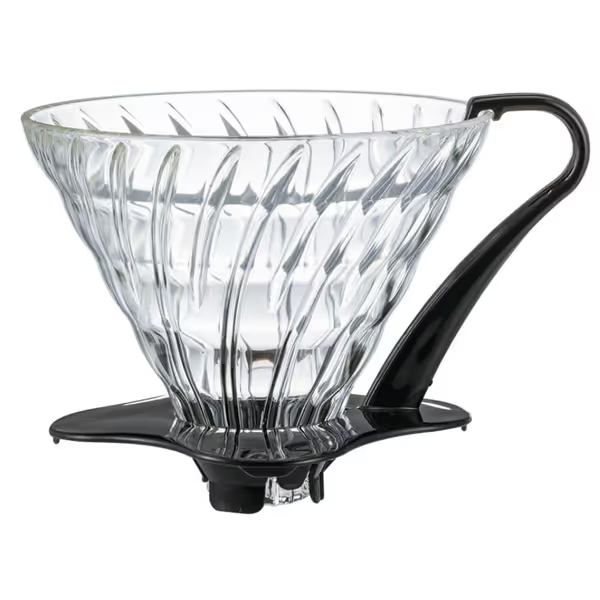
HARIO VDGN-03-B Coffee Dripper, Black
See your pour-over in opaque mugs, ensuring precise, consistent brewing.
$28.85
Body MaterialHeat-Resistant Glass
Body MaterialHeat-Resistant Glass
Pros
Clean aesthetic elevates counter appeal.
Easier visibility for precise pouring.
Cons
Paint peeling raises health and durability concerns.
Some find it overpriced for reported issues.
Customers find the coffee dripper has a clean aesthetic and works well, with one noting it's easier to fit in mugs. However, the durability receives mixed feedback, with some finding it sturdy while others say it's not durable. Moreover, the paint peeling and health concerns are significant issues, with multiple customers reporting paint peeling and concerns about drinking paint chips. Additionally, the value for money is criticized, with one customer describing it as overpriced for the quality.
Customers find the coffee dripper has a clean aesthetic and works well, with one noting it's easier to fit in mugs. However, the durability receives mixed feedback, with some finding it sturdy while others say it's not durable. Moreover, the paint peeling and health concerns are significant issues, with multiple customers reporting paint peeling and concerns about drinking paint chips. Additionally, the value for money is criticized, with one customer describing it as overpriced for the quality.
Hard Water Realities: How Tap Chemistry Affects Your Choice
Let's address a pain point that rarely gets proper attention: your actual tap water. Most home brewers don't realize how dramatically water chemistry impacts which method will work better for them.
In hard water areas (with high calcium/magnesium content):
- Pour-over benefits from pronounced dripper ribs that accelerate drawdown, preventing overextraction from minerals interfering with clean flow
- Siphon often outperforms with cloth filters that capture more minerals while preserving oils crucial for balanced extraction
A recent industry report confirmed that water hardness above 150 ppm significantly increases channeling risk in pour-over methods but has less impact on siphon extraction consistency. This explains why many home brewers in hard water regions report inconsistent pour-over results despite perfect technique: your water chemistry, not your skill, may be the bottleneck. For actionable setups by water type, read our water hardness and brewer geometry guide.
Sensory anchor: If your pour-over consistently tastes harsh or bitter despite temperature and grind adjustments, test with bottled water. If it improves dramatically, your water chemistry is likely the culprit, not your technique.
The Practical Decision Framework: Choose Based on Your Morning
Forget theoretical flavor comparisons. Let's build a workflow that works for your reality.
Choose Pour-Over If:
- Your weekday mornings have unpredictable interruptions (kids, pets, last-minute emails)
- You have hard water and want simpler cleanup (paper filters)
- Your available active time is under 4 minutes
- You value a simpler setup that fits in tight kitchen spaces
- You're using a mid-tier grinder with inconsistent particle distribution (pour-over is more forgiving)
Choose Siphon If:
- You have dedicated, uninterrupted morning time (6-8 minutes)
- You've addressed water chemistry concerns (reminerallized water or soft tap water)
- You want maximum flavor clarity from high-end specialty beans
- You enjoy the ritual as part of your mindfulness practice
- You're willing to manage more complex equipment maintenance
Critical checkpoint at 5:22 AM: Before committing to either method, ask: "Will I actually have this level of focus during my busiest weekday mornings?" The most beautiful siphon setup won't deliver consistent results if you're constantly distracted by morning demands. Make it easy to do right.
Gear Reality Check: What Actually Matters for Consistency
Let's be honest about gear: most reviews focus on aesthetics or minor flavor nuances rather than weekday practicality. Here's what matters for real-world consistency:
For Pour-Over Success:
- Dripper stability trumps aesthetics: choose one that won't tip when your cat brushes past it
- Ribs matter more than shape: pronounced ribs accelerate drawdown in hard water
- Filter fit is critical: no gaps between filter and dripper wall
The Hario V60 offers pronounced spiral ribs that accelerate drawdown in hard water conditions, plus its wide opening accommodates most carafes. When reviewing drippers, I time actual drawdown rates in 200 ppm water, and many look beautiful but perform poorly with real-world tap water. To lock in repeatable technique that matches your gear, follow our pour-over setup guide. The V60's glass version provides excellent heat retention while maintaining stability during pouring.
For Siphon Success:
- Heat source reliability determines consistency more than the brewer itself
- Cloth filter maintenance requires weekly attention (boiling, storing)
- Temperature control is the hidden challenge (alcohol burners vary wildly)
While siphon brewing offers incredible advantages in flavor clarity, the equipment demands more consistent attention than most weekday mornings allow. Unlike pour-over, where you can batch tasks during draws, siphon requires your full attention during the critical heat removal phase.
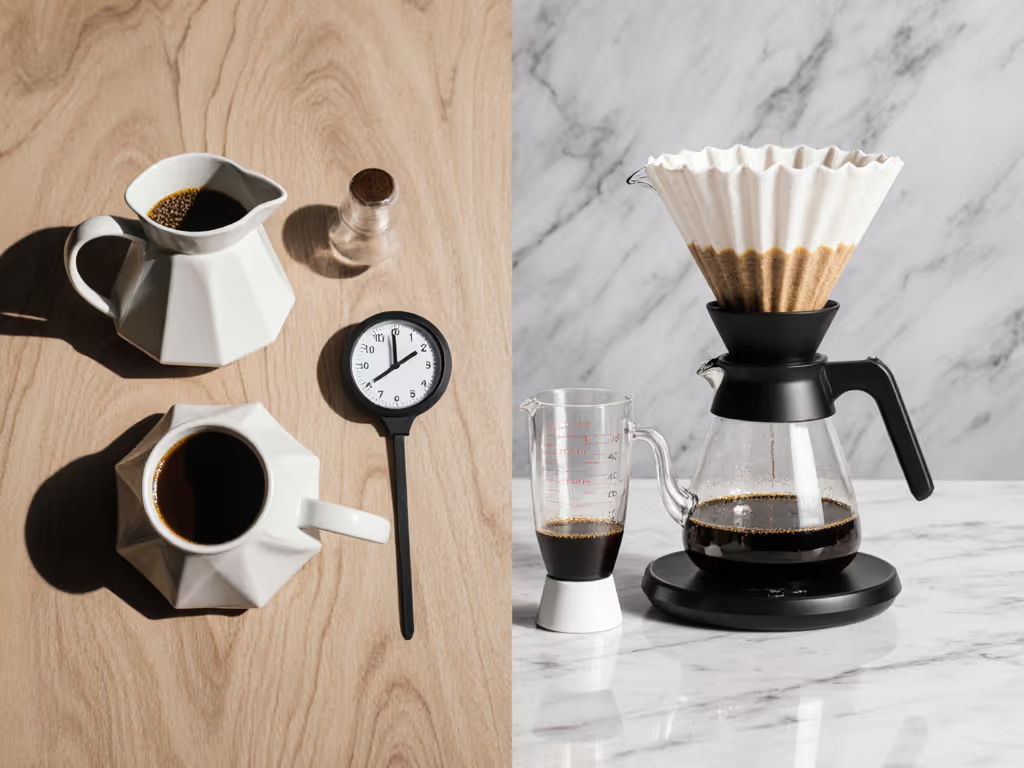
Your Action Plan: Build Your Own Workflow
Here's exactly what to do tomorrow morning (no extra gear required): If you want objective comparisons, learn how to measure pour-over TDS so your notes match what’s in the cup.
- Test your water with a $10 TDS meter (ideal range: 75-150 ppm)
- Run identical beans through both methods if possible (or try pour-over with paper vs. metal filter)
- Time your active involvement (not just total brew time)
- Note distractions during each method: where did you have to pause?
- Adjust within constraints: hard water? Try a siphon; tight schedule? Optimize pour-over drawdown
The real goal isn't choosing the "best" method: it's designing a routine that works consistently within your actual constraints. When I rebuilt my morning around my son's new wake-up time, I chose a dripper with pronounced ribs that handled hard water efficiently, allowing me to complete brewing during diaper changes and breakfast prep. Eight minutes total, zero stress, consistent cups.
Make it easy to do right, not just possible under perfect conditions. Your weekday coffee shouldn't be a stress test but a reliable micro-ritual that sets the tone for your entire day.
Small motions, big payoffs; design your morning for repeatable calm.
Next Step: Your 3-Day Workflow Test
For the next three mornings, run this simple experiment:
- Day 1: Standard pour-over with your current setup
- Day 2: If available, try siphon method; if not, try pour-over with different filter type
- Day 3: Optimize your chosen method based on Days 1-2 observations
Track:
- Total active time (not total brew time)
- Number of interruptions during critical phases
- Consistency of taste (use a simple 1-5 rating for balance)
This hands-on comparison delivers more insight than any theoretical comparison of siphon versus pour-over. You'll discover which method actually works with your real morning, not someone else's idealized routine.
After three days, you'll know exactly which approach fits your life. That's when true consistency begins: not with the perfect recipe, but with the method that works when life happens.
Related Articles