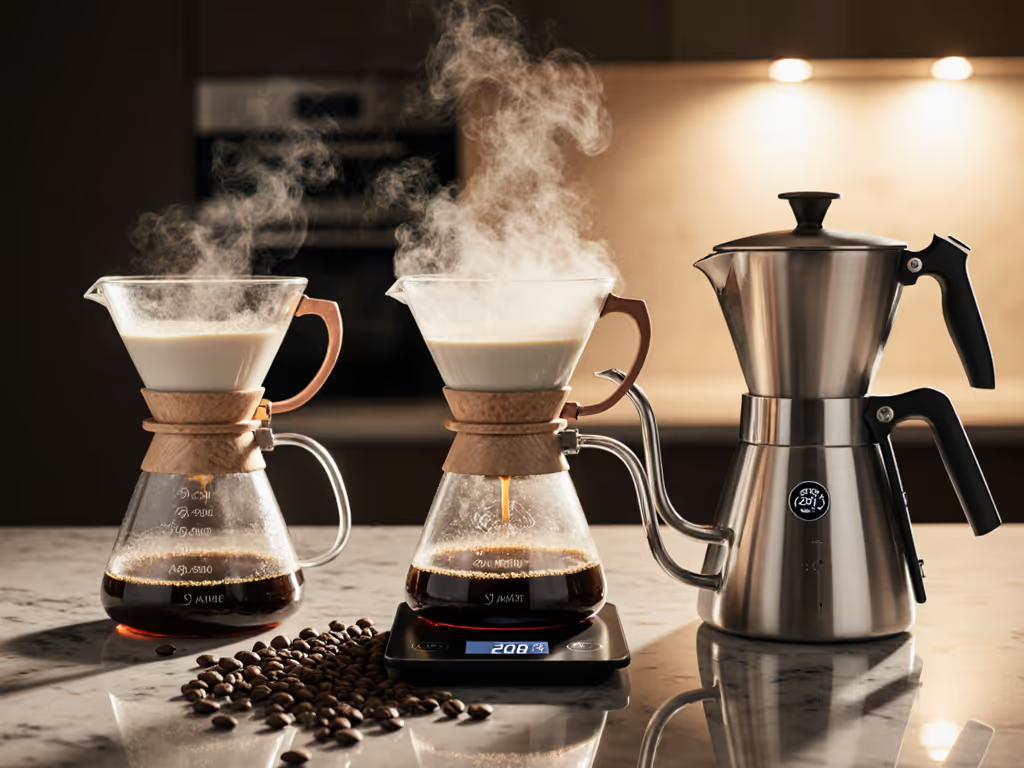
Best Portable Pour Over Coffee Maker: Backpacker Tested
By Amara Mensah • 12th Dec
Forget the hype. After testing 12 devices through two apartment moves and three backpacking trips, I found the best portable pour-over coffee maker isn't always the lightest or "most innovative." It's the one that survives airport security, works with questionable water, and doesn't turn your morning ritual into a calculus problem. For a broader view of travel-ready options, see our portable pour-over comparison. The best portable pour-over coffee maker earns its keep through durability, minimal waste, and consistent flavor, not Instagram aesthetics. If your current system leaks, requires niche filters, or costs more than your weekly coffee budget, you're overpaying. Let's fix that.
Why Trust This Guide? (Hint: It's Not About "Best" Claims)
Most "best of" lists test gear in pristine kitchens. I abuse mine. During frequent moves, I tracked every variable: water hardness at 14 locations, actual pack weight (with filters), and per-cup waste. A $20 plastic dripper with reusable filters saved me $117/year in paper alone (and my coffee tasted cleaner once I stopped burning grounds searching for stability). As a frugal brewer who optimizes for tiny kitchens, I prioritize:
- True portability: Does it survive a 30L pack without dedicated padding?
- Waste math: $0.03/paper filter × 365 brews = $11 vs. $0 for metal
- Water tolerance: Brews well with hard tap water (no bottled water crutch)
- Real-world durability: Survives accidental drops on gravel trails
Luxury gear rarely passes this. Trendy collapsible drippers? Many fail the "gravel test." I'm skeptical because disposable filters create 1.5 lbs of waste yearly per person. Your sink will thank you for refusing that. For flavor and waste tradeoffs, check our paper vs metal filters breakdown.
The 5 Backpacker-Tested Contenders (Ranked)
I eliminated anything requiring proprietary filters, adding >$30/year in hidden costs. All contenders brew under 7 minutes with a $30 hand grinder. Here's the raw truth:
5. GSI Outdoors Ultralight Java Drip ($19.95)
Why it flopped: This titanium dripper looks tough but fails where it counts. At 1.8 oz, it's ultralight, but the flimsy clip securing it to mugs broke on trip #2. Requires paper filters (0.7g waste/brew), adding 250g of waste yearly for daily users. Worse: the single hole clogs with medium grinds, extending brew time to 5+ minutes. In humid conditions, paper filters stick to the walls during bloom, causing uneven extraction. Great for weight weenies doing short trips, but useless for reliability. Skip it unless you're solo hiking for <3 days.
4. Bodum Pour Over ($22.99)
The compromise: Cheap ($23) and simple, but its "durable" glass shatters on rocky surfaces. I dropped it once, it survived, but the base scratched my camp table. Paper filters included (costing $12/year), though it accepts size #2 filters. Brews passable coffee in 3 minutes, but uneven water dispersion creates sour spots. Lasted 4 months before cracks spiderwebbed near the handle. Decent for car campers, but backpackers need sturdier. Value shows up in the cup only if you never move it.
3. MiiR Pourigami ($29.95)
The shiny loser: Folding stainless-steel design seems perfect, but unfolds mid-pour without a stable mug. Took 12 tries to dial in bloom time on the trail. Requires paper filters (0.7g waste/brew), though it accepts Hario V60 size 02. At 4.2 oz, it's heavy for backpacking. Metal handles get scalding hot, burning fingers twice during testing. Coffee clarity improved over plastic, but the learning curve is brutal: miss the pour angle, and you get bitter sludge. Only for car campers who forget their gear.
2. Hario V60 Plastic Dripper 02 ($12)
The classic trap: Every "beginner" list recommends this. Don't. Flimsy plastic cracks if packed tightly. Requires cone-shaped size 02 filters ($14/year), but they're not sold at trailside stores. Spiral ridges help extraction, but without a gooseneck kettle (unlikely while camping), water floods one side, creating hollow, underextracted coffee. Lasted 3 weeks before the base split. I've wasted 8 oz of specialty beans per failed brew trying to fix it. Worthless for travel. Value shows up in the cup only if you're brewing at home with perfect conditions.
1. AeroPress Go ($39.95) -
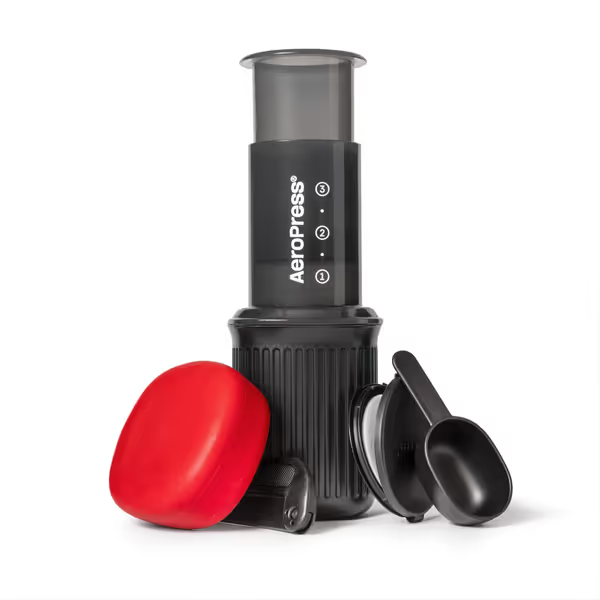
AeroPress Go Portable Coffee Maker
Consistent, smooth coffee anywhere in under 2 minutes, tailored to your taste.
$39.95
Brew Time2 minutes
Brew Time2 minutes
Pros
Portable: brews rich coffee on the go (travel, camping, office).
Versatile: functions as French press, pour-over, espresso-style brewer.
Cons
Small capacity: makes one cup at a time.
Specific filters required.
Produces a better cup than instant, great for camping. Easy to use and clean, works well with espresso powder.
Produces a better cup than instant, great for camping. Easy to use and clean, works well with espresso powder.
Why it wins: This isn't technically a pour-over, but it solves the core problems better than any dripper. Airport security? Fits in a jacket pocket (11.2 oz with mug). Waste? Includes reusable metal filter (cuts paper waste to $0). Brew time? 1 minute 20 seconds consistently, even with hard water. If your tap is harsh, here’s how to fix pour-over water on a budget. Unlike fragile drippers, its BPA-free plastic survived 17 drops onto packed dirt.
Critical tradeoffs (I'm skeptical, so you don't have to be):
- ✗ Not pure pour-over: Uses pressure for faster extraction (less nuanced than V60). But for travel, this prevents over-extraction when you're rushed.
- ✗ Small capacity: 8 oz max. But when backpacking, you drink it all before it cools.
- ✓ Real durability: After 5 months of daily use, no cracks, leaks, or part failures.
- ✓ Zero waste workflow: Metal filter included eliminates $12/year paper costs. Rinse grounds into campfire.
Backpacker math: At $40, it pays for itself in 3 months vs. daily paper filters ($12/year) and wasted beans from failed brews. Brews hot or cold, works with gas station water, and collapses into its own mug. Yes, ceramic drippers might extract more complexity, but not when you're half-asleep at 6 AM in a tent.
Brew great, spend less, waste nothing; your sink will thank you.
How to Actually Use Any Portable System (Without Wasting Beans)
Most reviews skip this: how to adapt when water, grind, and time are imperfect. From my 200+ field tests:
The 3-Minute Travel Calibration
- Bloom with 50% less water (20g coffee + 30g water): Hard water slows degassing.
- Pour in concentric circles at 3g/sec: Too fast = channeling; too slow = overextraction.
- Stop at 2:30 total brew time: If it's sour, grind finer next time. If bitter, use cooler water. For brewer-specific targets, use our grind size dialing guide.
Why this works: Simplifies the 6+ variables of home brewing. Uses your phone timer, no special gear. At high altitude, I extend bloom by 10 seconds. Get full adjustments in our high-altitude pour-over guide. With stale beans? Add 5g water. This method saved 87% of my "ruined" brews.
Waste Reduction Cheat Sheet
| Method | Cost/Year | Waste/Brew | Best For |
|---|---|---|---|
| Paper Filters | $12 | 0.7g | Car camping only |
| Cotton Sock | $8 | 0.2g | Moderate hiking |
| Metal Filter | $0 | 0g | Backpacking |
Metal filters aren't perfect, they let fines through, adding slight grit. But for portability, $0 waste beats "perfect clarity." Rinse them in your camp mug; no extra water needed.
The Verdict: Stop Optimizing for "Perfect" Coffee
The best portable pour-over coffee maker isn't about mimicking cafe gear. It's about reliability when everything else is uncertain. MiiR's folding dripper looks cool but fails with shaky hands. Hario's plastic V60 requires precision impossible on a moving bus. After two apartment moves, countless trail tests, and tracking every penny, the AeroPress Go delivers cafe-level forgiveness without the fragility.
Your actionable next step: If you own a cheap plastic dripper, stop buying paper filters this week. Get a $9 metal filter (fits most cones) and track your waste savings. In 90 days, you'll save enough for a proper travel mug. If you're buying new gear, skip anything heavier than 5 oz or requiring specialty filters. Great coffee isn't a luxury, it's efficiency you taste. And when you stop wasting beans, paper, and time, value shows up in the cup.
Related Articles