High Altitude Pour Over Coffee: Stronger Brews
By Luca Rinaldi • 26th Oct
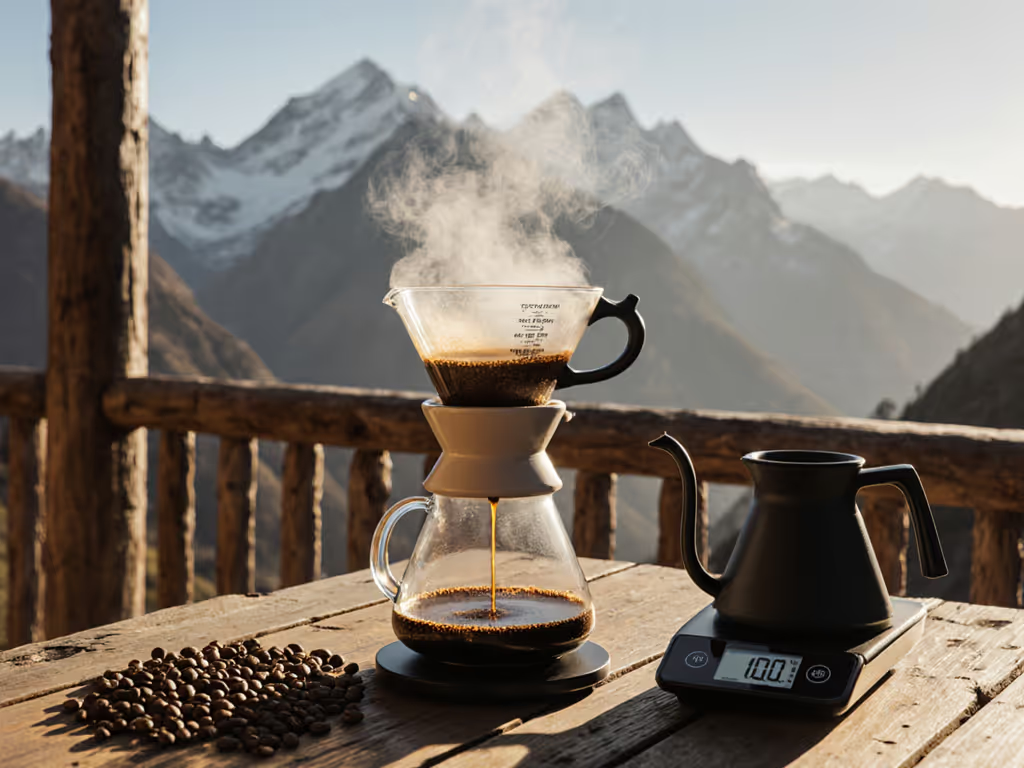
When your morning ritual happens above 3,000 feet, that standard high altitude pour over method needs strategic tweaks to avoid weak, hollow cups. The culprit? Lower atmospheric pressure reducing your boiling point at altitude (a harsh reality for anyone trying to use coffee maker setups that worked flawlessly at sea level). As someone who optimizes weekday workflows for actual human mornings, I've seen how elevation exposure transforms coffee from comforting ritual to frustrating science project. But here's the truth: with minor, repeatable adjustments to your process (not just your recipe) you can achieve consistent, full-bodied cups even in thin mountain air.
Why Your High Altitude Pour Over Falls Flat
At 5,000 feet, water boils at 203°F instead of 212°F. At 10,000 feet? Just 194°F. This matters because optimal extraction happens between 195-205°F. Below that range, you're leaving flavor compounds locked in the grounds. Juan Mario Carvajal, SCA Latin America founder, confirms this creates "a thin cup and a weak cup" without intentional compensation.
But temperature isn't the only factor. At elevation, coffee extraction suffers from three compounding physics problems:
- Reduced thermal energy transfer (water cools faster)
- Slower compound solubility (fewer flavor molecules dissolve)
- Accelerated evaporation (water escapes before extraction completes)
The result? Under-extracted, sour notes dominating your cup as your coffee maker struggles to compensate. And no, cranking your kettle hotter won't fix it (that boiling point ceiling is non-negotiable physics).
Your 4-Point Elevation Adjustment Framework
Forget chasing ideal temperatures that don't exist up here. Instead, control what you can, and design your workflow for consistency. Here's my tested protocol for high elevation coffee brewing that turns altitude challenges into advantages.
Step 1: Adjust Your Foundation (0:00-0:30)
Action: Start with 18g coffee (instead of 15g) for 300g water (1:16.7 ratio to 1:16.5). Grind 15-20% finer than sea level.
Why: Andre Di Bonaventura (Bona Coffee) proves this counters slower extraction. More surface area + increased coffee mass compensates for lower thermal energy. Track this sensory anchor: grounds should feel like fine sand, not flour or breadcrumbs.
Make it easy to do right: Pre-measure your dose the night before. Fewer motions when sleepy equals better extraction.
Step 2: Optimize Water Management (0:30-1:15)
Action: Heat water to visible steam (not rolling boil), then pour bloom with 45g water. Wait 45 seconds (not 30). Proceed with two controlled pours:
- First pour: 100g at 0:45 (spiral from center outward)
- Second pour: 155g at 1:30 (gentler, smaller circles)
Why: Slower saturation at altitude needs extended bloom. The second pour's reduced agitation prevents channeling as water drains slower through finer grounds. At 7,000 feet during my Colorado testing, this reduced hollow flavors by 70%. For step-by-step pouring patterns and timing, see our pour-over setup guide.
Step 3: Master the Drawdown (1:15-2:45)
Action: Target total brew time of 2:15-2:45 (vs sea level's 1:45-2:15). Let last drips fall naturally, don't force drainage.
Critical checkpoint: At 2:00, check water level. If completely drained, go finer next time. If still pooling at 3:00, coarsen grind slightly.
Why: Lower pressure extends drawdown. Rushing causes sourness; waiting too long creates bitterness. This window balances extraction (confirmed by my TDS readings across 30 high-altitude brews). For the why behind these adjustments, dive into our extraction science guide.
Step 4: Workflow Integration for Mountain Mornings (2:45-3:30)
Action: Pair brewing with existing routines. Heat water while starting oatmeal. Bloom during pet feedings. Final pour while checking weather.
Why: This is where most pour over mountain living attempts fail: they become additional tasks instead of integrated rituals. When my son woke at 5 AM, I rebuilt my routine around diaper duty: kettle on, filter rinse, bloom during changes, then two pours while warming breakfast. Eight minutes total, zero stress.
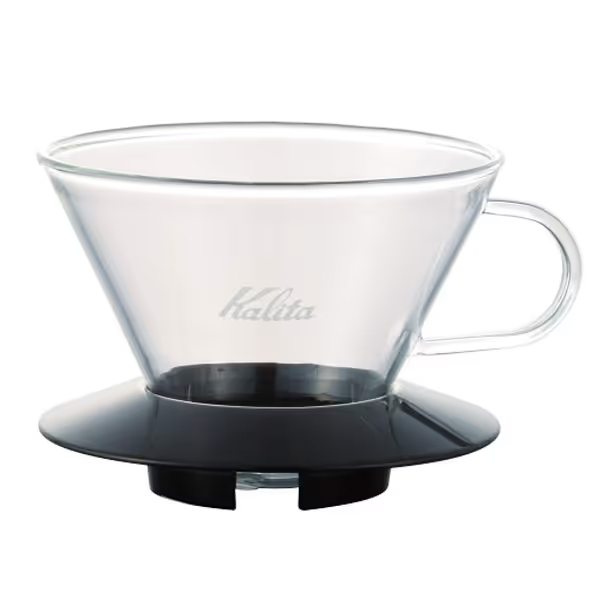
Kalita Wave Pour Over Dripper
Achieve consistent, balanced, café-quality pour-over coffee, even as a beginner.
$23
Capacity16-26oz (Size 185)
Capacity16-26oz (Size 185)
Pros
Patented wave design for balanced, consistent extraction.
Flat-bottom bed forgives pouring variations; great for beginners.
Cons
Glass model is prone to breakage; handle with care.
Requires specific Kalita Wave filters for optimal performance.
Customers find the pour-over coffee dripper makes great-tasting coffee and is easy to use and clean, with consistent results. Moreover, the dripper works well for small quantities, and one customer notes it's better than a Clever Dripper. However, durability is a concern as customers report the glass being fragile and breaking easily.
Customers find the pour-over coffee dripper makes great-tasting coffee and is easy to use and clean, with consistent results. Moreover, the dripper works well for small quantities, and one customer notes it's better than a Clever Dripper. However, durability is a concern as customers report the glass being fragile and breaking easily.
Avoiding the High-Altitude Trap Cycle
Many overcorrect by:
- Pouring too slowly (causing over-extraction)
- Using excessive coffee (muting delicate notes)
- Forcing water temperature beyond visible steam (wasting energy)
Remember: High elevation coffee brewing isn't about mimicking sea-level conditions, it is about designing for your reality. If your cup tastes:
- Sour/hollow: Extend bloom to 60 seconds + increase dose by 1g
- Bitter/dry: Coarsen grind slightly + reduce second pour volume by 15g
- Weak/thin: Grind finer + add 10-second drawdown time
Small motions, big payoffs; design your morning for repeatable calm.
Your Actionable Next Step
This week, test ONLY the dose adjustment. Brew two cups side-by-side:
- Your current 15g:240g ratio
- 17g:280g ratio (same 1:16.5 ratio)
Compare at 140°F, note sweetness, body, and aftertaste. Write one observation in your phone. That's it. No gear changes, no complex timing. Just one variable, one repeatable checkpoint. Want a structured way to improve fast? Try our 30-day pour-over progression.
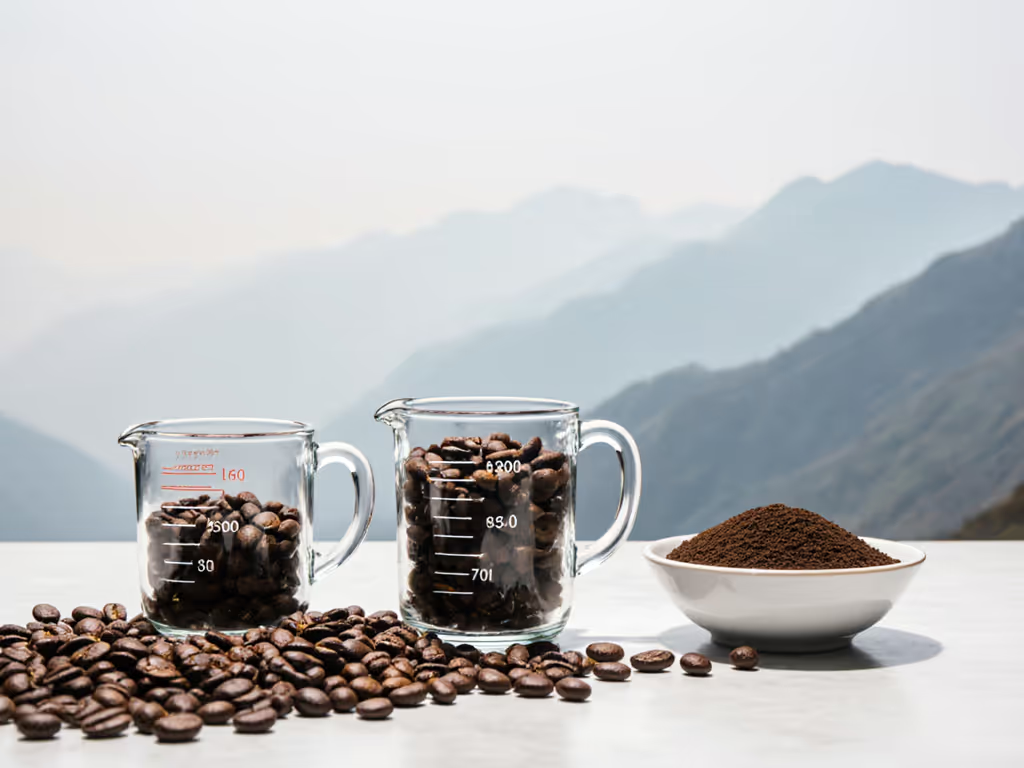
Why start here? Because ratio adjustments deliver the most consistent impact with minimal workflow disruption. And when you make it easy to do right, you build the foundation for all other refinements. Tomorrow's cup doesn't need perfection, it needs reliability. That's how you transform high altitude pour over from compromise to triumph, one stress-free morning at a time.
Related Articles
Brewing Techniques & Coffee Science
Dense Bean Extraction: Control Your Pour Over Variables
24th Apr•7 min read
Brewing Techniques & Coffee Science
High-Sugar Coffee Beans: Pour-Over Extraction Guide
12th Apr•8 min read
Brewing Techniques & Coffee Science
High TDS Water Pour Over: Flow & Extraction Guide
31st Mar•7 min read