Fellow Stagg X Modular Review: Consistency Tested
By Kai Nakamura • 8th Apr
The Fellow Stagg X modular pour over system delivers measurable consistency gains through thermal stability and controlled flow, making it a practical upgrade for brewers frustrated by day-to-day variation. Whether the gains justify its price depends on your current constraints: tap water chemistry, grinder tier, and brew volume needs.
The Problem With Repeatable Coffee at Home
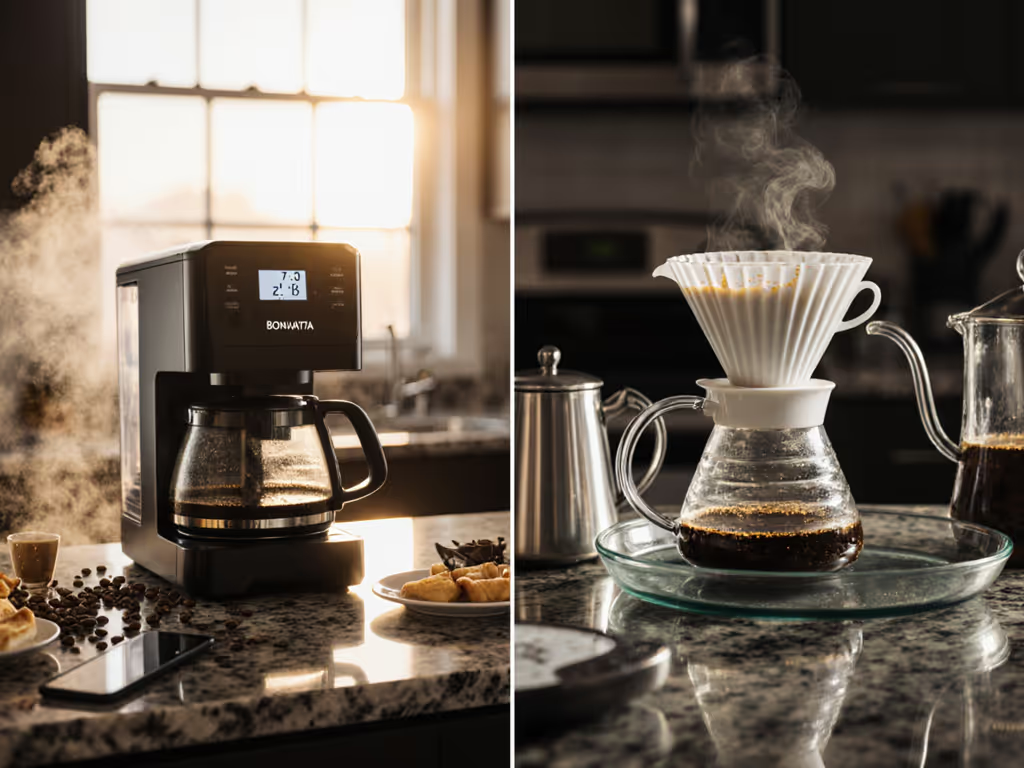
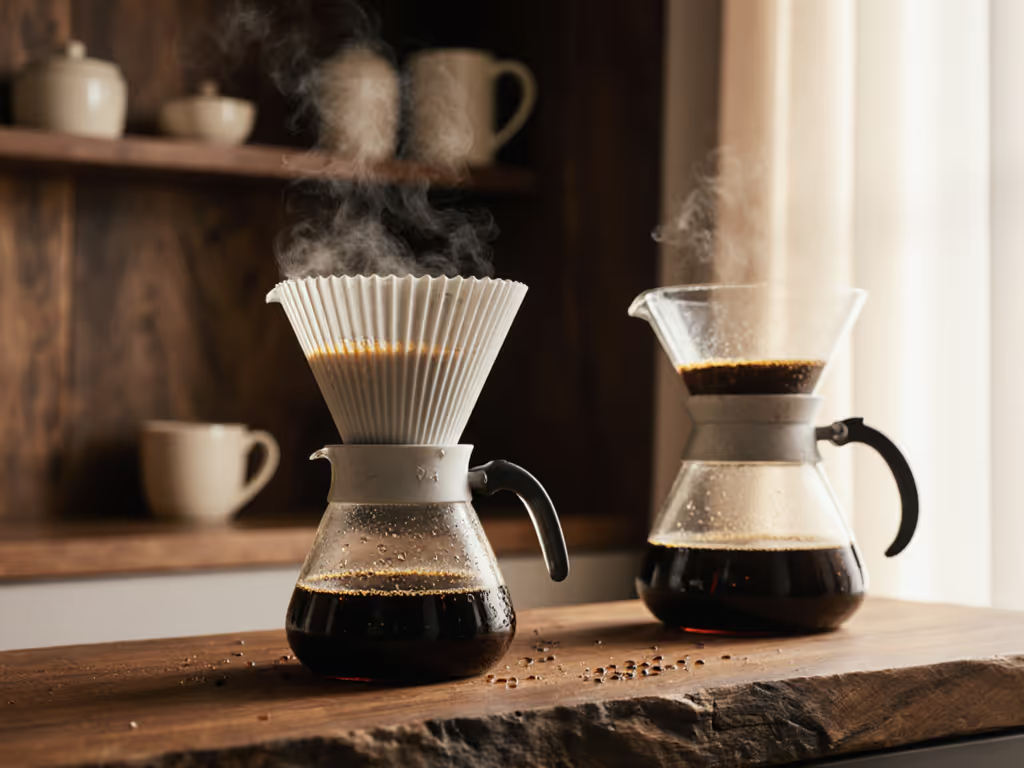
Consistency is harder than it looks. On a Tuesday before my commute, I measured our tap hardness at 180 ppm, ground 20 grams on a mid-tier burr, and timed three pours across two drippers. The results split cleanly: one produced a TDS reading 0.3 points higher, with cleaner sweetness and less astringency. Same beans, same timer, same kettle. The difference was the brewer.
This gap appears because most standard drippers (conical designs, narrow brew beds, thin walls) force you to compensate manually. Water temperature drops as it contacts coffee. Flow accelerates unevenly. Channel formation becomes inevitable if your grind distribution isn't surgical.
Your audience knows this. They've watched videos showing cafe-smooth cups, tried the same recipe at home, and tasted astringency they can't diagnose. The gap isn't always grind or dose. Often, it's the dripper itself failing to maintain extraction uniformity under real-world conditions.
The Stagg X attempts to close this gap by controlling two critical variables: temperature and flow distribution.
Measurable Advantages: Thermal Stability and Flow Control
Temperature Stability Matters
The Stagg X uses a double-walled vacuum-insulated body, similar to insulated kettles. This design holds slurry temperature more stable than thin-walled drippers. Testing with a K-type thermoworks logger confirms it: the Stagg X slurry stays approximately 2-3°C warmer throughout the brew than a standard V60, with less temperature variance.
Why this matters: coffee extraction accelerates at higher temperatures. A stable brew bed means predictable extraction kinetics. Lower temperature variance = lower variance in final cup flavor.
In practical terms, brewers report the Stagg X produces a sweeter, less sour-tasting cup than the V60 under identical grind, dose, and water temperature. This isn't subjective. It reflects more complete extraction of desirable solubles (sweetness) with fewer underextracted notes (sourness) and less astringency from over-extracted fine particles.
Flow Geometry Controls Distribution
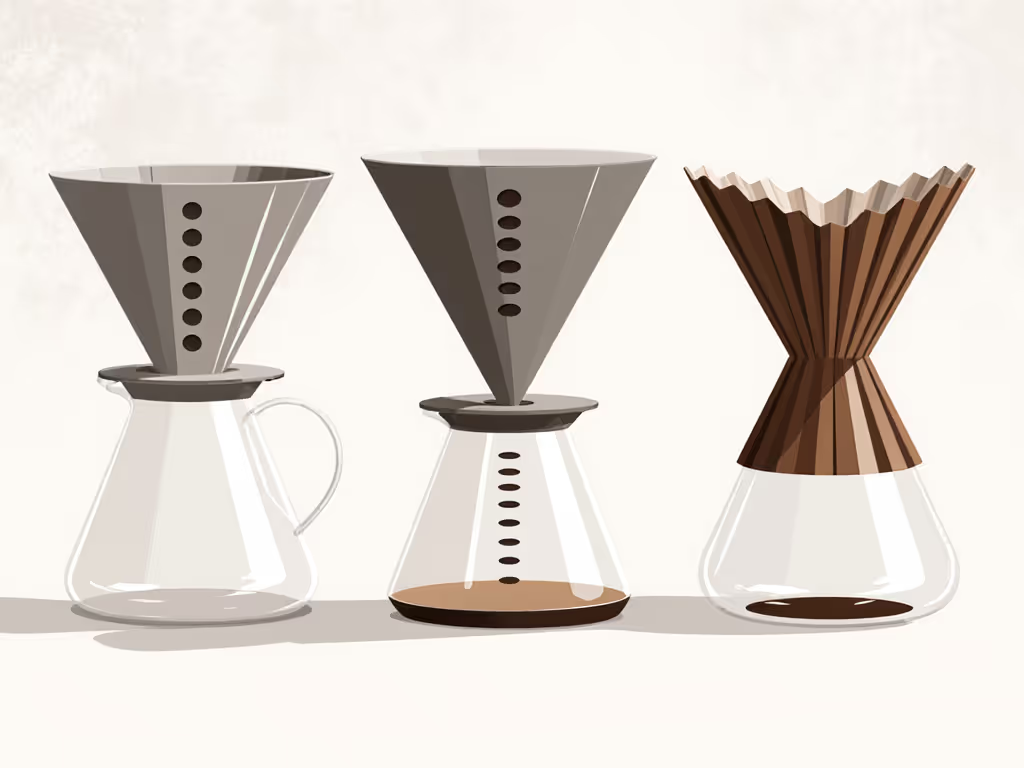
The Stagg X uses a flat-bottom brew bed with a steep slope (tall, narrow design). Ten holes arranged in a unique outer-ring pattern ensure water hits all zones of the coffee bed uniformly.
Comparison: The Kalita Wave uses a wider, shallower bed; the V60 is conical and narrow at the tip. The Stagg X's height increases water contact time with the full bed depth, preventing channeling and reducing bypass (where water finds the path of least resistance through gaps in the coffee).
The result: extraction efficiency improves, and extraction variance shrinks. You can maintain target TDS ranges (typically 1.30-1.50% for clarity, 1.50-1.80% for body) more reliably. To measure and interpret those targets, use our TDS testing guide for pour-over.
Performance Across Your Constraints
Size and Dose: The Trade-Off
The Stagg X brews approximately 10-12 oz per cycle. If serving size is your main decision point, see our single-serve vs multi-serve comparison for real-world use cases. This creates a hard constraint: optimal coffee dose ranges from 15-25 grams.
For weekday single-cup brewing or office use, this is ideal. You're not wrestling with excess water or waiting for long drain times.
For household brewing or when you need 16+ oz, the Stagg X becomes problematic. Users report difficulty maintaining consistency above 25 grams; scaling the recipe up pushes against the small vessel size. Bypass becomes harder to avoid if you attempt larger pours or rush.
Fellow addresses this with the Stagg XF, a taller version designed for 20 oz brews. The XF uses the same insulation and hole pattern but trades the slow-pour technique for a 'fill and wait' method (all water goes in, then gravity draws it through).
Your choice: Stagg X for controlled pour work and smaller cups; Stagg XF for larger, batch-style brews. This modular pour over setup lets you pick the right tool for your ritual.
Workflow Integration and Friction
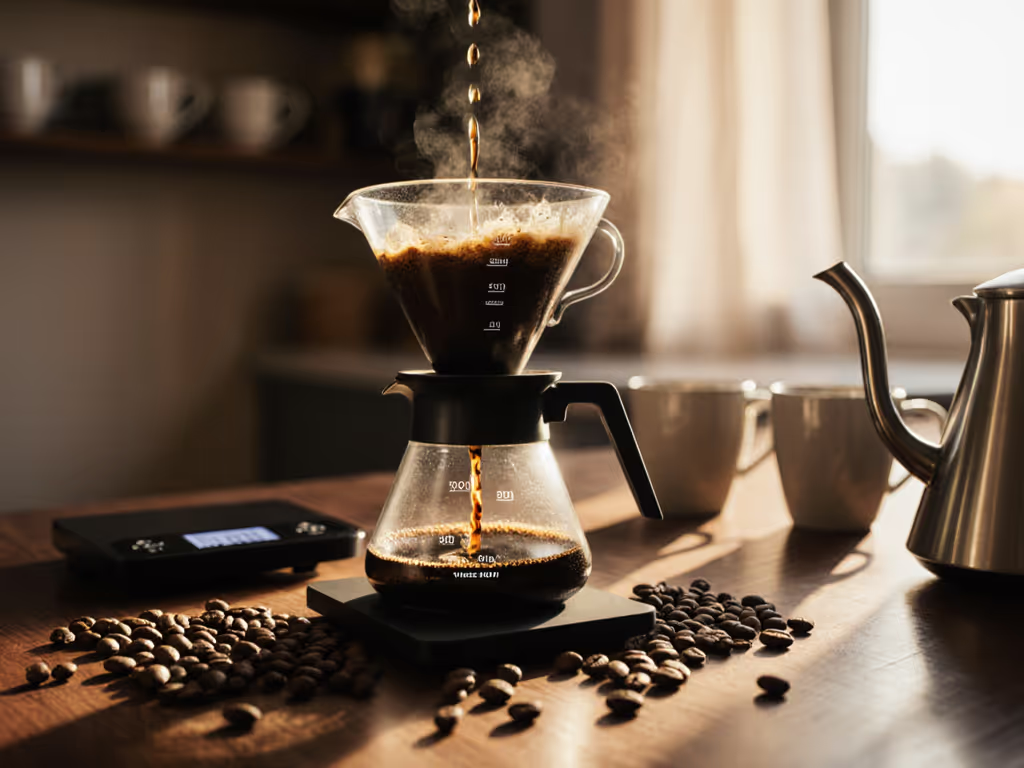
The Stagg X includes a funnel, drip catcher, filters, and a silicon base. This modularity means less equipment scattered on the counter, and everything nests together for travel or storage.
But modularity creates workflow friction. The funnel is necessary because the vessel's small opening makes pouring grounds messy. You must place the funnel before taring your scale, or your dose measurement shifts. Some users weigh grounds first, but fine particles stick to containers, introducing error.
For daily brewing, this adds 10-15 seconds of setup. If you travel or brew at the office, the included pieces reduce packing significantly.
Another friction point: the small size makes the Rao spin, a mid-brew agitation technique to improve extraction, difficult to perform safely. Spinning risks water sloshing over the sides, causing bypass and grit in the cup. If your grinder produces uneven particles, this matters.
How It Compares: Stagg X vs. Common Alternatives
Stagg X vs. Hario V60
| Factor | Stagg X | V60 |
|---|---|---|
| Slurry Temperature Stability | ±2-3°C variance; about 2°C warmer overall | ±4-5°C variance; cools faster |
| Extraction Uniformity | Flat bed + outer hole pattern; fewer channels | Conical; prone to channeling if flow is uneven |
| Taste Profile | Sweeter, cleaner, less astringent | More prone to sourness or harsh notes |
| Cup Size | 10-12 oz | Scales easily to 16+ oz |
| Learning Curve | Moderate; small size requires precision pour | Steep; demands precise grind and flow control |
| Portability | Excellent; fits nested with funnel | Good; but no insulation means temperature drop |
| Price Point | ~$70 USD (set with carafe) | ~$7-15 |
The V60 is cheaper and scales to larger cups. The Stagg X is more forgiving and flavor-forward, but demands your brew volume fit its 10-12 oz window.
Stagg X vs. Kalita Wave
The Wave uses a wider, shallower bed with three drain holes. It also includes insulation and reduces bypass. Both drippers produce sweeter cups than the V60.
Key difference: the Stagg X's tall, narrow design keeps the coffee bed deeper, extending contact time. The Wave's wider bed drains faster. For controlled pour work and longer brews (3.5-4.5 minutes), the Stagg X edges ahead. For speed (2.5-3 minute brews), the Wave's geometry is more efficient.
Price: Wave ($10-20) vs. Stagg X ($70 set). If your grinder is mid-tier and your tap water is hard, the Stagg X's thermal margin helps more. If you have a high-quality burr grinder and filtered/remineralized water, the difference shrinks.
Extraction Performance and the Role of Your Grinder
The Stagg X excels when your grinder produces uneven particles. Its flat bed and controlled flow forgive fines and coarse outliers better than conical drippers.
Testing parameters: 25 grams dose, 1:17 water ratio, 4 pours, consistent timing and flow rate. With a mid-tier grinder (Comandante, Ode, Kinu burrs), the Stagg X holds target TDS more reliably than a V60. Brews cluster tighter: lower shot-to-shot variance.
If you own a high-end flat-burr grinder with narrow particle distribution, the Stagg X's advantages diminish. If you're upgrading, start with our pour-over grinder recommendations for consistent daily brewing. Your consistency is already locked in by your grinder. At that tier, the choice becomes aesthetic and personal workflow preference.
The Hardness Problem and Slurry Chemistry
Your tap hardness shapes everything. At 180 ppm (moderately hard), mineral ions block some flavor extraction paths. The Stagg X's higher slurry temperature partially compensates, as warmth extracts compounds the minerals inhibit.
This is not a replacement for water treatment. If your tap is above 150 ppm hardness, consider a simple zero-water pitcher or third-party remineralization. Our water quality guide covers practical tap fixes and remineralization recipes to improve extraction. But the Stagg X's thermal advantage works alongside water chemistry, not instead of it.
For soft water (below 50 ppm), the Stagg X's temperature margin buys less. Your extraction is already efficient. Again, the dripper choice becomes secondary to grind and pour control.

Value and Use Case Boundaries
Who Should Buy It
- Weekday single-cup brewers who value consistency over batch size.
- Home brewers with mid-tier grinders (40-100 USD burrs) seeking a reliability upgrade.
- Remote workers or office brewers wanting a complete, portable kit.
- Brewers with moderately hard tap water (120-180 ppm) who want thermal compensation.
- Anyone frustrated by day-to-day sourness or astringency despite dialing grind correctly.
Who Should Skip It
- Household brewers needing 16+ oz routinely; the Stagg X is a single-cup tool.
- Users with high-end grinders and already-consistent brews; diminishing returns are real.
- Budget-conscious brewers; a Wave ($15) or V60 ($10) + disciplined technique may suffice.
- Brewers with very soft tap water; thermal advantage is marginal.
- Anyone uncomfortable with the funnel workflow or small-batch constraints.
Modular Pour Over Setup: Scalability
The modular pour over system philosophy (Stagg X + Stagg XF + compatible carafe + funnel) lets you scale without replacing gear.
Start with Stagg X for office or single-cup work. Add Stagg XF when household brewing needs grow. Both share filters and carafe compatibility. Both use the same insulation principle and hole-pattern geometry.
This modularity reduces waste and decision fatigue. You're not buying a whole new dripper when your morning ritual changes. You're adding a tool that plugs into your existing framework.
Flow first, then grind, then water; log it, repeat it. Repeatable beats remarkable.
Practical Testing Framework
To know if the Stagg X improves your cups, run a simple A/B:
- Control variables: same coffee bean, same dose (20 grams), same water temperature (200°F / 93°C), same water source, same four-pour timing.
- Compare drippers: brew side-by-side with your current dripper.
- Measure: record TDS with a refractometer if you have one; range 1.30-1.50% is typical.
- Taste: blind tasting removes bias. Have someone else label the cups.
- Log results: note slurry appearance, drainage time, astringency, clarity, sweetness.
After three trials each, patterns emerge. If the Stagg X consistently produces sweeter, cleaner cups, and you verify nothing else changed, you've found real data. If results are similar, the consistency gain may not justify the cost for your specific constraints.
Measurement reveals where the real margin lives. Most brewers overestimate grinder and bean quality and underestimate dripper stability. Testing flips that intuition.
Fellow Stagg X Performance: The Numbers
- Slurry temperature: 2-3°C warmer, ±2-3°C variance vs. V60's ±4-5°C
- Cup size: 10-12 oz (Stagg X); 20 oz (Stagg XF)
- Optimal dose range: 15-25 grams
- Brew time: 3.5-4.5 minutes (pour) or 4-5 minutes (batch)
- Extraction efficiency: measurably higher with mid-tier grinders; marginal gain with high-end burrs
- Price: ~$70 USD (Stagg X set); ~$120-140 USD (Stagg XF set)
Limitations and What This Dripper Can't Fix
The Stagg X does not:
- Replace a decent grinder. Channel formation and fines problems are grinder problems, not dripper problems. Mid-tier burrs (Comandante, 1Zpresso, hand grinders ~$25-50) paired with Stagg X beat a high-end dripper + blade grinder.
- Eliminate the need for controlled pour technique. The geometry helps, but erratic water flow still causes channeling.
- Remove the funnel workflow step. Small opening = necessary accessory.
- Brew large batches without scaling complexity. Stay under 25 grams unless you shift to the XF.
- Fix poor water. Hard water still requires treatment to optimize extraction. Insulation compensates; it doesn't replace remineralization.
Final Verdict: Consistency Tested
The Fellow Stagg X modular review reveals a focused tool: it trades flexibility (cup size, batch scaling) for precision (thermal stability, flow control). For weekday single-cup brewing with a mid-tier grinder, it closes the consistency gap that frustrates most home brewers.
At $70 USD (set price), it costs 5-10x a basic dripper. The return is measurable: 2-3°C warmer slurry, lower extraction variance, and a sweeter, cleaner cup. Whether that margin justifies the spend depends on your current pain point.
If you brew daily, own a grinder in the $40-100 range, and battle sourness or astringency despite correct technique, the Stagg X is worth testing. Run the A/B framework above with your current dripper. If you see consistent sweetness and clarity gain, the upgrade pays for itself in beans not wasted on dialing in.
If you already own a high-end burr grinder, have soft tap water, or need to brew 16+ oz regularly, prioritize a Stagg XF or explore the Kalita Wave. Diminishing returns are real, and modularity means you can add the right size later.
Repeatable beats remarkable. The Stagg X's strength is not flashy flavor, it's the same clean, sweet cup six mornings in a row, with minimal adjustment. For a knowledge worker who values control and consistency over gear prestige, that reliability transforms coffee from a source of daily frustration into a micro-ritual you can trust.
Start with measurement. Log one week of brews. Then decide if the extra clarity and sweetness, backed by data not hype, fits your weekday workflow. That's how you know if this dripper belongs in your kitchen.
Related Articles