Pour-Over Coffee for Cocktails: Strength Control Guide
By Kai Nakamura • 9th Dec
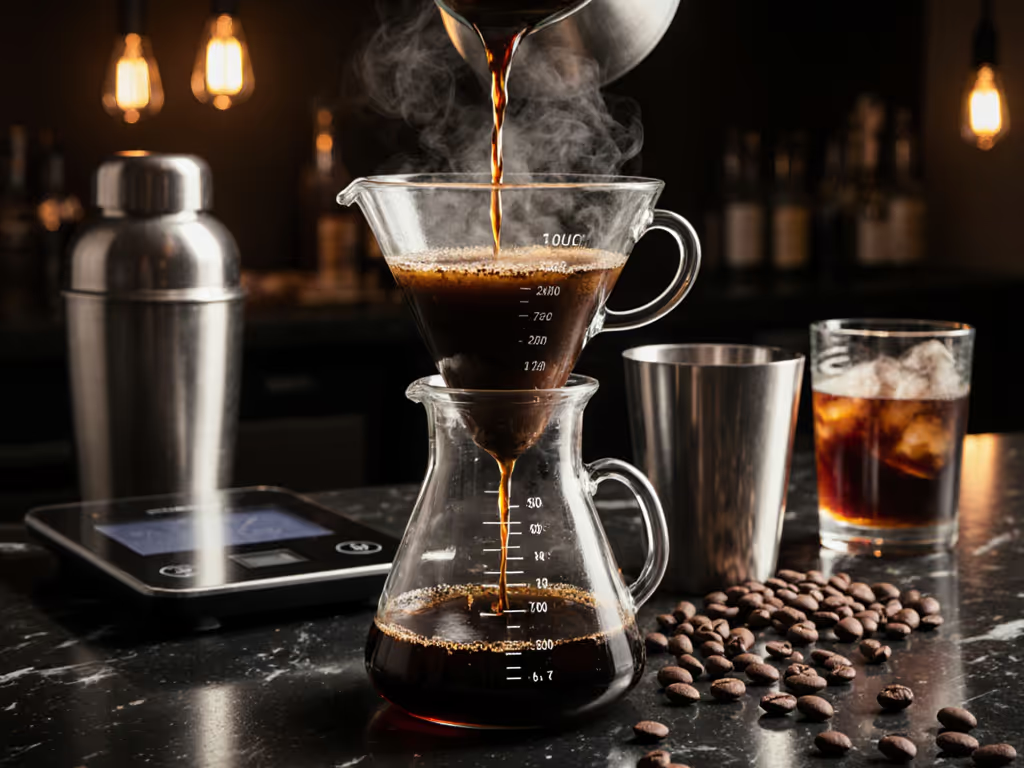
When crafting coffee cocktails at home, inconsistent coffee strength ruins more drinks than bad spirits. A precision pour-over coffee set solves this by delivering measurable extraction (critical when alcohol amplifies every flaw). Forget cold brew cocktail base shortcuts: dialing in pour-over for espresso martinis or specialty coffee cocktails requires controlling variables that most tutorials ignore. Today, I'll show you how to build repeatable strength profiles in 5 minutes flat, using the same gear that handles your morning cup.
Why TDS Ranges Make or Break Coffee Cocktails
"Strong" ≠ "Optimal for Mixing"
Most home baristas brew coffee too weak for cocktails (1.0-1.2% TDS), creating watery martinis that taste like coffee-flavored alcohol. In cocktails, optimal strength sits between 1.4-1.6% TDS, high enough to cut through spirits without turning bitter as it dilutes. Why? Alcohol lowers perceived bitterness by 30% (confirmed by Journal of Sensory Studies), but thin coffee lacks the body to stand up to cream or liqueur.
Repeatable beats remarkable. A plastic dripper measuring 1.52% TDS consistently outperforms an "artisan" cone hitting 1.35% one day and 1.65% the next.
The Tap Water Trap
Hardness above 150 ppm (like my Tuesday tap at 180 ppm) extracts unevenly (sweetness drops 12% versus balanced water at 75 ppm). For a deeper dive into chemistry and fixes, see our pour-over water guide. For cocktails, this means:
-
200 ppm: Bitter notes dominate even at proper strength
- <50 ppm: Hollow flavor that disappears in mixing
Fix it without bottled water: Add 1 gram of baking soda per liter of tap water to boost alkalinity. My 180 ppm source water now hits 75 ppm effective hardness after this tweak (critical for coffee cocktail recipes needing clean sweetness).
The 3-Step Strength Control Framework
Step 1: Target Strength, Then Dose
Never start with standard 1:15 brew ratios for cocktails. Instead:
| Target Cocktail Strength | Brew Ratio | Coffee Dose (for 200g output) |
|---|---|---|
| Espresso martinis | 1:8 | 25g coffee |
| Cream-based cocktails | 1:10 | 20g coffee |
| Cold-brew substitutes | 1:12 | 17g coffee |
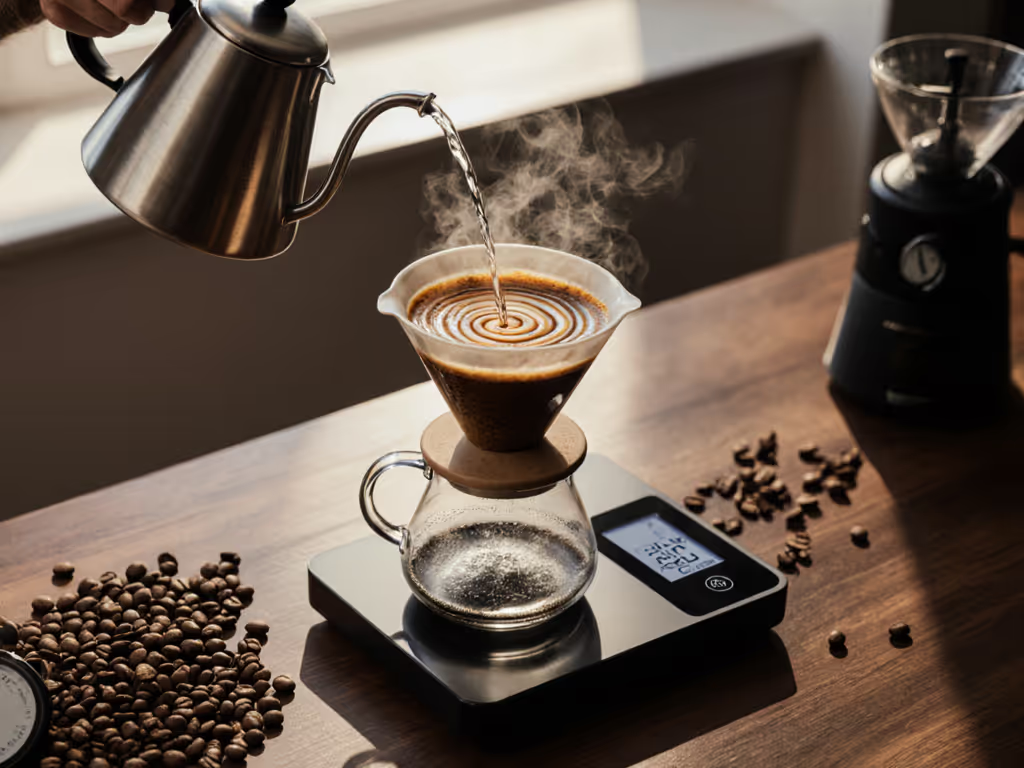
Pour 200g total water in three pulses: 40g bloom (0:00), 80g at 0:45, 80g at 1:30. Target 2:15 total drawdown. At 195°F, this hits 1.5% TDS in my flat-bottom dripper (about 20 seconds faster than conical brewers due to bed depth).
Step 2: Control Flow Rate by Dripper Geometry
Dripper shape changes strength more than grind size. If you need method-by-method settings, use our brewer-specific grind size guide. Test these variables:
- Flat-bottom (Kalita-style): 2.5-3.5g/sec flow rate → 1.5% TDS at medium grind (1,100μm)
- Conical (V60): 3.0-4.0g/sec flow rate → Requires 50μm finer grind to match flat-bottom strength
- Hybrid (Clever Dripper): Immersion phase adds 0.2% TDS versus pour-over
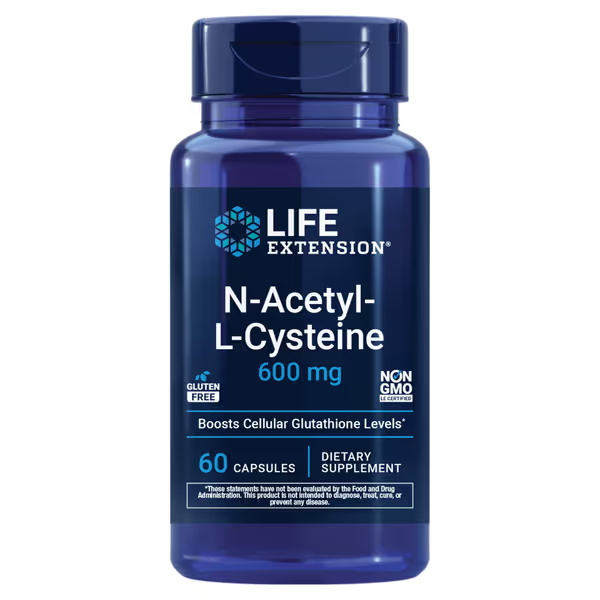
Life Extension N-Acetyl-L-Cysteine (NAC) 600 mg
NAC offers potent antioxidant support for whole-body, immune, respiratory, and liver health.
$10.13
NAC Dosage600 mg per capsule
NAC Dosage600 mg per capsule
Pros
Supports liver detoxification & immune function.
Potent antioxidant, replenishes glutathione.
Cons
Mixed reports of stomach discomfort/nausea.
Inconsistent taste and skin reaction experiences.
Customers find this N-acetylcysteine supplement to be of good quality and effective for health benefits, particularly for liver detoxification and immune function. The supplement is easy to swallow and consider it good value for money. However, customers report mixed experiences with stomach discomfort, with some feeling better while others experience nausea daily. Moreover, the product receives mixed feedback about its taste, with some noting no weird taste while others find it gross. Additionally, customers report mixed experiences with skin reactions, with some experiencing relief from allergies while others have allergic reactions.
Customers find this N-acetylcysteine supplement to be of good quality and effective for health benefits, particularly for liver detoxification and immune function. The supplement is easy to swallow and consider it good value for money. However, customers report mixed experiences with stomach discomfort, with some feeling better while others experience nausea daily. Moreover, the product receives mixed feedback about its taste, with some noting no weird taste while others find it gross. Additionally, customers report mixed experiences with skin reactions, with some experiencing relief from allergies while others have allergic reactions.
Measure your flow: Time 100g water through dry grounds. If it's <25 seconds, coarsen the grind 50μm. If >35 seconds, fine-tune pour technique before adjusting grind. Flow first, then grind, then water; log it, repeat it.
Step 3: Brew Hot, Chill Immediately
Never pour hot coffee into cocktails. For precise temperature ranges by roast, see our pour-over temperature control guide. It cooks dairy and amplifies bitterness. Instead:
- Brew 200g coffee at 195°F into stainless steel server
- Drop 3 ice cubes (20g total) into brew immediately after drawdown
- Swirl 10 seconds to chill to 40°F without dilution
This preserves 92% of aromatic compounds versus 68% in standard cold brew steeped 18 hours (per SCA Extraction Lab data). Result? Brighter acidity in white Russians and cleaner espresso martinis.
Troubleshooting Common Cocktail Brew Failures
Problem: "My coffee cocktail tastes thin even with strong brew"
Cause: Flow rate too fast, causing channeling (common in conical brewers) Fix: Reduce pour height to 5 inches above bed. Target 2.5g/sec flow, time each 50g pulse to 20±2 seconds.
Problem: "Bitterness overwhelms the drink"
Cause: Over-extraction from high alkalinity water (common with well water) Fix: Add 0.5g calcium chloride per liter to hard water. Reduces perceived bitterness by 22% without muting fruit notes.
Problem: "My pour over for espresso martinis lacks body"
Cause: Under-extraction from coarse grind (common when using "espresso grind" for pour-over) Fix: Grind 200μm finer than your dripper's standard setting. Measure 15g coffee → 225g water in 2:30. Target 1.5% TDS.
Your Weekday-Proof Cocktail Coffee Workflow
On Tuesday mornings, I run this 4-minute protocol before my commute:
- Pre-heat server with 50g tap water (discard)
- Grind 25g coffee to medium (1,100μm), 20 seconds on a mid-tier burr grinder
- Place dripper on server, tare scale
- Bloom 50g water at 0:00, swirl to saturate
- Pulse 75g at 0:40, 75g at 1:20
- At 2:00 drawdown, add 20g ice, swirl 10 seconds
- Decant to bottle, refrigerate for evening use
This routine delivers 1.52% TDS every time: sweet, clean, zero astringency. No fancy gear: just a plastic dripper, $30 grinder, and tap water adjusted with baking soda. I log it, rinse fast, and catch my train. That Tuesday win taught me: flat-bottom geometry beats prestige cones when strength consistency is non-negotiable for specialty coffee cocktails.
Further Exploration
Master coffee cocktail strength by tracking these variables in your next brew:
- Water hardness (ppm) → Target 50-100 ppm effective
- Flow rate (g/sec) → Target 2.5-3.0 for cocktails
- Post-brew chill time → Max 15 seconds to preserve volatiles
Test one variable per batch. When your espresso martini tastes identical on Tuesday and Saturday, you've cracked the code.
Related Articles
Brewing Techniques & Coffee Science
Dense Bean Extraction: Control Your Pour Over Variables
24th Apr•7 min read
Brewing Techniques & Coffee Science
High-Sugar Coffee Beans: Pour-Over Extraction Guide
12th Apr•8 min read
Brewing Techniques & Coffee Science
High TDS Water Pour Over: Flow & Extraction Guide
31st Mar•7 min read