Bean Size & Shape: How They Affect Pour-Over Extraction
By Maya Patel • 19th Feb
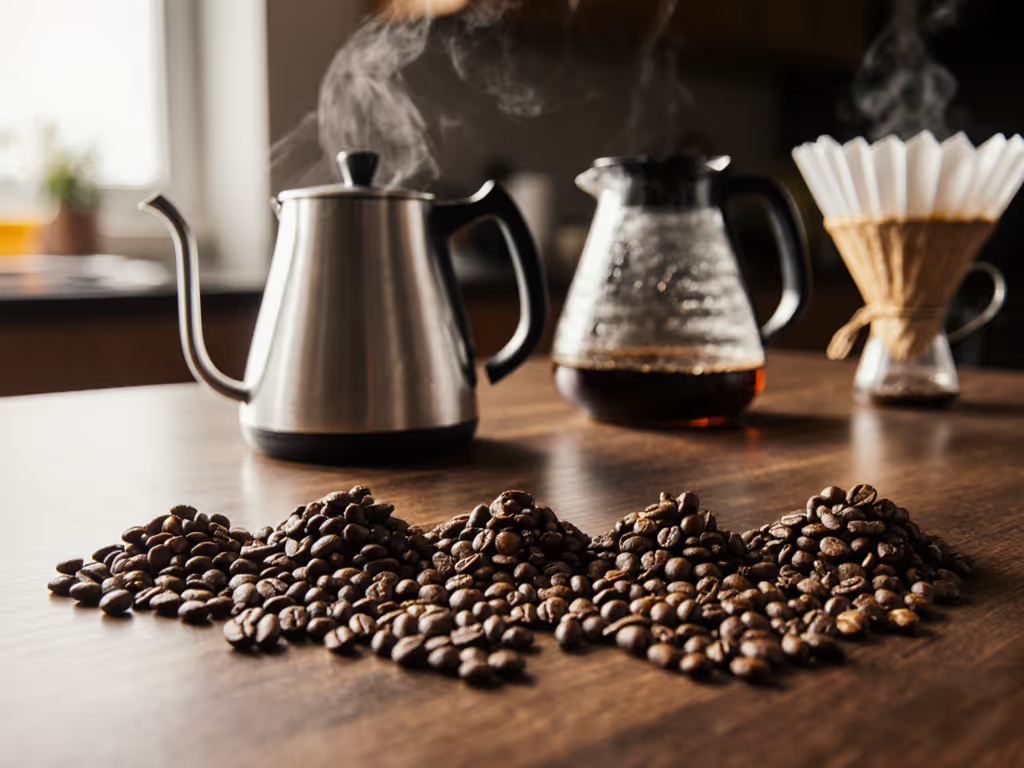
You pick up two bags of coffee, one with dense, uniform beans, another with lighter, more irregular ones. You grind them the same way, use the same recipe, and somehow they taste completely different. It feels like magic, but it's actually bean size pour over dynamics at work long before you brew. Let's unpack what's really happening and why it matters more than you might think.
The truth is, bean characteristics don't just affect flavor (they affect how your grinder behaves), which cascades into extraction, balance, and whether your cup sings or falls flat. Once you understand this chain, you'll stop blaming your technique for every inconsistency. For a deeper dive into variables behind balanced extraction, see our extraction science guide.
Common Questions About Bean Size, Shape, and Extraction
What's the connection between whole beans and the grind I actually use?
Here's where many brewers get stuck: they assume grind quality is purely about grinder mechanics. But bean density and particle size (especially variation) matter just as much.[1][2] When beans are more uniform in size and density, the grinder produces a more consistent particle distribution. When they're erratic, your grinder struggles, creating uneven particles: some too coarse, some too fine.[3][4]
Why does this matter? Because extraction depends entirely on surface area.[3] When water flows through your coffee bed, it needs consistent contact with particles to pull out flavors evenly. Uneven grind sizes mean some particles extract quickly (over-extracting and tasting bitter) while others extract slowly (under-extracting and tasting sour). You end up with both problems in one cup.
Denser, more uniform beans make your grinder's job easier, which makes your brew taste better, regardless of the dripper model or filter you use. If you switch brewers, use our grind size by brewer to adjust quickly.
How does bean density actually affect my pour-over?
Density is the hidden variable most brewers never discuss. Denser beans resist the grinding process, forcing the burrs to work harder and creating finer, more consistent particles. Lighter beans shatter unevenly.[2][4] This directly affects brew time and extraction yield (EY%).[1] Get step-by-step dense bean adjustments for faster dialing-in.
Here's the practical impact: If you're using a lighter-roasted, less dense bean and you apply your usual grind size, water may rush through your bed faster than expected. The grounds have less resistance, so you extract less (your cup tastes thin or sour).[1][2] You then tweak your recipe, maybe grinding finer or adding more water. But the real culprit was bean density all along.
Conversely, denser beans slow water's path through the bed naturally. Extraction happens more easily because water has more time and consistent contact with particles. Same coffee-to-water ratio, same grinder setting, but the dense beans yield a sweeter, more balanced cup because the extraction percentage improved.[1]
Start where you are: if you notice one coffee tastes thin with your standard recipe and another tastes balanced, ask yourself whether bean density might be the difference. One variable, one win, then another.
Does bean shape really matter, or is that overthinking it?
Bean shape does matter, but not for the reason most people think. Shape affects how beans stack and position during grinding. More uniform, rounder beans feed predictably through the burrs. Flat, asymmetrical beans sometimes get caught or misaligned, leading to uneven grinding again.[3]
The real insight: shape consistency is a proxy for quality and care. Specialty coffees are usually sorted for uniformity (they're graded, defects removed, and roasted with attention to evenness). Mass-market coffees often contain mixed sizes and shapes. When your beans look chaotic, your grind will too, and your extraction suffers.[1][2][3]
This isn't snobbery, it's physics. If you're grinding wild particle sizes, no dripper shape or filter type will save you. Confidence brews consistency, and consistency starts with beans that cooperate with your grinder.
How does porosity tie into all this?
Porosity (how many tiny air pockets a bean has) affects how quickly water penetrates during brewing.[1][2][3] High-porosity beans (often lighter roasts) absorb water faster; low-porosity beans (often dark roasts) resist water longer.
What this means for pour-over: high-porosity beans bloom more aggressively (they release gas quickly) and extract faster overall. Low-porosity beans need a longer contact time to reach the same extraction percentage. If you're switching between roast levels and not adjusting your brew time or grind size, you'll miss the balance. For roast- and freshness-specific bloom timing, see our bloom phase guide.
Here's the beginner's move: when tasting a new coffee, notice whether it blooms dramatically or quietly. If dramatically, water is moving fast, you might grind slightly finer or pour more deliberately. If quietly, water is moving slow, you might grind coarser or pour faster. One small tweak, mapped to bean behavior.
My beans look different from my usual coffee. What should I change?
If bean size or appearance shifts (maybe your new bag has visibly larger or smaller beans than last month), expect your extraction to behave differently, even with the same grinder and dripper.[1][3]
The checklist:
- Grind the new beans at your usual setting and brew your normal recipe.
- Taste honestly. Does it taste sour (under-extracted), bitter (over-extracted), or different in some other way? Use our troubleshooting guide to correct sour or bitter results fast.
- If sour, grind finer by one notch and brew again. If bitter, grind coarser.
- Repeat this until the cup tastes balanced and sweet.
That's it. You're not reinventing your method, you're making one adjustment based on how the new beans behave. Most brewers overthink this. I've watched people at a neighborhood library workshop bring whatever beans they had (wild variation in size, roast date, origin), and the moment they mapped one change at a time (rinse the filter, grind finer, steady the bloom), clarity bloomed. That's when you realize control beats expensive beans every time.
Can I fix bean-related extraction problems without buying new gear?
Absolutely. Bean characteristics affect extraction, but they don't require you to buy a finer grinder or fancier dripper.[1][2][3] You already have levers: grind size, grind consistency (how long you grind or how you shake the grinder between batches), bloom time, and pour rate.
If beans are inconsistent, a small hand grinder will actually reveal the problem faster than an expensive automatic one because you feel resistance and can adjust pace. Consciously grinding slower and more deliberately produces finer, more even particles, which partially compensates for uneven bean size.
If porosity is high and extraction is fast, extend your bloom or pour slower. If porosity is low and extraction lags, shorten your bloom or pour faster. These are free adjustments. The gear question comes after you've exhausted these. Most beginners skip this step and blame their equipment. Don't.
Putting It Together: A Practical Reframe
Bean size, shape, density, and porosity aren't separate problems: they're one upstream variable that cascades into grind consistency, which determines extraction, which determines your flavor.[1][2][3][4] You can't control the roaster's bean lot, but you can respond intelligently to what you receive.
The shift: stop thinking of beans as fixed objects. Think of them as inputs to your grinder. When beans change, your grind changes. When your grind changes, your extraction changes. When extraction changes, your cup changes. It's a chain, not magic.
Next time you open a new bag, spend two minutes noticing: Are these beans denser or lighter? Rounder or flatter? Do they look like my last bag? Then grind a small amount, hold it in your palm, and feel whether the particles look uniform or scattered. That five-minute observation will help you adjust your brew before you waste a full dose wondering why it tastes off.
Further Exploration
If you're curious about diving deeper, start by experimenting with one variable: brew two cups of the same coffee, keeping everything identical except grind size (one notch finer, one notch coarser). Taste side by side. You'll taste extraction differences directly, and you'll start building intuition about how bean characteristics (through grind) shape your cup. From there, track which roasts and origins behave differently in your setup. That data becomes your personal brewing playbook, and no two coffees will catch you off guard again.
Related Articles
Brewing Techniques & Coffee Science
Dense Bean Extraction: Control Your Pour Over Variables
24th Apr•7 min read
Brewing Techniques & Coffee Science
High-Sugar Coffee Beans: Pour-Over Extraction Guide
12th Apr•8 min read
Brewing Techniques & Coffee Science
High TDS Water Pour Over: Flow & Extraction Guide
31st Mar•7 min read