Washed Process Pour Over: Consistency Blueprint
By Luca Rinaldi • 20th Apr
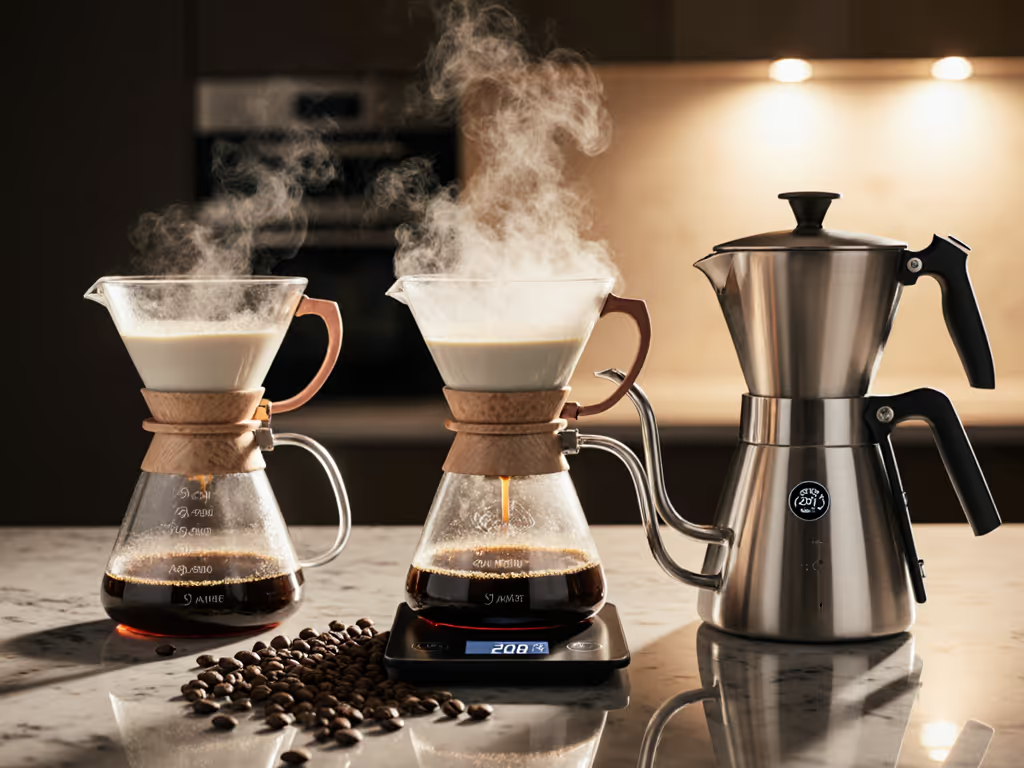
When you choose washed process pour over, you're making a deliberate choice: clarity over fruit-forward complexity, and repeatable taste over chance. The coffee itself matters, but so does your dripper. This guide helps you select the right brewer and build a weekday-proof workflow that delivers consistent extraction every single morning.
Why Washed Process Demands a Consistency Framework
Washed coffees (also called wet-processed) remove the fruit and mucilage before drying, leaving the bean's intrinsic qualities (terroir, altitude, variety) to define the cup. The result is a clean, high-acidity profile with bright floral, citrus, or tea-like notes. Because the processing method isolates the bean itself, small variations in your brew method show up immediately. A grind that's too coarse or an uneven pour won't hide behind fruit sweetness; instead, you'll taste underextraction (sour, hollow) or channeling (flat, one-note).
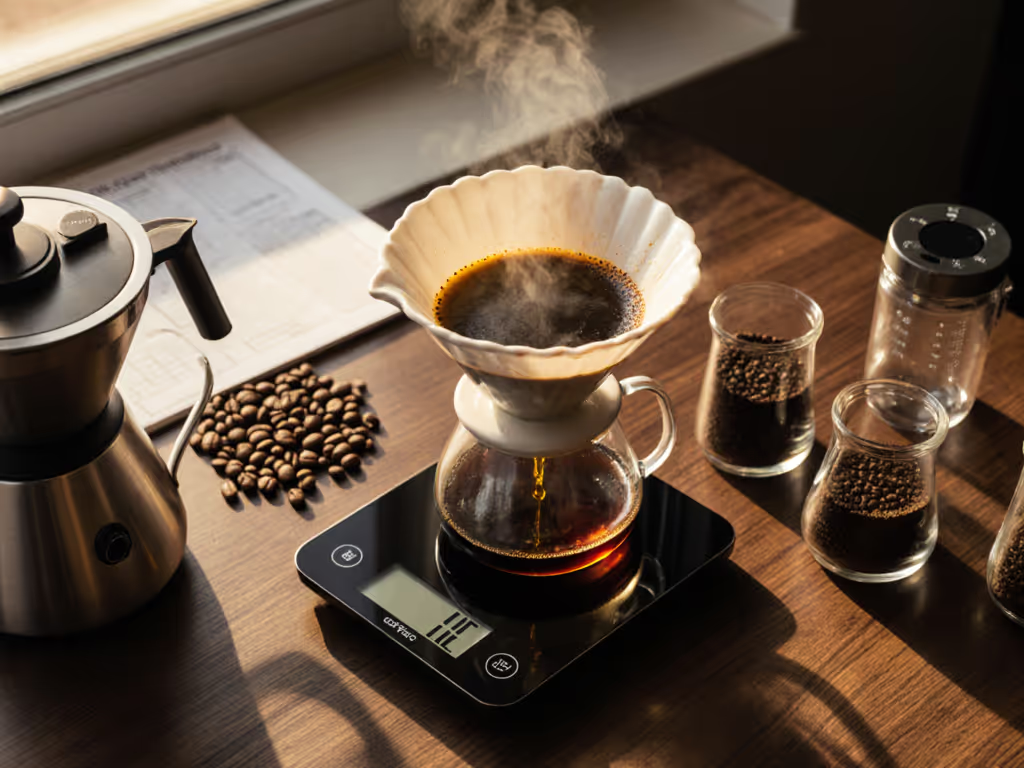
This transparency is both a strength and a constraint. Consistency isn't optional (it is the entry price for those clean, crisp cups you've tasted in videos). The good news: washed coffee extraction responds predictably to small adjustments in grind size, water temperature, and pour technique. When my son started waking earlier, I rebuilt my whole morning ritual around this truth: fewer motions equal better coffee. Kettle on, rinse filter, bloom during diaper duty, two controlled pours while oatmeal warmed. The dripper mattered (I chose one with pronounced ribs to handle our harder tap water). Eight minutes total, zero stress, consistent cups. That's what happens when you design your routine, not just your recipe.
How Washed Coffee Extraction Differs from Other Processes
Washed coffees typically require precise conditions because there's no fruit layer to buffer over-extraction:
- Water temperature: 195-210°F (90-98°C), often on the hotter side to encourage full extraction of the bean's acids and floral compounds
- Brew ratio: 1:16 to 1:16.5 (coffee to water) is standard, reflecting the need for full saturation without pushing into bitterness
- Bloom time: 30 seconds minimum, to release CO2 and enhance sweetness
- Total brew time: 2:30 to 3:30 minutes, depending on grind and dripper design
- Pour agitation: Moderate, controlled pours to prevent channeling while maintaining consistent saturation
Because washed beans have no protective fruit layer, fermentation-related defects are rare, but extraction defects (under or over) are common. The clean flavor profile you want relies on hitting a narrow extraction window. Your goal isn't perfection; it's repeatability. Make it easy to do right by choosing a dripper that forgives small timing shifts, and build checkpoints you can hit half-asleep before your first sip.
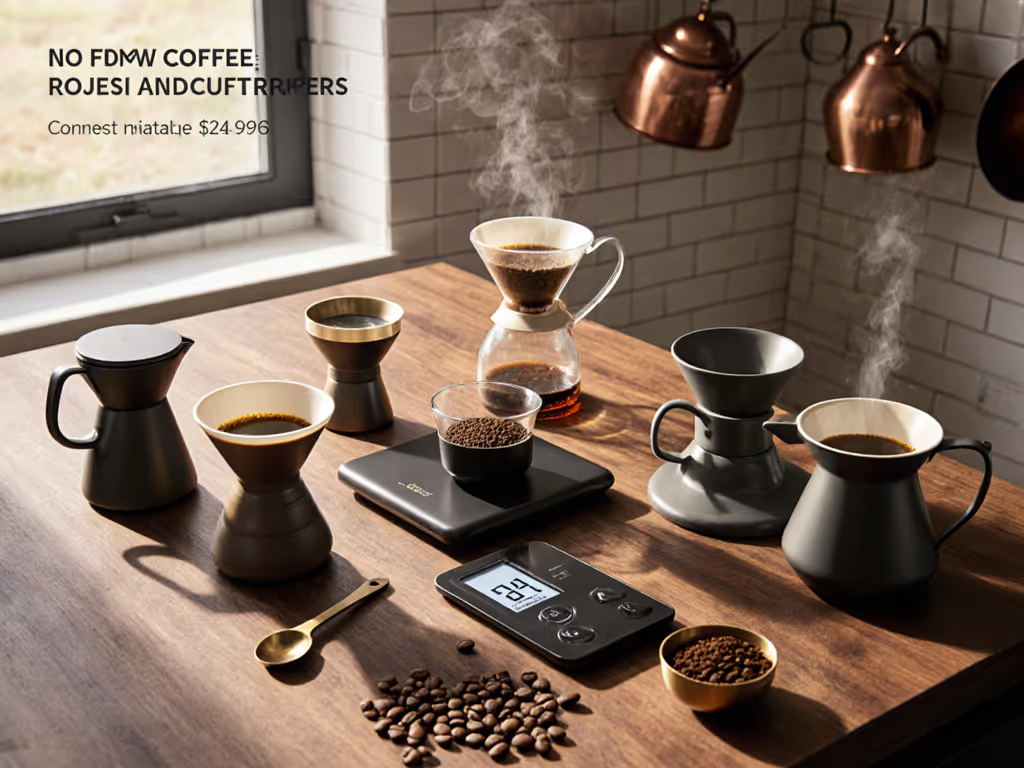
Dripper Comparison: Which Handles Washed Coffee Best?
Not all drippers handle washed coffee the same way. Here's how three popular options differ: For a deeper head-to-head on cone vs flat-bottom performance, see our V60 vs Kalita Wave comparison.
V60: Fine Control, Sensitive to Technique
The Hario V60 is a spiral-ribbed cone with a large central hole. It drains quickly and rewards precise pouring.
Strengths for washed coffee:
- The spiral ribs promote laminar flow and minimize contact between water and sidewalls, preserving brightness
- Large hole allows fast drawdown if you need to adjust extraction time mid-brew
- Works well in hard water (the ribs' pronounced geometry resists clogging from mineral buildup)
Trade-offs:
- Requires consistent, circular pouring; uneven pours channel easily
- Dries quickly between brews if you're not rinsing the filter carefully
- Best for grinders with even particle distribution; fines will choke the brew
Time commitment: 2:45-3:00 minutes total brew time.
Ideal user: Someone who has 7 minutes, a burr grinder, and enjoys the rhythm of a multi-step pour.
Kalita Wave: Flat-Bottomed Forgiving Design
The Kalita Wave features a flat bed, wave-shaped filters, and a smaller outlet hole. It's slower and more stable than the V60.
Strengths for washed coffee:
- Flat bed promotes even water contact, so subtle grind inconsistencies matter less
- Wave filters reduce sediment and paper flavor; water temperature stays more consistent during bloom
- Slower drawdown (3:30-4:00 minutes) gives you room for error in pour timing
- Reliable in hard water without frequent descaling
Trade-offs:
- Slower extraction requires hotter water (205-210°F) to achieve target brightness
- Less dramatic acidity than V60 (by design, the flat bed extracts a touch longer and fuller)
- Requires patient pouring; dumping water rapidly won't speed it up meaningfully
Time commitment: 3:30-4:00 minutes total brew time.
Ideal user: Someone who values predictability over finesse, or uses a lower-tier grinder with uneven particles.
Clever Dripper: Immersion with Drain Valve Control
The Clever combines immersion (like a French press) with the clarity of a paper filter.
Strengths for washed coffee:
- Immersion extracts more evenly, reducing reliance on pour technique
- Drawdown is controlled by a valve you open (no guesswork on flow rate)
- Very forgiving with grind size variation and water quality fluctuations
- Fast total time (4:00-5:00 minutes, including steep) if you're rushed
Trade-offs:
- Slightly heavier body and less acidity pop than V60 or Kalita (immersion always extracts a touch longer)
- Requires cleaning the valve mechanism; can get sticky in hard water
- Less hands-on ritual if you enjoy the pour-over motion
Time commitment: 4:00-5:00 minutes total brew time.
Ideal user: Someone prioritizing reliability and minimal technique fussiness, or who has harder water and wants fewer breakdowns.
Building Your Consistency Blueprint
To make washed coffee repeatable, establish a checkpoint workflow. Here's the framework:
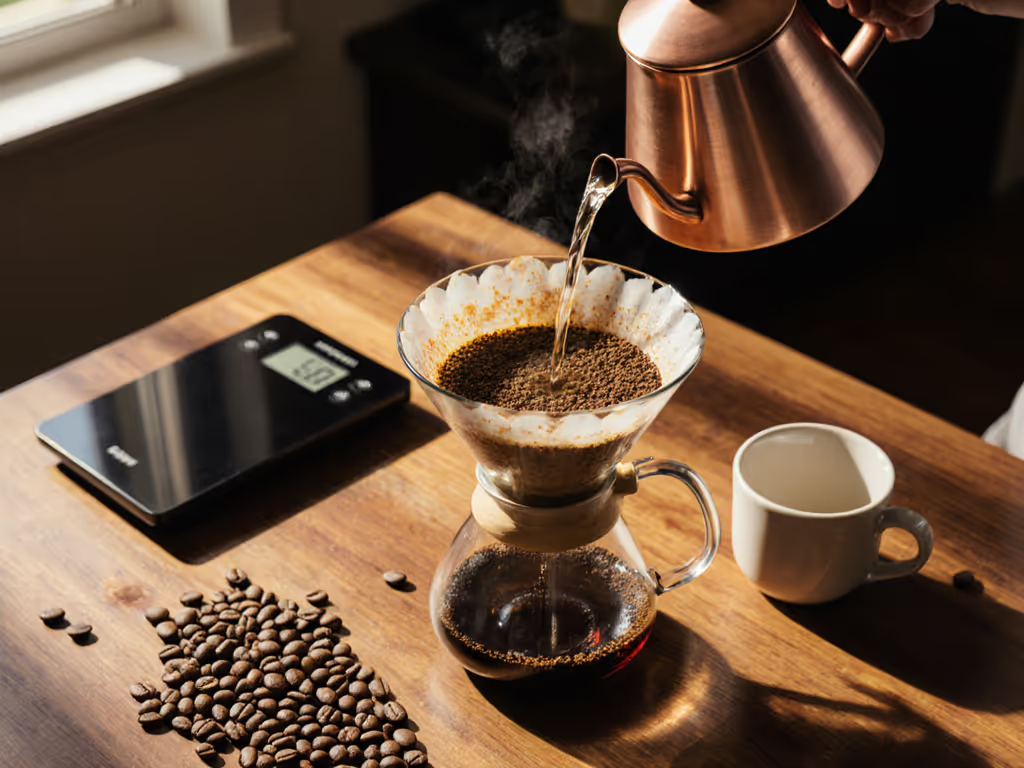
0:00-0:30: Setup & Bloom
- Rinse filter with 195°F water (sensory anchor: it should feel hot but holdable on the back of your hand for 2-3 seconds).
- Add ground coffee; start timer.
- Pour bloom water (roughly 2x coffee weight - if you're using 15g coffee, bloom with 30g water) in slow circles. You'll hear the coffee "crack" (a subtle crackling as CO2 escapes). For precise timing, use our bloom phase guide to match roast level and bean age.
0:30-1:30: First Pour
- Pour to 60-70% of your target water volume in a spiral, starting from the center and moving outward.
- Watch for even saturation; if you see dry grounds at the edge, pause and pour into that zone.
- Keep the pour steady (about one full rotation per 10 seconds).
1:30-2:30: Final Pour & Drawdown
- Finish to your target volume in one or two additional pours, depending on dripper type.
- For V60: complete the pour by 2:00, then watch the bed drain. Should finish around 2:45-3:00.
- For Kalita: one final pour around 1:30 is often enough; total time is 3:30-4:00.
- Checkpoint: the water level should drop evenly, not leaving a ring of dry grounds.
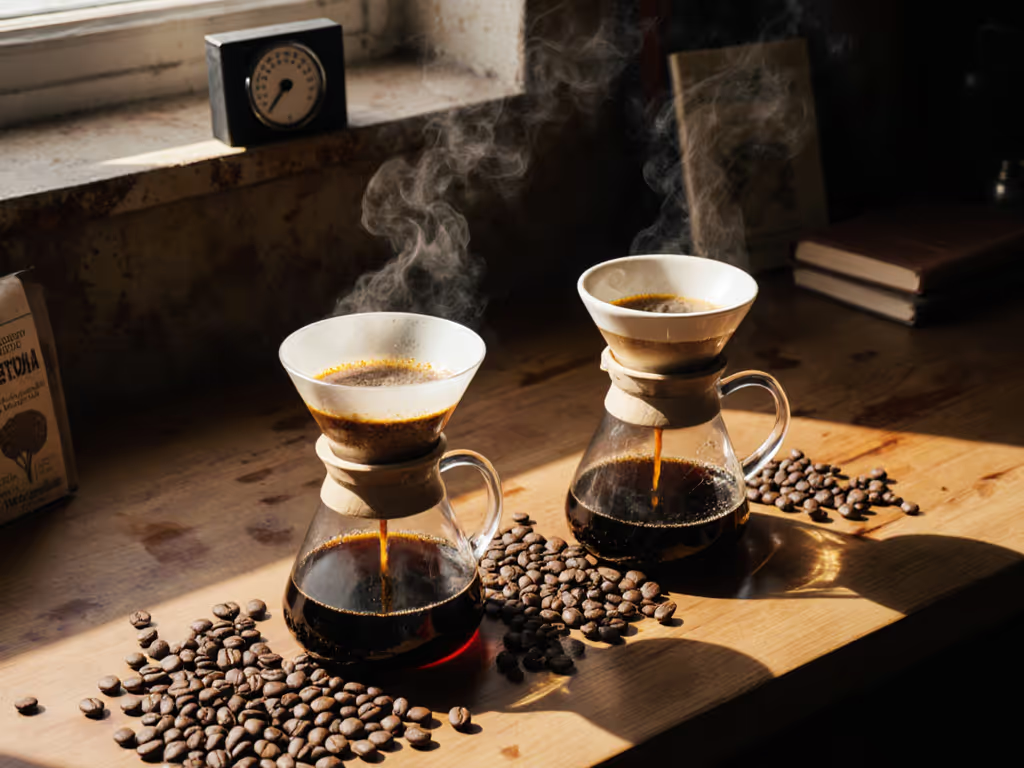
Sensory cue: When the bed is nearly empty, you'll hear the drip rate slow from a steady stream to occasional drops. That's your signal the extraction is complete.
Water Hardness: The Hidden Variable
If your tap water is hard (above 150 ppm calcium), washed coffee's acidity can taste sharp or thin. For a geometry-specific approach to mineral-heavy water, see our water hardness and brewer geometry guide. The minerals interfere with flavor clarity. This is not a small matter; it's often the reason a recipe that works in one home tastes flat in another.
Two practical adjustments:
- Choose a dripper with pronounced ribs or geometry (like the V60 or a Kalita). These resist mineral buildup and won't channel as quickly if your water is alkaline. This is why I stuck with the V60 pattern for our household.
- Use lightly filtered water or add a single pinch of citric acid (about 1/16 teaspoon per 250g water). This is not about perfecting chemistry. It's about making the setup work without obsession.
The goal: make it easy to do right. If a small water tweak saves you 30 seconds of fiddling and delivers sweeter cups, take it.
Actionable Next Step: Your First Consistency Test
Choose one dripper from the comparison above based on your grinder quality and available time:
- Limited time, curious about pour-over: Start with the Clever Dripper. It removes pour-technique variables and lets you taste washed coffee's brightness without perfectionism.
- Mid-tier grinder, 7 minutes available: Go Kalita Wave. It tolerates grind unevenness and hard water better than alternatives.
- Burr grinder, enjoy rhythm and control: Pick the V60. It rewards consistent technique and delivers the most acidity clarity.
Once you've chosen, run the same recipe (same beans, grind size, dose, water temperature) for five consecutive mornings. Record one word about the taste each day: sour, balanced, bitter, sweet, flat, bright. After five cups, you'll see your own pattern. If you're consistently sour, grind finer by half a step. Dial it in faster with our brewer-specific grind size guide. If bitter, go slightly coarser. Adjust one variable per day.
Small motions, big payoffs; design your morning for repeatable calm. Your consistency blueprint starts now.
Related Articles