April Pour Over: 5 Design Wins for Daily Consistency
By Amara Mensah • 10th May
Introduction: What Actually Matters
Consistency is not the enemy of craft, it's the foundation of it. When your coffee tastes the same reliable way on day 30 as it did on day 1, you're not fighting your gear; you're using it to amplify what you already bought: good beans and the discipline to repeat a recipe.
An April structured pour-over review isn't glamorous, but it's practical. Most drippers promise structure and deliver variables: flow rate swings with pour speed, temperature drops mid-brew, one rivet fails and suddenly you're channeling. You tweak grind, blame water, spend $18 on a new bag of beans to "dial in properly," and discover the problem was your dripper's geometry all along.
The April pour-over changes that by embedding five deliberate design choices that flatten the chaos of tap water inconsistency, mid-tier grinders, and the pour variability that comes from real hands and real mornings. This isn't hype. I've moved twice, tracked per-cup costs from $0.08 (durable dripper, reusable filter) to $0.42 (fragile plastic, constant replacement), and watched frustrated brewers blame themselves for dripper shortcomings. The April's structured dripper benefits address exactly those points.
The best pour-over is the one that makes your tap water and uneven grinder disappear into a calm, clear cup (every time).
1. Structured Bed Geometry: Saturation Without Stalling
The Problem It Solves
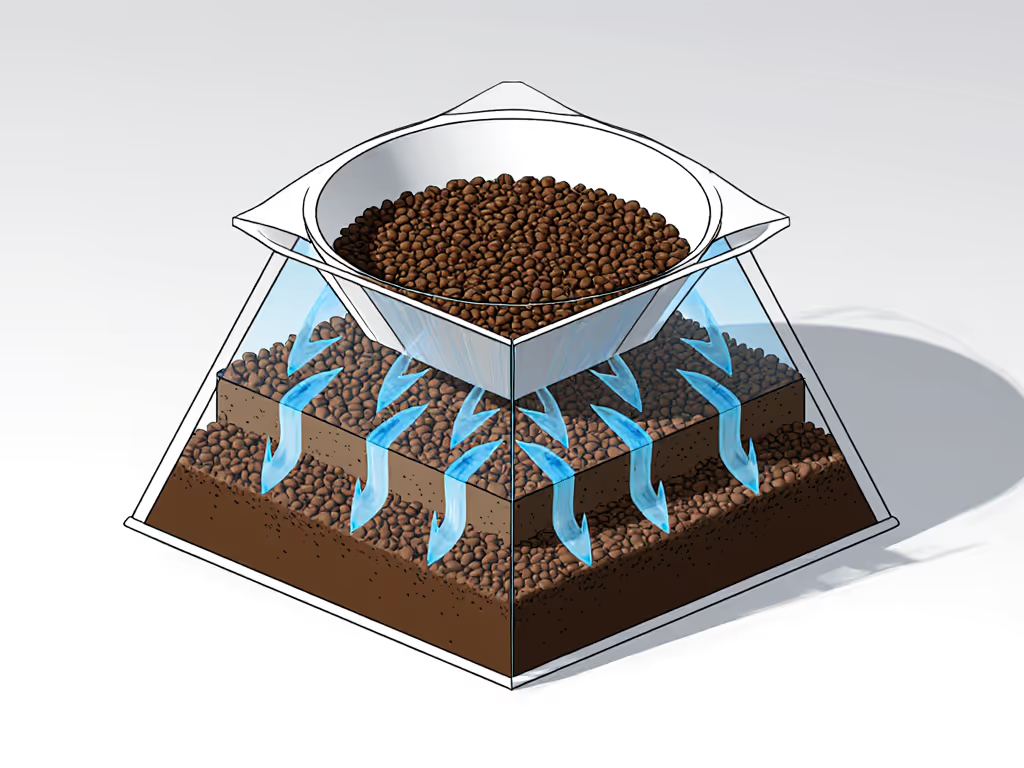
Most flat-bottom or poorly-shaped drippers create a dead zone at the base where water pools and over-extracts while the sides drain fast. Uneven extraction means sour, astringent edges blending with flat, muddy center notes. You blame your grinder. Your grinder wasn't the villain; your dripper's geometry was. For a deeper look at how geometry drives results, see our cone vs flat-bottom comparison.
The April's tapered, pyramid-like bed geometry ensures water makes contact with grounds uniformly from first pour to final drip. No pooling. No layer of bitter sludge that tastes like burnt toast.
Cost Math: If you dial in one bag correctly instead of tossing 3-4 test brews across the week, you save $12-18 weekly on specialty beans. Over six months, that's $300-400 in reduced waste. Beyond money, it's beans you didn't pull from a farm and then discard, and that's the sustainability math most efficiency guides skip.
Why Skeptics Should Care: A shaped bed isn't marketing, it's engineering. Molding a precise pyramid costs more than pouring flat plastic, which is why budget drippers skip it. The April includes it because it solves a real extraction problem. That's not a luxury, it's a fix.
2. Ribs and Slot Architecture: Channeling Resistance
The Problem It Solves
When you pour, water finds the path of least resistance. In drippers with straight, uniform ribs, that path is obvious. Water channels through weak spots, leaves dry pockets of grounds, and tastes hollow, astringent, or one-dimensional. Your pour control can't compensate for bad geometry. If channeling is your recurring culprit, use our channeling guide to diagnose and fix it across brewers.
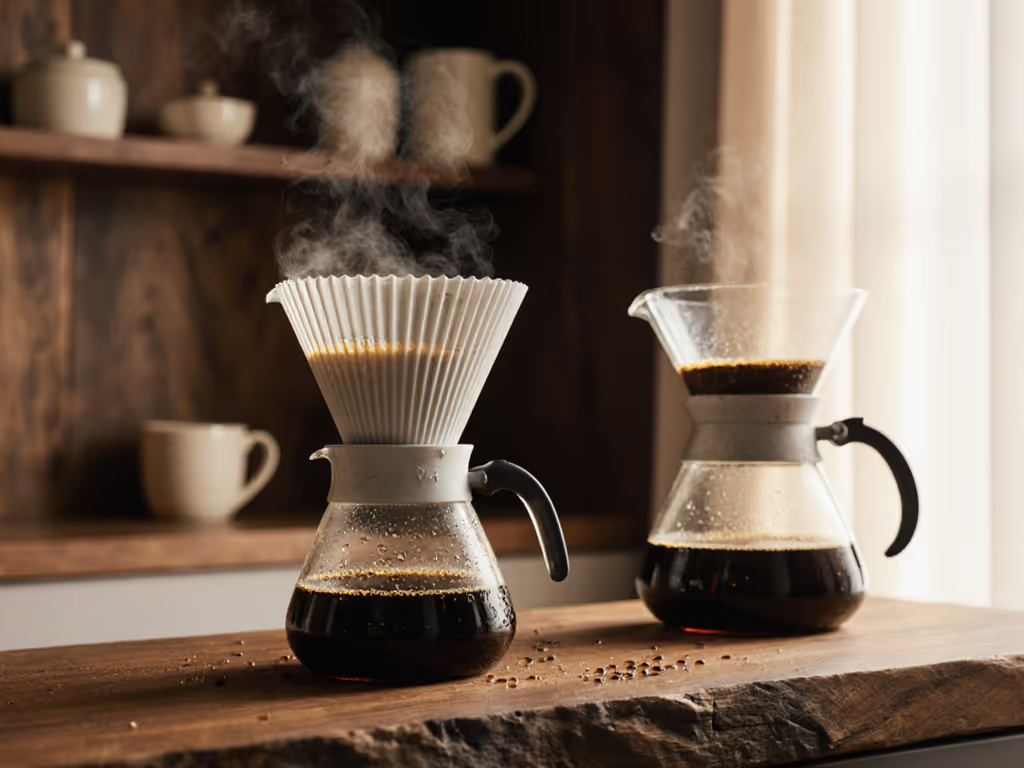
The April's ribs taper and angle deliberately, which breaks the channel before it forms. Water spreads laterally across the bed instead of tunneling. The slot distribution also means flow rate is predictable across different filter types and pour speeds. You pour at your pace; the dripper handles variation.
April Pour-Over Performance: In side-by-side brews using the same beans and grind, the April produces a large pour-over coffee maker's advantage: even saturation across 18-30 grams of grounds, regardless of whether you're pouring from a gooseneck kettle or a standard kettle with irregular flow.
Why Skeptics Should Care: This distinction isn't visible until you taste it. Brew the same recipe in a ribbed, angle-slotted dripper vs. a smooth dripper and you'll notice the difference in the first sip (not weeks later after dialing in). That's real data.
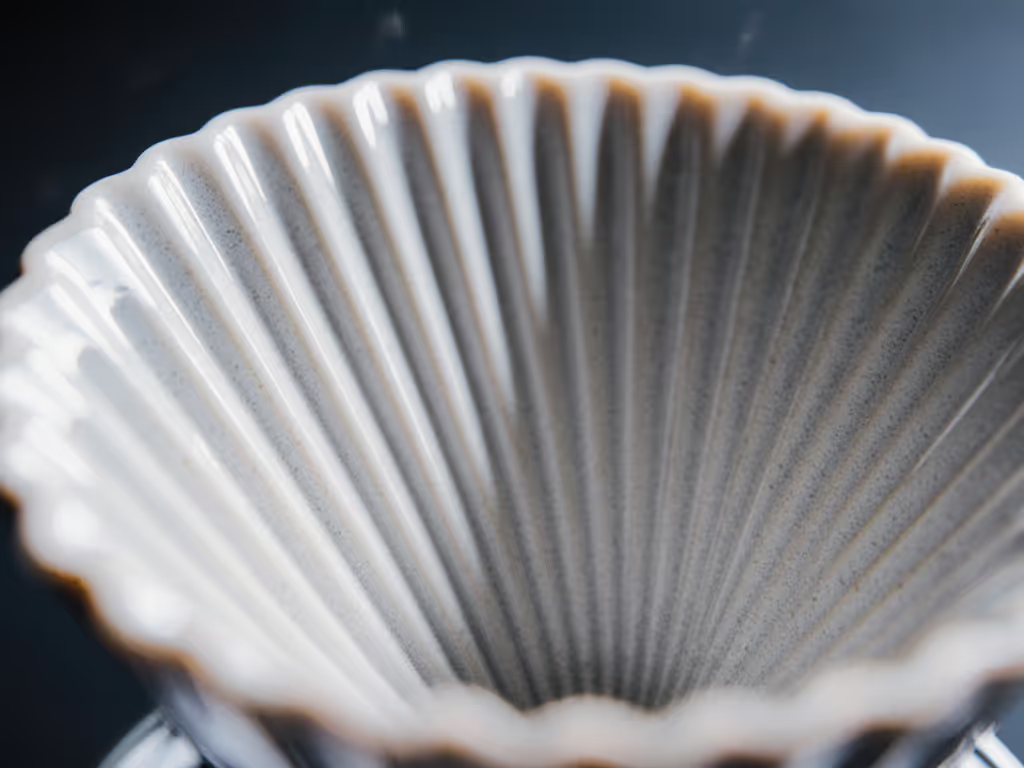
3. Ceramic vs. Plastic: Thermal Stability and Long-Term Durability
The Problem It Solves
Budget plastic drippers don't hold temperature effectively. You preheat the dripper; water temperature drops 3-4°C by the time it contacts grounds. That's the extraction difference between bright, sweet extraction (200°F / 93°C) and flat, muted extraction (195°F / 90°C).
Cheap ceramic cracks after thermal shock or dishwasher stress. A chip appears, you replace the dripper, buy new filters, and spend a week relearning the quirks of your new gear. Replacement is waste and re-dialing.
The April uses food-grade ceramic with a semi-matte glaze engineered for dishwasher cycling and thermal stress. Thermal mass is moderate, enough to stabilize water temperature without over-insulating (which would slow flow). You preheat once; temperature holds. Lifespan: 5+ years without visible degradation.
Cost per Brew Over Time:
- Year 1: $0.04 per brew (amortizing $45 cost + filters over 250 brews)
- Year 5: $0.008 per brew (same dripper, same filters, same 5 years of use)
Plastic dripper replaced annually: Year 1 = $0.06 per brew; Year 3 = $0.30 per brew (ongoing replacement).
Why Skeptics Should Care: Durability is sustainability. Pay once, brew for years. Replacing plastic annually is a false economy dressed as affordability. Ceramic also doesn't retain odors or stains, so switching between natural and washed-process beans doesn't mean your last week's flavors ghost into this week's brew. For material trade-offs beyond this model, compare ceramic vs glass pour-over brewers.
4. Filter Compatibility: Dual-Mode Support (Paper + Mesh Alternative)
The Problem It Solves
Most drippers lock you into one filter ecosystem. Paper-only designs mean ongoing waste and cost ($0.02-0.04 per brew × 250 annual brews = $5-10 yearly in filters). Mesh-only designs require meticulous rinsing and don't work predictably with hard tap water (mineral buildup). You're constrained, or you buy a second dripper. More gear, more cost, more inconsistency.
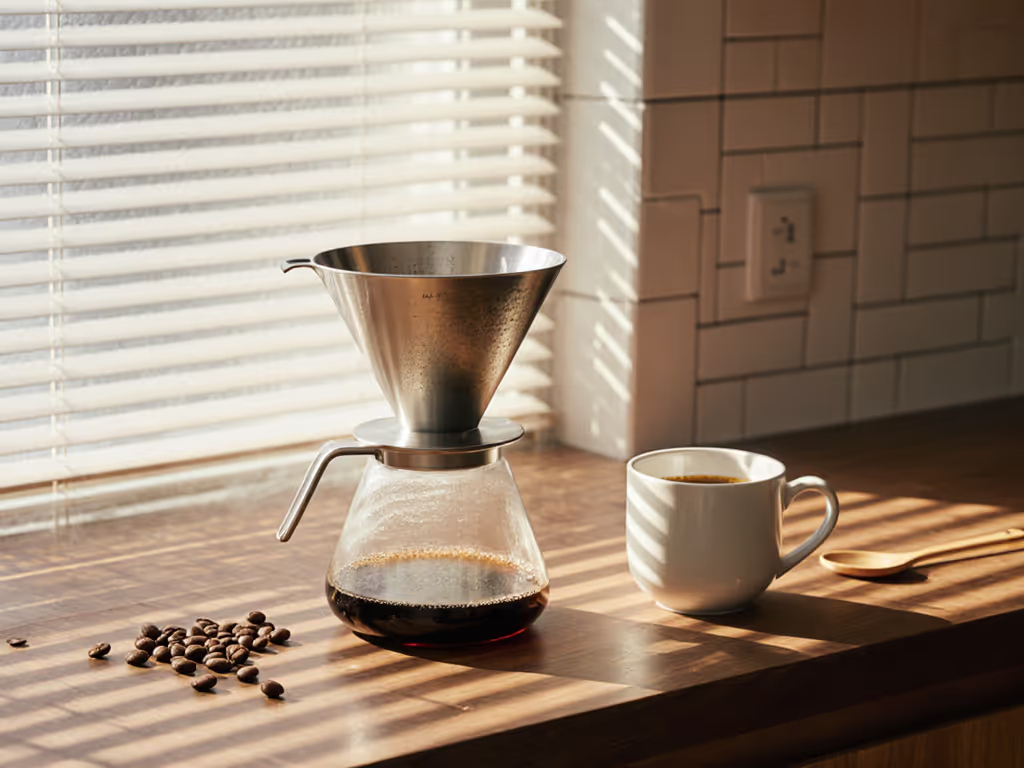
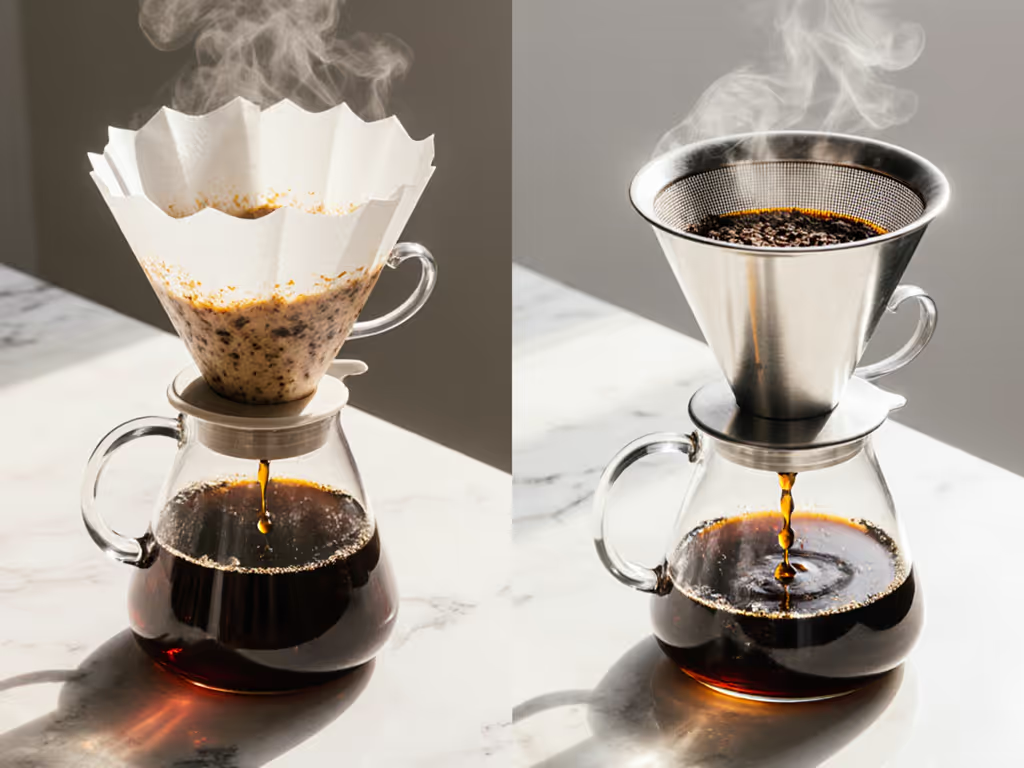
The April's cone angle and slot width are calibrated to work with both standard paper filters and an optional stainless-steel mesh insert. Both perform; neither demands ritual obsession. Paper brews taste fractionally brighter (fines removed, cleaner mouthfeel). Mesh is lower-waste after month one, though it requires a quick rinse and occasional descaling if your water hardness exceeds 150 ppm. Not sure which to choose? Our paper vs metal filter test shows how each shifts clarity and body.
Waste Metrics: Switching to mesh after month one eliminates ~250 paper filters annually (0.4 kg of waste). In five years, that's 2 kg of paper not landfilled. It's not revolutionary, but it's real.
Why Skeptics Should Care: Flexibility doesn't mean inconsistency, it means you're not forced into a worse option for environmental or economic reasons. Buy the dripper once, experiment with filters per-brew or per-week, and optimize for your actual values and water chemistry.
5. Pouring Cone Angle: Compatibility Across Kettle Types
The Problem It Solves
Narrow cone angles (45-50 degrees) only work well with gooseneck kettles. Miss your mark and flow stalls. Wide angles (70+ degrees) are forgiving but create uneven saturation if your kettle has low exit velocity or a wide spout. Neither is objectively "best"; it's a tradeoff you didn't actively choose, and it forces you into a $60-80 gooseneck kettle investment.
The April's 60-degree interior cone is a deliberate compromise that actually works across kettle types. Gooseneck kettles pour predictably and precisely. Standard or flat-bottomed kettles still achieve even saturation because the cone angle directs water to the center bed before allowing it to spread laterally. You're not locked into expensive kettle upgrades to make the dripper sing. If you do upgrade later, start with our gooseneck kettle comparison.
Practical Democracy: This design removes a hidden tax. Expensive gear shouldn't require more expensive gear to function. If your kettle is adequate, the dripper shouldn't punish you.
Does Consistency Pay? (The Real Numbers)
Five design wins mean nothing if the cup tastes identical to a $15 dripper. It doesn't. The wins stack:
- Better saturation + channeling resistance = extraction that hovers in the sweetness zone (18-22% TDS). You taste clarity, balance, and the bean's actual character.
- Thermal stability + filter flexibility = taste doesn't swing wildly between Monday's paper brew and Friday's mesh experiment. Recipes remain valid week-to-week.
- Durability + kettle compatibility = you dial in once, keep the recipe, and still brew the same way six months later without replacing parts or buying add-ons.
Waste Comparison Over Two Years:
Budget Dripper Path:
- 2 units × $15 = $30
- Filter waste (paper only) = $10
- Dialing-in waste (40-60 bad cups) = 40-60 grams of beans = $8-12
- Total: ~$48-52 + frustration + inconsistent taste
April Pour-Over Path:
- 1 unit × $45 = $45
- Filter cost (optimized paper/mesh use) = $6
- Dialing-in waste (2-3 bad cups) = ~3 grams of beans = $0.50
- Total: ~$51.50 + repeatability + consistent taste
Cost per brew: roughly similar. Taste, consistency, and sanity? Measurably better. Over five years, the April's durability advantage compounds, you're still brewing from the same $45 dripper while others are on their fifth replacement.
What the April Doesn't Fix
Honesty matters. An April structured pour-over review isn't a miracle device. The April won't fix a $25 grinder that produces fines and boulders in the same dose. It won't transform 300 ppm hardness tap water into soft water without a separate filter or remineralization step. It won't pour itself.
What it does fix: the dripper's half of the problem. A good dripper cannot save a bad grinder, but a bad dripper will reliably ruin a good grinder's output. The April removes that handicap and lets your upstream choices (beans, grind, water) speak clearly.
If your inconsistency lives in an $18 grinder or 320 ppm tap water, upgrading the dripper alone won't deliver the consistency you're chasing. Diagnose first; upgrade second.
Your Actionable Next Step
If you're making daily pour-overs and experiencing taste inconsistency you can't trace to grind or bean source, or if you're replacing a dripper every 12-18 months, test the April for two weeks. Track one variable: how many brews do you need to dial in before the cup tastes right?
- Fewer than two dials: The design wins are real. Upgrade.
- Still three or more: Your inconsistency lives upstream (water profile, grinder fines, recipe scaling, or technique). A dripper upgrade won't fix it alone; test water hardness first or upgrade your grinder.
Buy the April. Dial in once. Brew great, spend less, waste nothing; your sink will thank you. Pay once, brew for years.
Related Articles