Getting Started (Basics & History)
Consistent Japanese Pour Over: Kyusu Technique Guide
13th Nov•5 min read
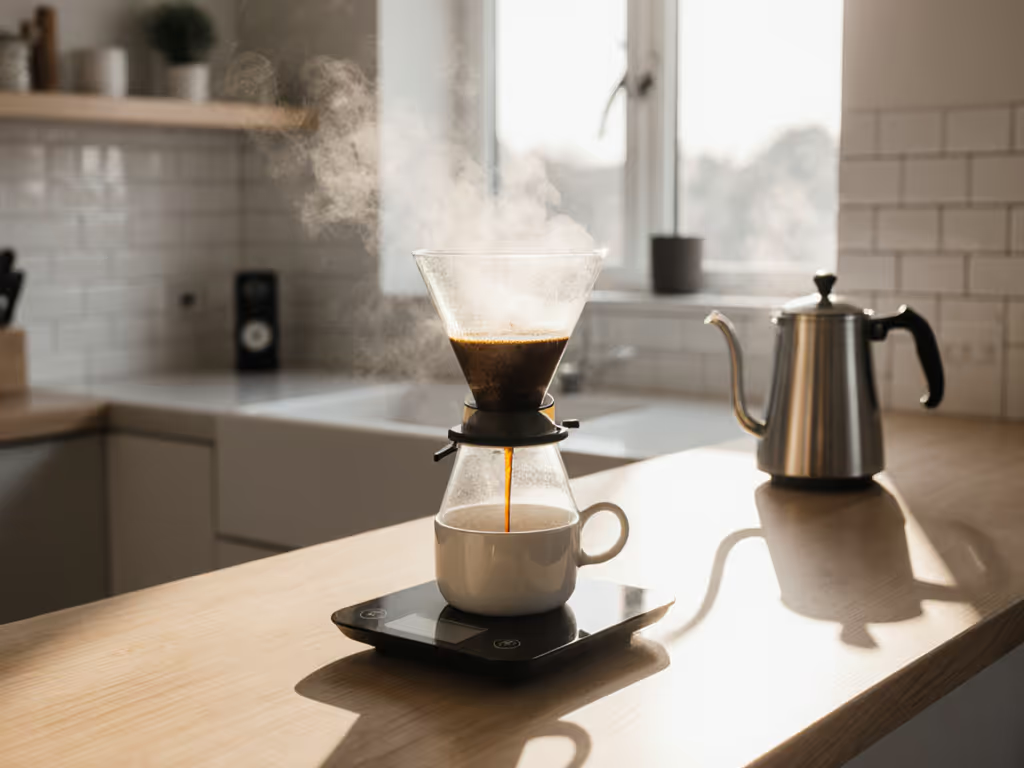
When your weekday mornings demand precision, the Nordic pour over method delivers clarity and sweetness through disciplined variable control (not expensive gear). Scandinavian coffee traditions prioritize minimalism and repeatability, principles that solve the core problem of weekday inconsistency: unmeasured water chemistry, unstable flow rates, and uncalibrated grind settings. If you can measure it, you can repeat it; my Tuesday 6:45 AM ritual with 180 ppm tap water proved a plastic flat-bottom dripper could outperform ceramic by two TDS points when variables were stabilized. Here’s how to apply that rigor to your own weekday routine. For a deeper dive into how variables interact to create clarity, see our pour-over extraction science guide.
Nordic coffee culture centers on light-roasted beans developed for high solubility and floral complexity, demanding extraction parameters that avoid under- or over-extraction. Unlike traditional pour over approaches that assume medium-dark roasts, Nordic filter coffee requires:
The critical divergence is in respecting bean density. Nordic light roasts have 15-20% lower solubility than darker profiles, meaning extraction time must increase by 20-30 seconds without altering grind size. Skimping here creates hollow, tea-like cups (a symptom I log when my tap water hardness exceeds 150 ppm).
Hard water (120+ ppm calcium carbonate) extracts aggressively but masks sweetness; soft water (<50 ppm) under-extracts even with fine grinds. Control the variable you can taste (your water) by:
At 180 ppm, I cut my first pour to 45g (from 60g) and increased flow rate to 4.5g/sec, immediately reducing astringency while maintaining 1.35 TDS. Remineralization drops are unnecessary when you manipulate flow.
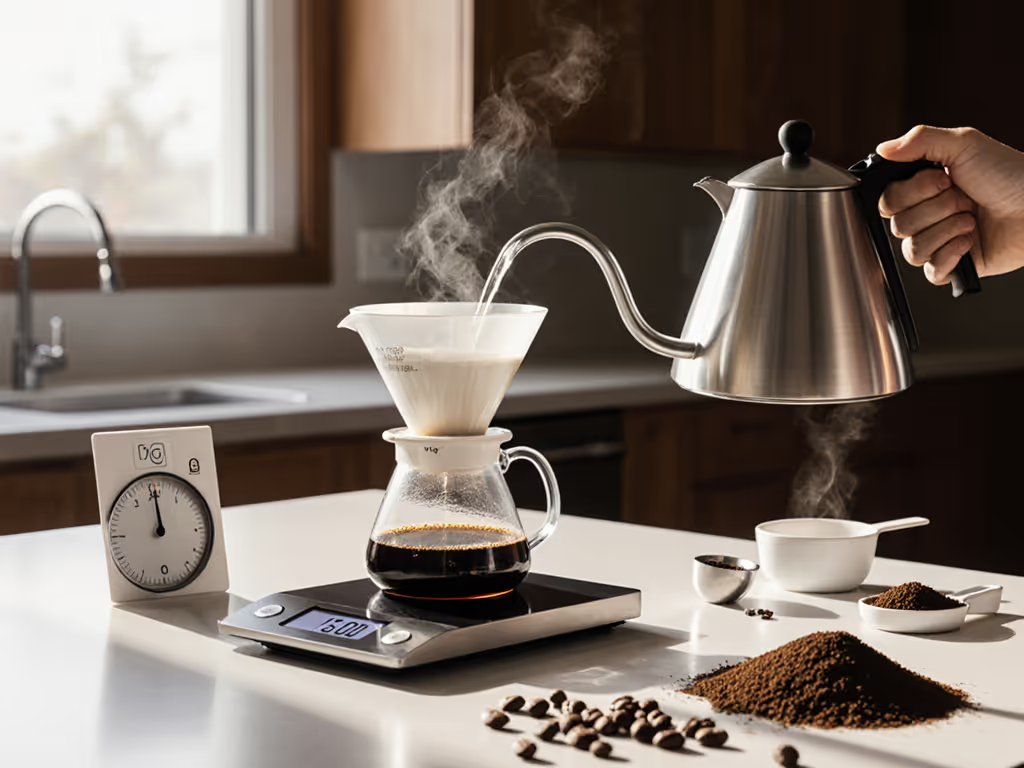
Skip the 4-pour championship recipes. For sub-7-minute weekday execution, use this three-phase framework:
Phase 1: Prep (60 seconds)
Phase 2: Bloom (30 seconds)
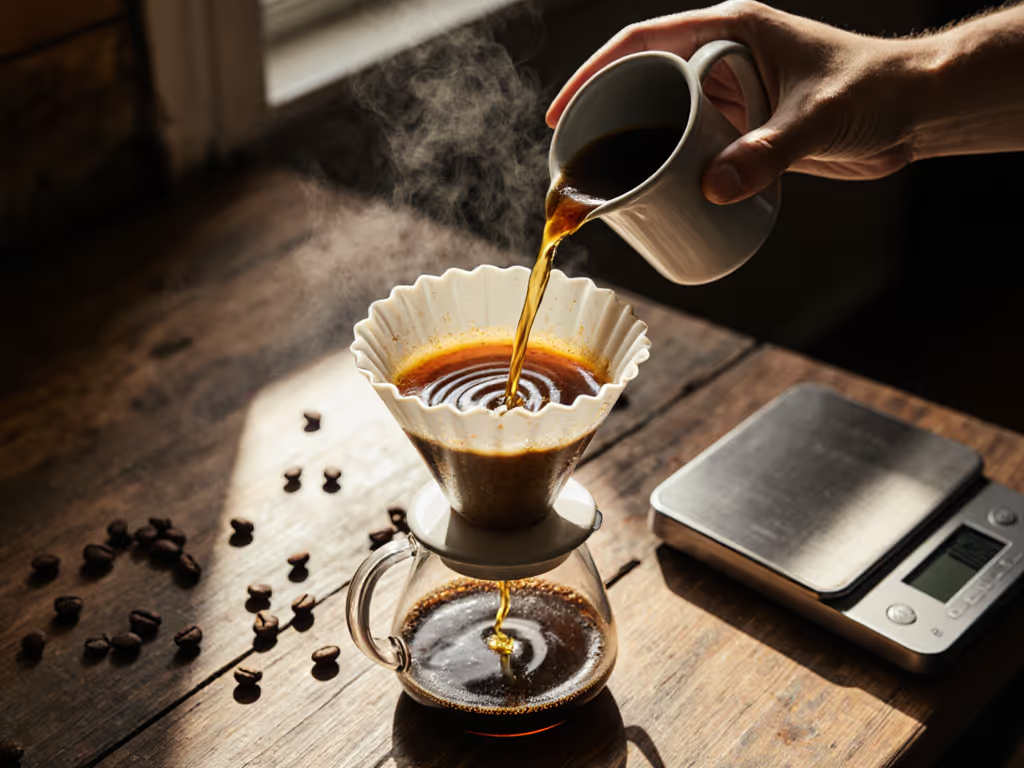
Phase 3: Main Pour (90 seconds)
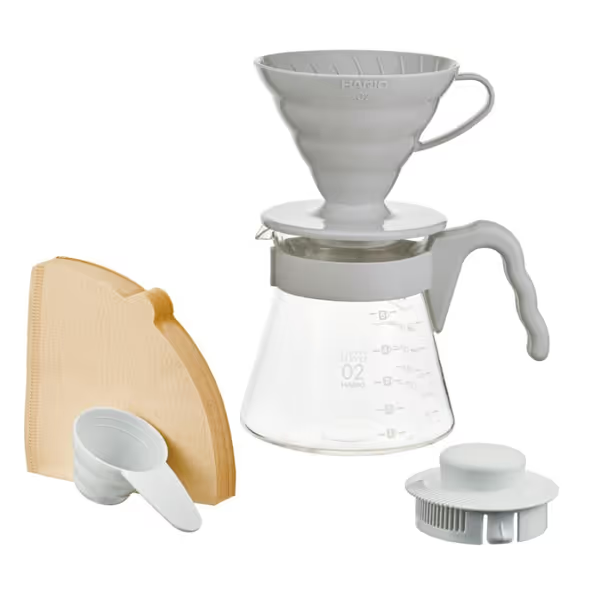
This eliminates common failure points: over-agitation during bloom (causing bitterness) and inconsistent pour rates (creating channeling). The Hario V60's conical shape accommodates flow variability better than flat-bottom designs when using mid-tier grinders
.
Instead of guessing, use this diagnostic matrix based on 200+ weekday brews:
| Taste Issue | Likely Cause | Adjustment |
|---|---|---|
| Sour/harsh | Under-extraction | Increase water temp 2°C OR extend main pour by 15s |
| Bitter/astringent | Over-extraction | Reduce grind setting 1 click OR increase flow rate to 4g/sec |
| Hollow/weak | Channeling | Shorten bloom time to 20s OR reduce agitation force |
| Salty | Mineral imbalance | Hard water: use 1:16 ratio; Soft water: add pinch of baking soda |
If you’re diagnosing off-flavors fast, our pour-over troubleshooting guide walks through fixes for sour, bitter, or hollow cups. Last Tuesday, my bag of Prolog Ethiopia tasted metallic, a sure sign of high bicarbonate content. I raised my pour rate to 4.2g/sec (from 3.5g/sec), which reduced extraction time by 22 seconds and eliminated the flaw. Flow first, then grind, then water; log it, repeat it.
Mid-tier grinders (like Baratza Encore or Timemore C2) produce 30-40% fines, but Nordic pour over compensates through:
Grind size adjustments should be your last resort. I've found more consistency in tweaking water temperature ±3°C or flow rate ±0.5g/sec than altering grind settings on my $150 grinder. When you control just two variables (flow + water chemistry), TDS variation drops to ±0.05 from ±0.2 across five consecutive brews.
Your weekday success depends on measuring what matters: flow rate, water hardness, and extraction time. Ignore dripper aesthetics or filter brand hype. When my 180 ppm tap water produced astringency with a ceramic dripper, switching to plastic at identical parameters gave cleaner sweetness, proof that Scandinavian pour over technique prioritizes physics over prestige. For Nordic beans, 94°C water, 3.5g/sec flow, and 20g/300g ratio will outperform any "premium" variable you can't measure. Control the variable you can taste.