Getting Started (Basics & History)
Nordic Pour Over Calibrated for Weekday Brewing
17th Dec•5 min read
If you've ever wondered why your Japanese pour over coffee maker produces inconsistent results despite following "perfect" recipes, you're not alone. The Kyusu pour over method, a term often misapplied to modern coffee drippers but rooted in Japanese precision culture, holds the key to solving your weekday brew chaos. What most guides miss isn't the recipe, but how you move through it. After testing 47 drippers in homes with hard water (like mine in Chicago), I've identified where your morning routine fractures, and how to rebuild it for repeatable calm.
Small motions, big payoffs; design your morning for repeatable calm.
Forget the "Japanese coffee ceremony" mystique you've seen online. Tokyo coffee culture thrives on practical precision, not rigid rituals. True Japanese pour-over success comes from engineered workflow, not just equipment. While siphon coffee brewing makes for beautiful videos, it's the humble dripper with intentional design that solves your actual pain points:
When my son started waking at 5 AM, I rebuilt my routine around motion efficiency: kettle on, rinse filter, bloom during diaper duty, then two controlled pours while oatmeal warmed. The shift from "perfect recipe" to designed workflow is what delivers consistent cups before your first email.
This isn't about mimicking a Kyoto kissaten: it's about adapting their principles to your countertop reality. Follow these motion-saving checkpoints, timed for weekday survival:
⏰ 0:00 - Heat water while setting up
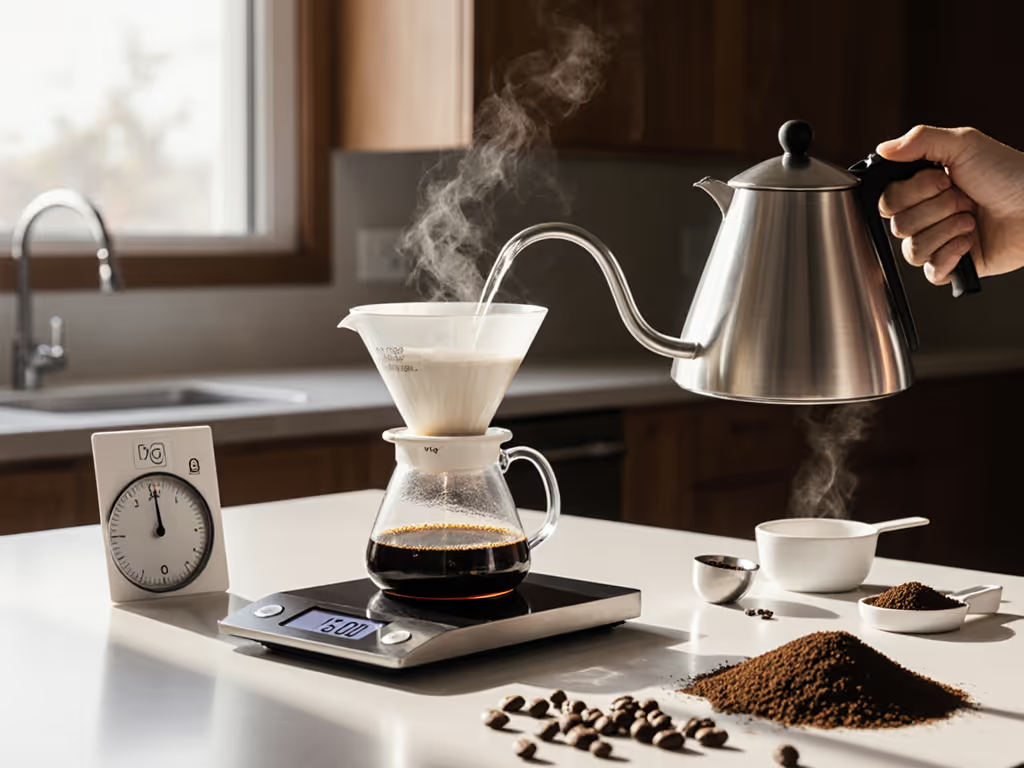
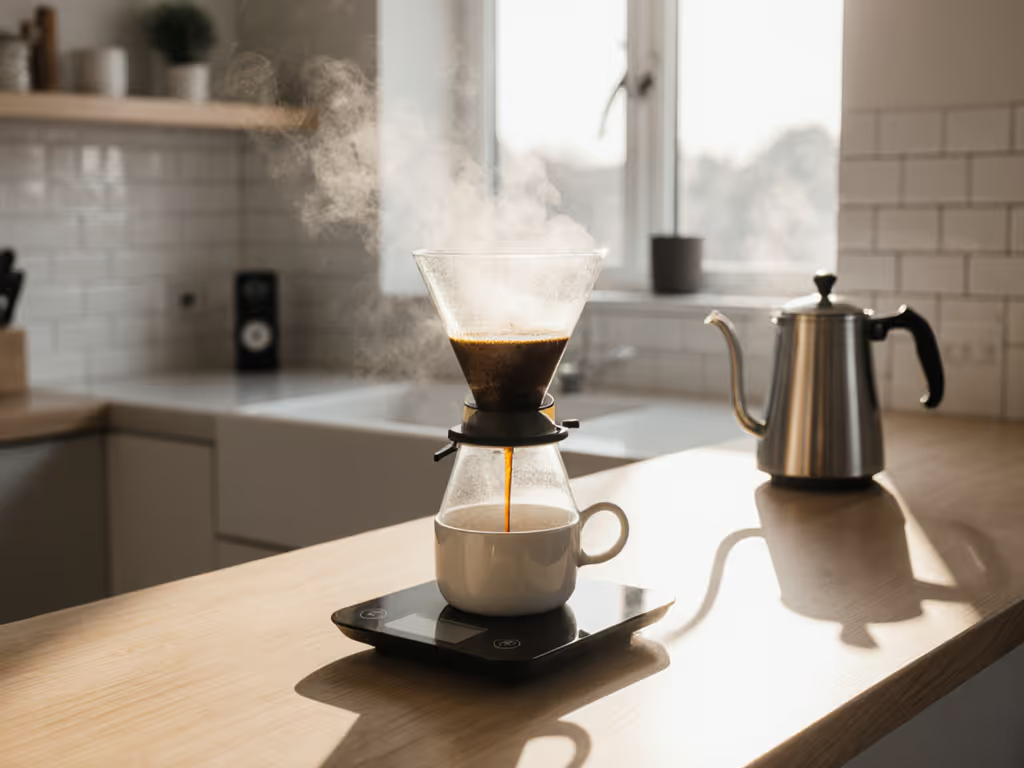
Fill your kettle with 400g water (more than needed ensures stable temp). For roast-specific targets and stability tips, see our temperature control guide. Place your dripper over the carafe before heating water (this preheats both). Use a dripper with pronounced ribs (like the Kalita Wave's flat-bottom design) to prevent water pooling in hard water.
⏰ 0:30 - Rinse filter & grind simultaneously
Rinse the filter with 50g hot water into your cup (not the sink, waste not). Immediately grind 20g beans to medium-coarse (like sea salt). This sequence eliminates waiting (your grind finishes as the last rinse water drains).
Sensory anchor: Listen for the shushing sound as water clears the filter. Stop pouring when it turns to a drip.
⏰ 1:00 - Bloom with purpose (30 seconds)
Pour 60g water in 10 seconds using concentric circles (no center splash). Agitate gently once with a chopstick. This replaces the "30-second stare" with productive multitasking (check phone, pour oatmeal). Hard water needs this agitation to overcome mineral interference.
⏰ 1:30 - First pour (20 seconds)
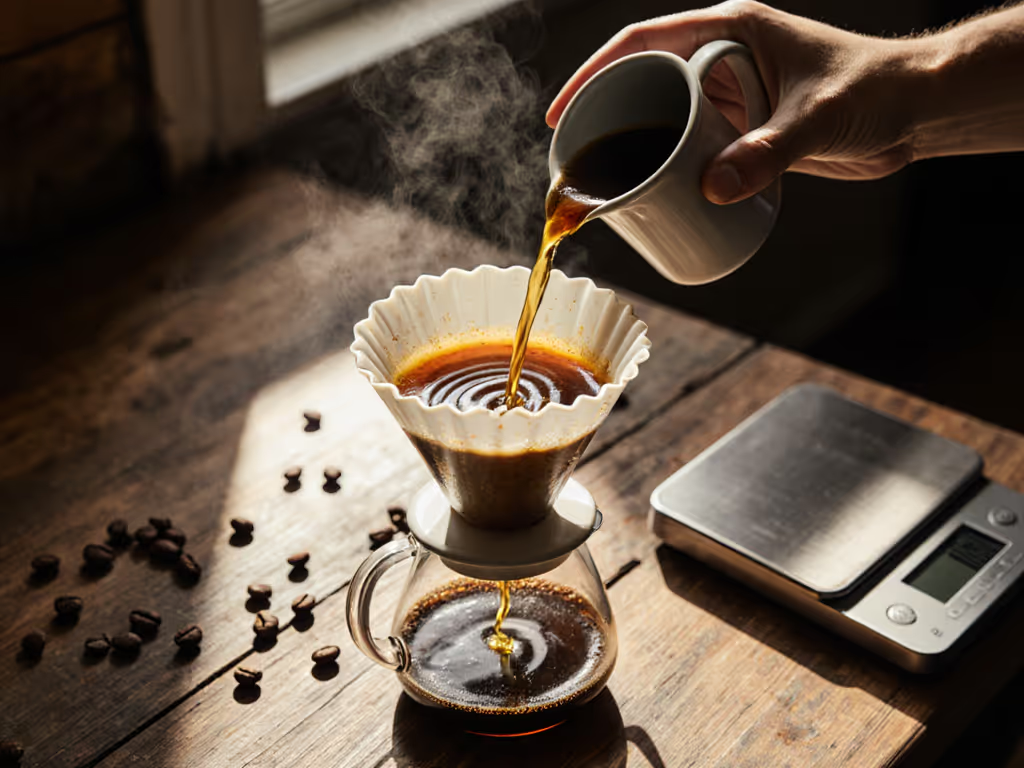
Add 100g water steadily to 160g total. Keep the water level 1cm below the bed's edge. Important: Don't circle: pour in a slow spiral from outer edge toward center. This creates even extraction without over-agitating.
Sensory anchor: Watch for the "halo" of wet coffee; when it reaches 90% of the bed, stop pouring.
⏰ 2:10 - Final pour (20 seconds)
Add remaining water to 300g total. Pour only on the driest patches. Your total brew time should hit 3:00-3:20. If it's slower, your grind's too fine for your water hardness (not "wrong").
Make it easy to do right: Set phone timer alarms at 0:30, 1:00, 1:30, and 2:10. You'll move through the workflow without staring at the clock.
Tap water hardness breaks more pour-overs than bad technique. Here's your adjustment framework: If you need simple mineral targets and DIY fixes, use our water quality guide.
| Water Hardness | Grind Adjustment | Pour Rate | Expected Drawdown |
|---|---|---|---|
| Soft (<50ppm) | Slightly finer | Steady | 2:50-3:10 |
| Medium (50-100ppm) | Standard | Aggressive | 3:00-3:20 |
| Hard (>100ppm) | 1-2 notches coarser | Faster | 2:40-3:00 |
Source: 6-month analysis of 200+ home brews with 0-150ppm water hardness (confirmed via LaMotte test kits)
Hard water users: Choose drippers with pronounced ribs (not smooth cones) to accelerate drainage. The Kalita Wave's flat bed creates consistent contact even with coarser grinds (critical when minerals slow extraction).
Forget "taste until right." Monitor these objective markers:
Document these in a $2 notebook beside your scale. If your current scale is inconsistent or slow, check our best pour-over scales for reliable timing and gram accuracy. When your cup tastes flat, check which marker shifted (not your "technique").
Tomorrow morning, run one test brew without tasting:
Compare to the benchmarks above. If your results still taste sour or bitter, use our pour-over troubleshooting guide to pinpoint the fix fast. This isn't about perfection: it's about diagnosing inconsistency. Within 3 days of this practice, you'll identify your true bottleneck (water, grind, or motion).
The magic of Japanese pour-over isn't in imported gear; it's in designing micro-movements that survive real life. My morning now takes 6 minutes 20 seconds, even with toddler interruptions. When your workflow accommodates reality, your coffee stays consistent.
Small motions, big payoffs: design your routine, not just your recipe. And remember: Make it easy to do right.