Brewing Techniques & Coffee Science
Dense Bean Extraction: Control Your Pour Over Variables
24th Apr•7 min read
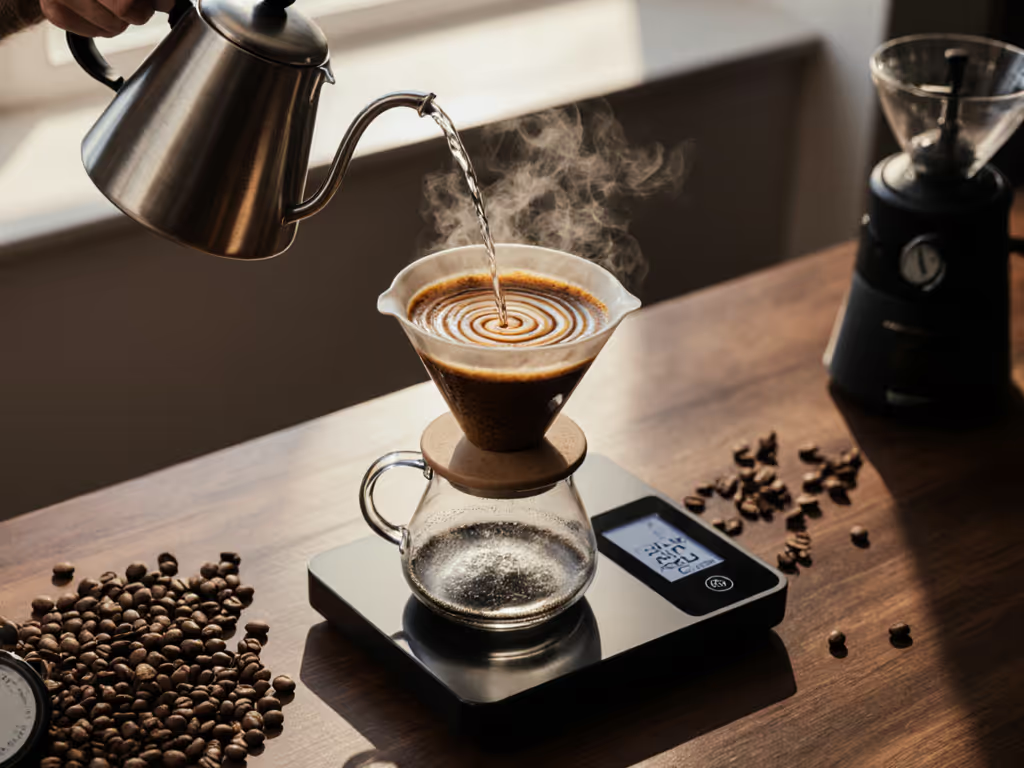
Mornings don't slow down for ritual. You've got 30 minutes before you need to leave, emails piling up, or a video call in 45 minutes. Yet you still want fast pour over coffee that tastes like coffee, not like you rushed. The good news: speed and flavor don't fight.
Most advice treats them as opposites. Speed recipes tell you to skip the bloom and use hotter water. Quality recipes tell you to nail every variable and fuss for seven minutes. But both miss the point. The real tension isn't between speed and taste, it's between what the coffee needs and what you can actually deliver on a weekday morning.
I've been there. After moving apartments twice in one year and tracking my per-cup costs (water, power, filters, beans), I discovered something: the fastest brews weren't the best, but the best brews weren't the slowest either. A quick pour over routine that works is one where you've removed the variables that don't matter and doubled down on the ones that do.
Here's the uncomfortable truth: most pour-over advice wasn't written for people with lives. It was written for people with time, consistent water, mid-tier or better grinders, and the patience to dial in a new recipe every month.
Your constraints are different. You don't have seven minutes. You probably have a grinder with some inconsistency baked in. Your tap water might be hard, soft, or somewhere mysterious. Quick win: tune your water with our pour-over water guide so speed doesn't equal flat flavor. You've got a dripper that lives on your counter year-round and collects dust. None of this is a flaw, it's just reality. And fast coffee that doesn't taste good is worse than no coffee at all.
A 5-minute pour over isn't inherently inferior. It's just a different set of tradeoffs. Here's the framework:
Faster brew = higher water temperature + more aggressive agitation + consistent medium-fine grind. These aren't cheats. They're levers. Higher heat speeds extraction by intensifying chemical reactions. Agitation (swirling) helps saturated grounds contact fresh water more consistently. A uniform grind reduces the variance between the fastest and slowest particles to extract, which is what causes bitterness (over-extracted fines) or sourness (under-extracted larger pieces). If you want the why behind these levers, see our pour-over extraction guide for how time, temperature, and grind interplay.
The myth is that slow = patient = better. Actually, slow just gives inconsistency more time to compound. If your grinder produces a wide range of particle sizes, a slow pour just means fines get hammered while larger chunks still under-extract. Speed, ironically, can flatten that curve.
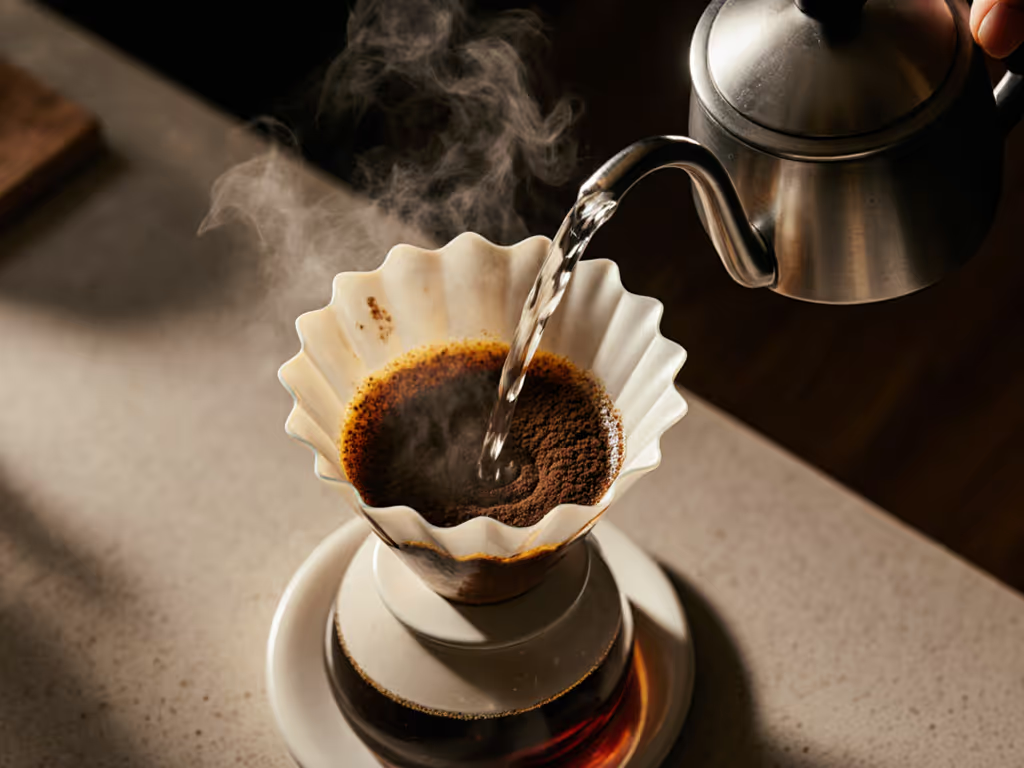
Let me walk you through three scenarios, the tradeoff analysis you actually need.
Time: 3 minutes total. Taste: 6.5/10.
Skip the bloom, use 212°F water, and pour aggressively. You'll extract faster. The coffee is drinkable. It's flatter than it could be (you've lost some of the aromatic clarity because CO2 is still off-gassing during extraction instead of before). You're also leaving a few percentage points of sweetness on the table.
Cost per cup: Lower (fewer steps, less water wasted in pre-rinsing).
When to use this: Travel, office, or when you're truly rushed and consistency doesn't matter as much as speed.
Time: 4.5 minutes total. Taste: 8.5/10.
Bloom for 30 seconds with just enough water to saturate (about three times the coffee weight). This vents CO2 and preps the grounds. Then pour at a steady, faster pace (finish the main pours in two minutes). Higher water temperature (208-210°F) helps extraction move quickly without bitterness. Gentle swirl between pours to level the bed.
Cost per cup: Mid-range (slightly more water in the bloom, but payoff in cup clarity).
When to use this: Weekday mornings when you want café flavor but won't make yourself late.
Time: 5.5-6 minutes total. Taste: 9.5/10.
Bloom 45 seconds, multiple pours over 4+ minutes, precise grind, careful temperature. This is the approach you'll see in competition and specialty recipes. It's deliberate and fine-tuned.
Cost per cup: Highest (more water, more time, more refinement required).
When to use this: Weekends, when you've got beans you paid for and an hour to yourself.
The fastest brew that tastes good is always the best brew for that moment.
Most people default to Scenario 3 out of guilt, then quit because five days a week it feels like a chore. Scenario 2 is the real win. It's the time-saving pour over technique that doesn't feel like compromise, because it isn't.
Stop optimizing everything. Optimize three things instead.
Uneven grinds are your primary enemy in fast brews. Fine particles extract in seconds; large pieces take minutes. When you're in a hurry, that mismatch ruins the cup.
The pragmatic fix: If your grinder produces visible dust or a wide range of sizes, it's fighting you. A $50-80 burr grinder (even an entry-level one) will pay for itself in reduced waste and fewer mugs poured down the sink. If you can't upgrade yet, sift. Use a fine mesh strainer to remove ultra-fine particles before brewing (fiddly, yes, but it narrows the extraction window).
Cost impact: A grinder improvement costs $50-100 upfront but saves $2-3 per week in wasted beans over six months.
For fast brews, 207-210°F is your range. Boiling (212°F) speeds extraction too much; channeling and bitterness spike. Below 205°F and you're leaving sweetness unextracted, especially in a hurried pour.
The pragmatic fix: If you have an electric kettle with temperature control, use it. Not sure which to buy? See our gooseneck kettle comparison for precise temperature control and pour feel. If not, boil and wait 30 seconds. Most kettles cool about 2-3°F per 30 seconds in a room-temperature environment.
Cost impact: A gooseneck kettle with temperature control costs $30-50. It'll last five years.
Use a small coffee scale. The difference between 30g and 32g of coffee doesn't sound like much until you brew it at speed. Under-dosed, fast brews taste thin. Over-dosed, they taste harsh.
The pragmatic fix: Weigh your coffee. Stick to 1:16 (1g coffee to 16g water) as a starting point. If your cup tastes sour (under-extracted), bump to 1:15. If it tastes bitter, back off to 1:17.
Cost impact: A kitchen scale costs $15-25 and eliminates guessing.
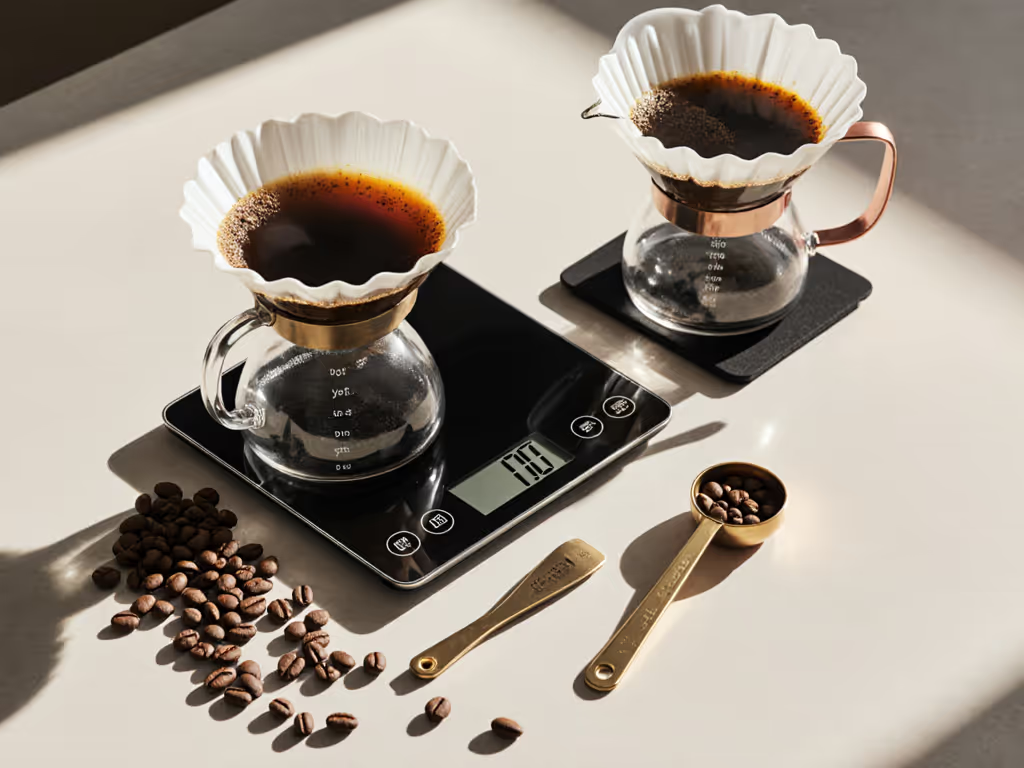
Here's where speed and sustainability align. When you have a repeatable 5-minute pour over routine, you stop wasting beans.
I tracked this rigorously after moving (every brew that went down the sink because it tasted sour, bitter, or just sad). Fast, reliable recipes cut that loss in half. Instead of dialing in for 30 minutes with six discarded cups, you dial in once, then repeat that recipe for two weeks. Fewer total brews. Same payoff.
Waste calculation:
At $15/100g, that's $150 a year. More importantly, it's fewer trips to the espresso bar because your home coffee is trustworthy.
Let's name what you're actually facing. You have seven minutes, maybe nine on good days. You don't want to think. You want reliability.
A fast, repeatable pour-over routine does that. Here's what that looks like:
This is not thrilling. It is reliable. And reliability is a flavor you can taste.
Brew great, spend less, waste nothing; your sink will thank you.
Start here.
Week 1: Commit to one recipe. Use 30g coffee, 480g water (1:16 ratio), 30-second bloom, 210°F water, two pours over two minutes. Write down what you tasted: sour, bitter, hollow, clear, sweet, balanced.
Week 2: If sour, grind finer. If bitter, grind coarser. Change one variable per week. This isn't trial and error; it's feedback.
Week 3: Once you've landed on a grind and temperature that gives you a balanced cup, stop changing. Brew this same recipe every weekday for the next month.
Track the result: consistency, time, ease, waste. Notice how your palate settles into the flavor because it's predictable. That calm is the real prize.
Pay once, brew for years. Once you nail a fast routine that works for your water, grinder, and dripper, you'll repeat it for months or years with zero thinking. The investment pays dividends every morning.
That's efficiency as a flavor. That's coffee that respects your time and your budget.