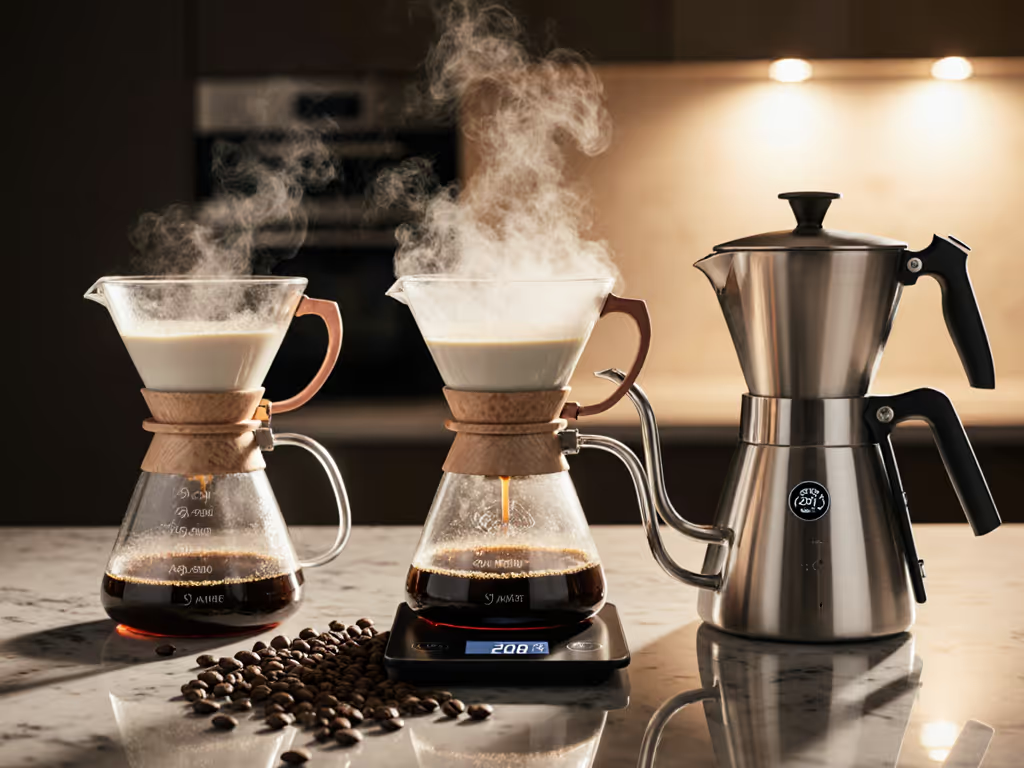
Geisha Coffee Pour Over: Your Perfect Brewing Match
By Maya Patel • 15th Mar
Geisha coffee pour over might sound like specialty-tier territory reserved for competition baristas, but here's what I've learned teaching in community libraries: the varietal itself isn't what's exclusive, it's the method that fits your setup. Geisha coffee has earned its reputation for delicate, complex flavors, and a thoughtful pour-over technique brings those qualities forward without requiring fancy equipment or intimidating protocols. This guide walks you through what makes Geisha special, how to match it to your current dripper and water, and practical adjustments that turn a fragile, floral bean into a consistent, rewarding cup.
Let me share the frame I use: mastery starts with one controllable change and honest tasting. Start where you are; one variable, one win, then another.
What Makes Geisha Coffee Special as a Pour-Over Choice?
Understanding the Geisha Varietal
Geisha traces its roots to Ethiopia but found fame in Panama's high-altitude microclimates. What sets it apart is both its genetics and its origin story (the plant itself behaves differently at elevation), and the volcanic soil in regions like Boquete and Chiriqui imparts mineral richness that becomes flavor.
The variety thrives above 1,600 meters, where slower cherry maturation develops nuance. This isn't marketing; it's agronomic. When Geisha is grown and processed with care, it exhibits exceptional quality potential at high altitude, meaning the beans arrive at your kitchen already primed for clarity and complexity.
But here's the part that matters to you, the home brewer: Geisha's floral, jasmine, and peach-forward profile is delicate. That delicacy rewards precision without demanding it. A forgiving dripper and honest water make the difference between a flat, muted cup and one that whispers sweetness. One small change, noticeably better.
The Flavor Profile and Why It Suits Pour Over
Geisha's signature tasting notes (floral: jasmine, lavender; citrus: bergamot, lemon; stone fruit: peach, apricot) aren't boldface punches. They're textured, layered, sometimes tea-like. These notes live in clarity, not body. When you over-extract or use poor water, they flatten.
Pour-over shines here because it gives you control over contact time and flow. Unlike immersion (where the bean steeps regardless), pour-over lets you adjust the bloom, the rate of water passage, and the total brew window. For a bean this nuanced, that translates to: you can dial it in without wasting bags.
The bonus? Geisha's clean, sweet finish pairs beautifully with a medium roast's subtle caramelization (not charred, not sour, just balanced). Pour-over's precision makes that balance repeatable.
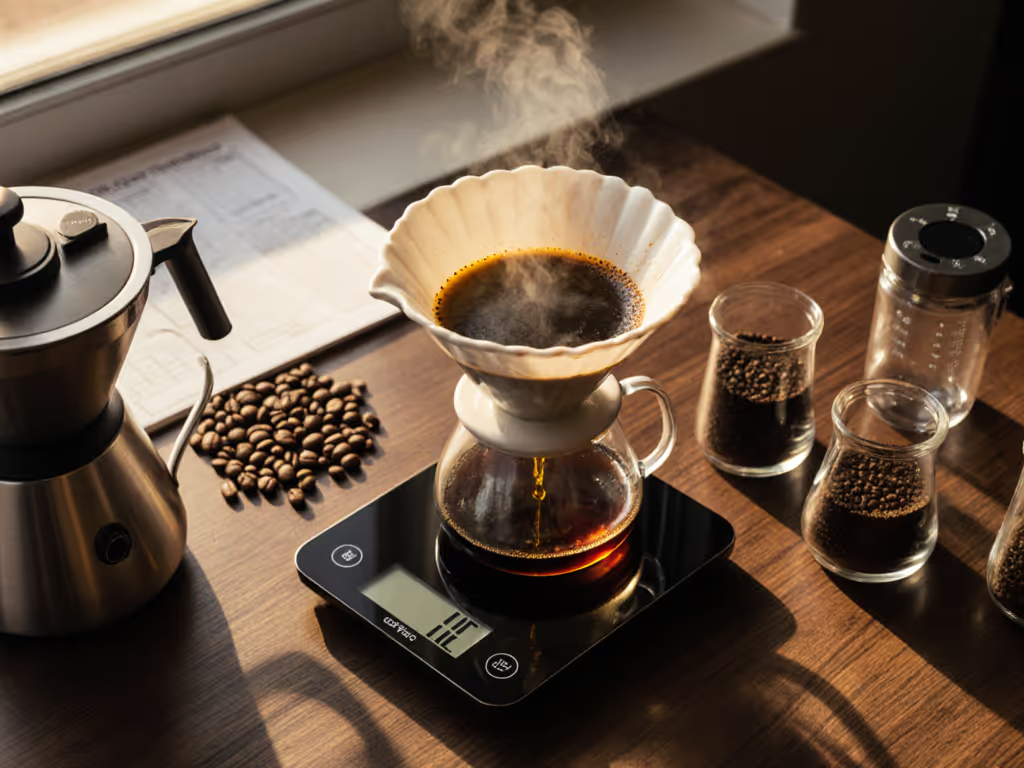
$GENERIC_IMAGE(coffee beans in ceramic dripper with bloom stage water)
Brewing Geisha Coffee Pour Over: FAQ Deep Dive
Q1: Which Dripper Should I Use for Geisha?
Your current dripper is probably fine. That's not flippant, it's honest.
Geisha does benefit from certain drippers because its delicate profile needs good flow control and an even bed depth. But "good" doesn't mean expensive. Forgiving drippers like the Melitta two-hole or a ceramic Chemex work well because they slow extraction just enough to prevent harshness, yet stay simple to clean and use on weekday mornings.
If you have a V60, Kalita Wave, or Orea, you're already set. The key is consistency (the same dripper, same rinse routine, same pour speed). If you're choosing between common drippers, our V60 vs Kalita Wave comparison explains design trade-offs that affect Geisha's clarity.
One small change: if your current dripper is producing sour, thin cups, switch to a slightly slower design (Melitta over V60, for example). If it's astringent or muddy, speed it up or adjust your grind before replacing hardware.
Q2: What Water Should I Use?
This is the single most overlooked variable for Geisha, because the bean's floral notes literally require mineral content to shine.
If you have good tap water (tested or simply tastes sweet, not salty), use it. Honestly. One neighborhood brewed Geisha with whatever came from the sink, rinsed their filter once, and tasted bergamot for the first time. That's when we mapped one change at a time: rinsed filter, steadier bloom, honest water. Faces lit up when sweetness appeared.
If your tap water is very hard (scaling kettles, white residue) or very soft (flat taste, no brightness), one change: bottled water or a simple pitcher filter designed for coffee. Avoid distilled water; Geisha needs minerals. Aim for water in the 75–150 ppm range if you can test it, but honest tasting trumps numbers. For dialed-in minerals and easy fixes, use our pour-over water guide.
Descale your kettle monthly if you're in a hard-water area. Buildup mutes Geisha's delicate profile faster than most varietals because there's less boldness to mask it.
Q3: What's the Ideal Grind and Dose for Geisha?
Start with a medium-fine grind (finer than drip coffee, coarser than espresso) and a 1:16 brew ratio (1 gram coffee to 16 grams water). For a standard cup, that's about 15–17 grams of ground Geisha and 240–270 ml of water.
Geisha's slower maturation creates denser beans, so they actually tolerate a slightly tighter grind than, say, a Brazilian natural. But grinder quality matters here: uneven particle size (common in burr grinders under $100) creates fines that overextract and taste bitter. These top $100 value grinders are consistent picks that minimize fines for cleaner Geisha cups. If your grinder is entry-level, don't go finer than medium-fine, and use a longer bloom to compensate.
One small change: if the cup tastes sour or thin, grind finer by 2–3 notches. If it's bitter or chalky, grind coarser or shorten the bloom.
Q4: What's the Step-by-Step Brew Technique?
Here's a rhythm that works for Geisha in 5–6 minutes, including cleanup:
- Rinse and preheat: Hot water through the dry filter and dripper into your cup. Discard. This preps the dripper and removes paper taste.
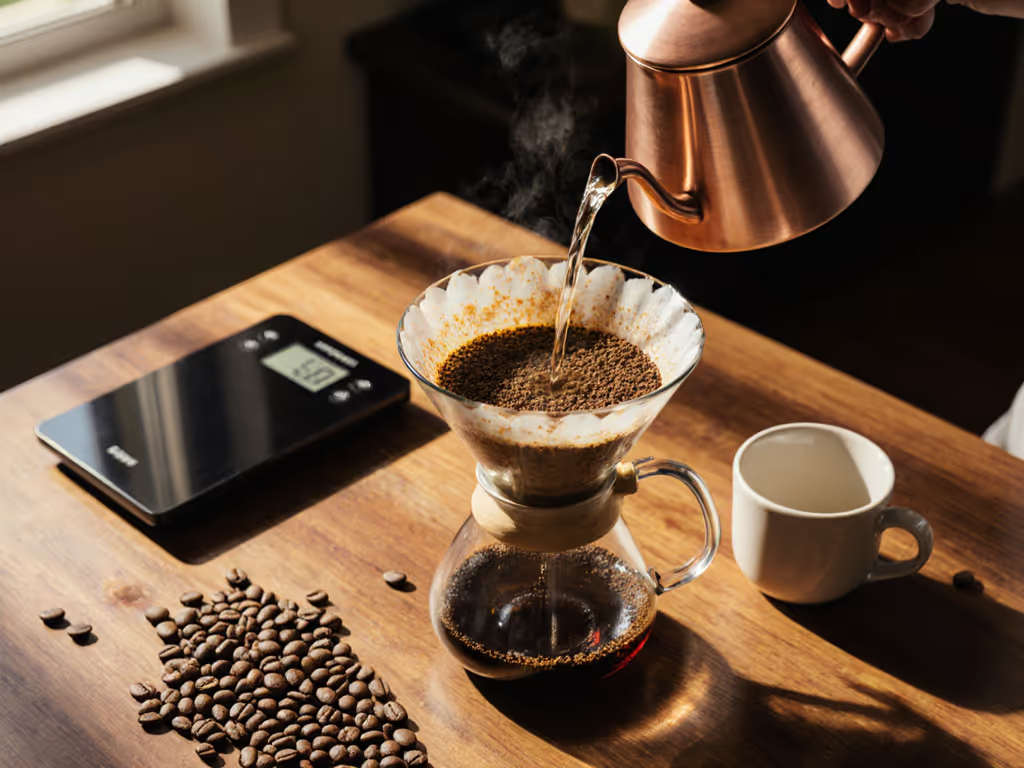
- Bloom: Pour your ground Geisha into the dripper. Add just enough hot water (around 205°F / 96°C, or a few seconds off boil) to saturate the grounds, roughly twice the weight of the coffee. Wait 30–45 seconds. This releases CO2 and evens extraction.
- Main pour: Slowly add water in a steady, circular motion, keeping the water level consistent in the dripper. Aim to finish pouring by the 3–3:30 minute mark.
- Finish: Let the last bit drip through. Total brew time should land around 4–4:30 minutes. If it's slower, grind coarser; if faster, grind finer.
- Taste immediately: Write a note. What did you taste? Floral? Citrus? Sour? Muddy? That's your map for next time.
The most important part isn't the exact numbers; it's that you repeat it the same way twice. Consistency beats precision every single time.
Q5: How Do I Know If My Brew Is Dialed In?
A well-extracted Geisha cup tastes clear, sweet, and balanced (jasmine or bergamot foreground, peach or apricot midpalate, clean finish). No harshness. No muddiness. You should taste complexity, not confusion.
If your cup tastes sour: under-extracted. Grind finer, lengthen the bloom, or lower water temperature slightly (hot water is 195–205°F; colder water extracts slower and less harsh).
If it tastes bitter or chalky: over-extracted. Grind coarser, shorten the brew, or use slightly hotter water.
If it tastes hollow or thin: the coffee-to-water ratio is off, or the water quality is poor. Add 1–2 grams more coffee per brew, or switch to filtered tap water.
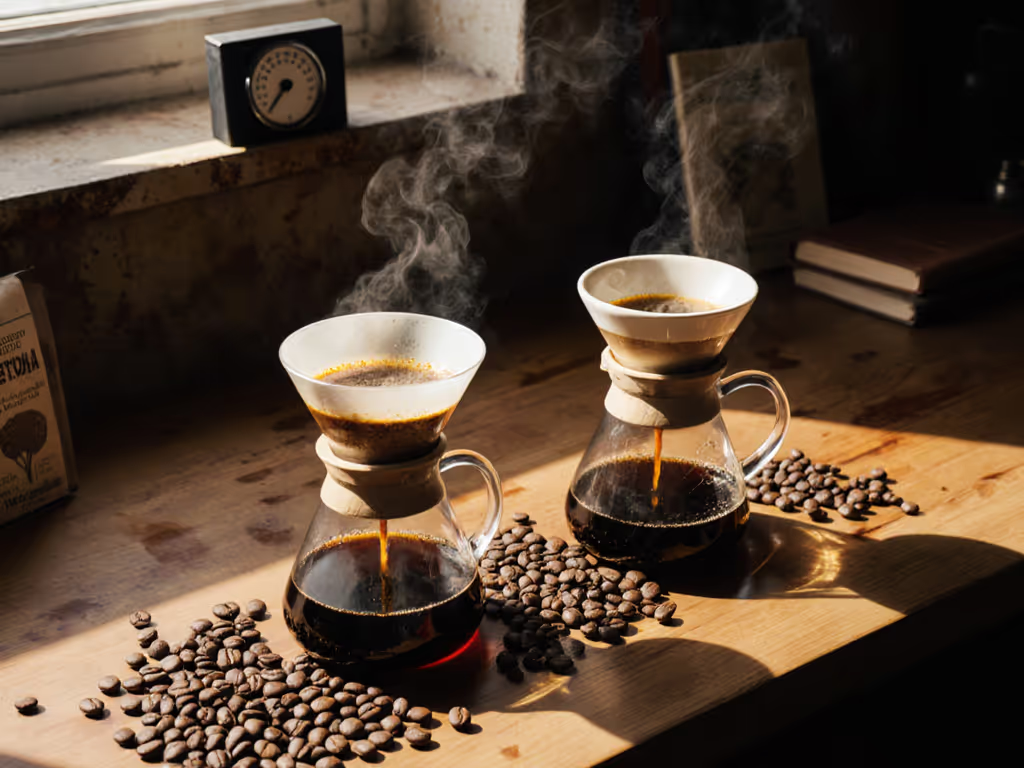
$GENERIC_IMAGE(comparison of underextracted sour cup versus properly extracted geisha pour over side by side
Q6: Does Geisha Pair Better with Certain Filters?
Yes, but not expensively. Paper filters are forgiving and remove oils, letting Geisha's clarity shine. Not sure which filter type to choose? See paper vs metal filters tested for clarity and body. Cloth filters (Chemex, some pourover sets) work too but require careful rinse routines; if you're short on time on Wednesday morning, paper is your friend.
White, unbleached, or bamboo paper, the material matters less than the rinse. Always rinse your filter in hot water before brewing; a dry or cold filter can impart papery taste, masking Geisha's subtlety.
One small change: if you've been using the same dripper and filter type for three brews and taste is still muddied, try a different brand or material. Sometimes a slight change in filter density shifts the water flow enough to unlock clarity.
Q7: How Much Geisha Coffee Do I Need per Brewing?
A single cup of Geisha pour-over uses 15–17 grams of beans. Geisha is pricy, specialty-grade, single-origin beans often cost $8–15 per 100 grams, so plan to spend roughly $1.20–2.50 per cup at home. That's still far less than a cafe, and the ritual of brewing it yourself makes it taste better.
If you're nervous about wasting expensive Geisha while learning, buy a smaller bag (100–150 grams) first. One small change, noticeable better applies here too: dial in one recipe slowly over three or four brews, tasting honestly after each one. You'll learn faster and waste less than jumping variables.
Q8: Can I Use Geisha for Travel or Office Brewing?
Absolutely, with one caveat: water quality becomes harder to control. If you're brewing at the office or in a hotel, choose a very portable, robust dripper (Melitta two-hole, a small ceramic Orea) and pre-grind a single dose at home if your destination has no grinder.
Knowing your home water profile (hard, soft, neutral) helps you estimate the unknown water's effect. If your home tap is hard and you're traveling to soft water, your office cup might taste slightly more floral and less balanced, but still recognizable as Geisha.
One variable, one win: try the same brew at the office three times before tweaking. Your taste memory and the office environment will shift perception; let that settle first.
Putting It Into Practice: Your First Geisha Pour Over
Here's my honest advice: buy a small bag of Geisha from a specialty roaster who can tell you the farm, the altitude, and the harvest date. Fresh matters. Choose your current dripper (your Melitta, V60, Chemex, or Orea). Use good tap water or one bottled-water test.
Brew three cups using the 1:16 ratio and medium-fine grind, nothing else changed. Taste each one. Write down what you taste: flowers, citrus, sweetness, harshness, clarity, muddiness, finish. By the third cup, the bean will have opened and your palate will sharpen. You'll have a baseline.
Then make one adjustment: grind coarser, or switch the water, or lengthen the bloom by 15 seconds. Brew again. Taste. Did it shift? That's the feedback loop that builds confidence. That's where mastery begins.
Geisha rewards slow, honest attention. It doesn't punish gear constraints the way some varietals do. Your current setup, your tap water, your grinder, they're your starting point, not your ceiling. One small change, noticeable better. Repeat. Then keep going.
Further Exploration
If this framework resonates, you might deepen your practice by: tasting Geisha alongside a different, bolder varietal (a natural-process Brazilian or a washed Ethiopian Yirgacheffe) to sharpen your palate; testing your tap water at a local water authority or with an inexpensive TDS meter to understand your baseline; brewing the same Geisha three times with intentional changes (grind, bloom, water) and logging results; or connecting with a local specialty roaster who sources Geisha and can walk you through their origin story, because context deepens flavor.
For varietal-specific tips, see our Geisha vs Bourbon pour-over guide. The goal isn't perfection. It's a calm, repeatable ritual that tastes undeniably better than before. That's the win. Start where you are; one variable, one win, then another.
Related Articles