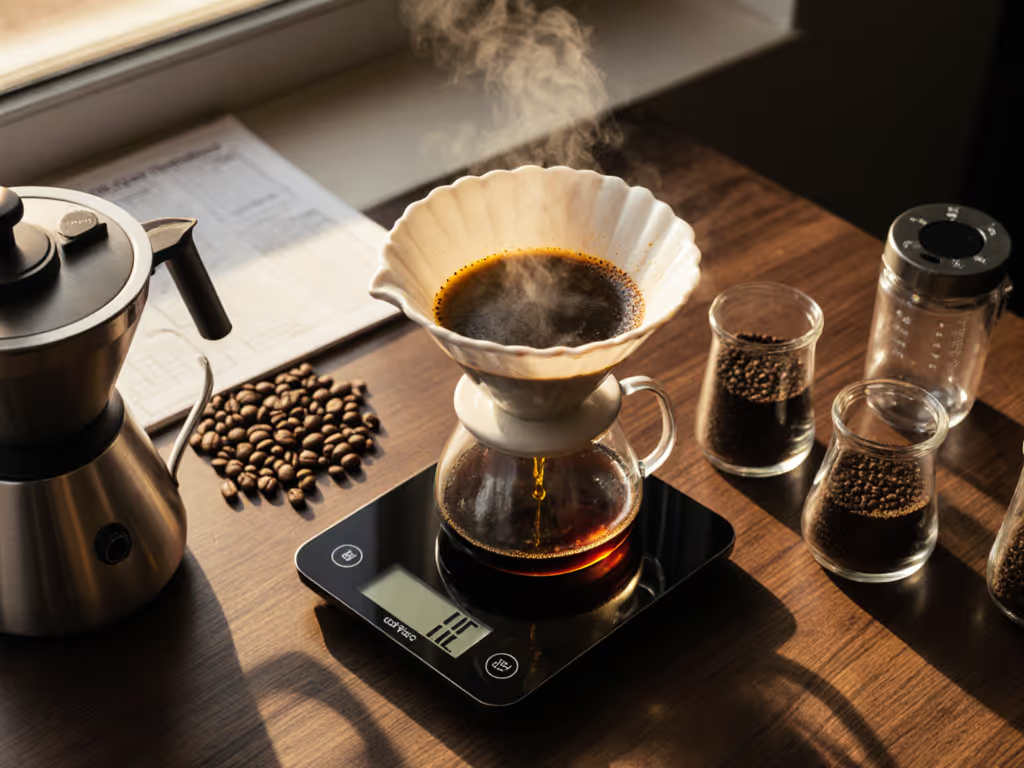
Cone Drippers Under $25: Which Delivers Real Value
By Amara Mensah • 4th Apr
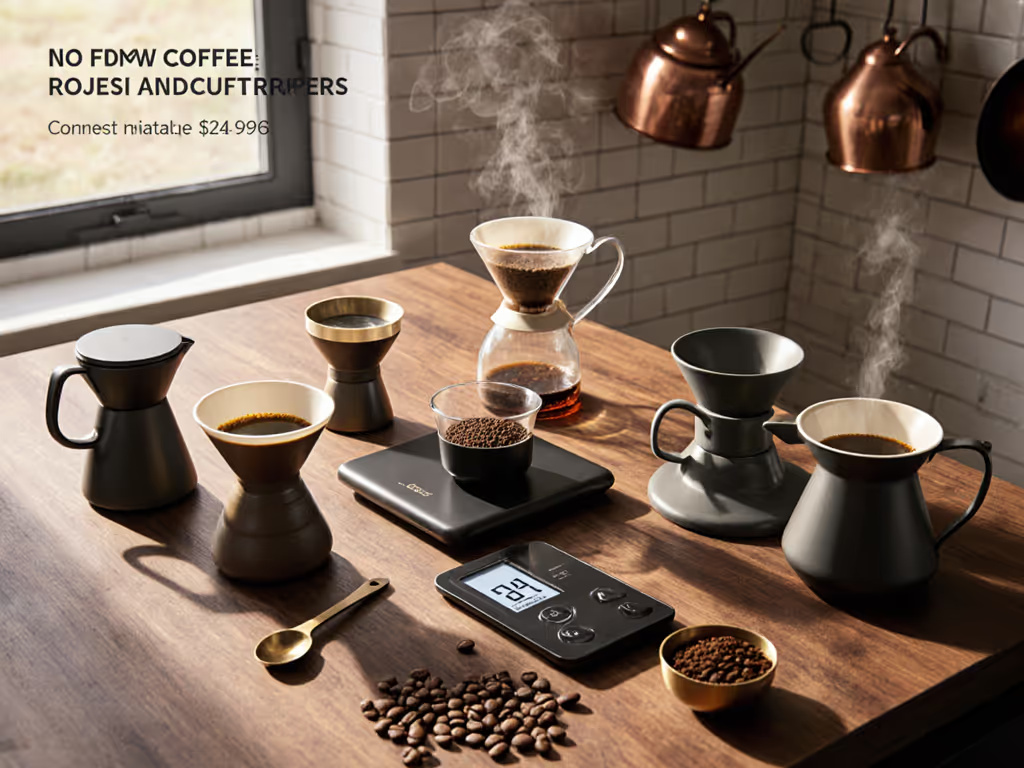
There's a myth that hits hard when you first start exploring pour-over coffee: that spending more unlocks better flavor. It's seductive, especially when gear pages promise precision engineering and heat retention breakthroughs. But here's the honest part: the best value in cone drippers sits under $25, and the difference between a $22 dripper and a $120 one isn't flavor. It's usually aesthetics, brand name, or niche durability features you won't use on a weekday morning.
The real question isn't whether you can find a cheap cone dripper. It's whether it'll actually work with your grinder, your water, and your daily rhythm without eating beans or your patience. If your water needs a quick tune-up, start with our pour-over water guide for clearer, sweeter cups. I've tested this frame before: when I moved apartments twice in one year and tracked every per-cup variable (filters, water, power, beans), I watched a $20 cone dripper pay for itself in two months against what I'd spent on paper filters and mediocre brews. The coffee improved once I dialed grind and bloom, not the gear.
Let's cut through the noise and compare what's actually available, what works, and what's honestly just filler.
The Budget Cone Landscape: What's Under $25?
Cone drippers under $25 fall into three rough buckets: plastic cones (including silicone and polypropylene blends), ceramic or glass drippers with reusable metal filters, and the occasional promotional or bundled option that feels too cheap to be real.
The key tradeoff you're managing isn't quality, it's material longevity versus upfront cost. A plastic cone might feel flimsy, but it'll survive a dropped move and pair with cheap paper filters forever. A glass dripper with a stainless-steel mesh filter costs slightly more upfront but eliminates the paper-filter waste stream and the recurring $3-$5 monthly filter expense. Over a year, that math matters.
Here's what matters first: filter compatibility. A dripper is only as consistent as the filters it uses. Learn how filter material affects flavor in our paper vs metal comparison. If you can't find the filters locally or online without a hunt, the dripper is dead weight, no matter how elegant it looks.
The Plastic V60 Clone Path
Plastic V60-style drippers (including silicone variants) dominate the under-$25 space and come in around $20-$24. They're light, durable if you're gentle, and they accept widely available #2 Hario filters or compatible clones.
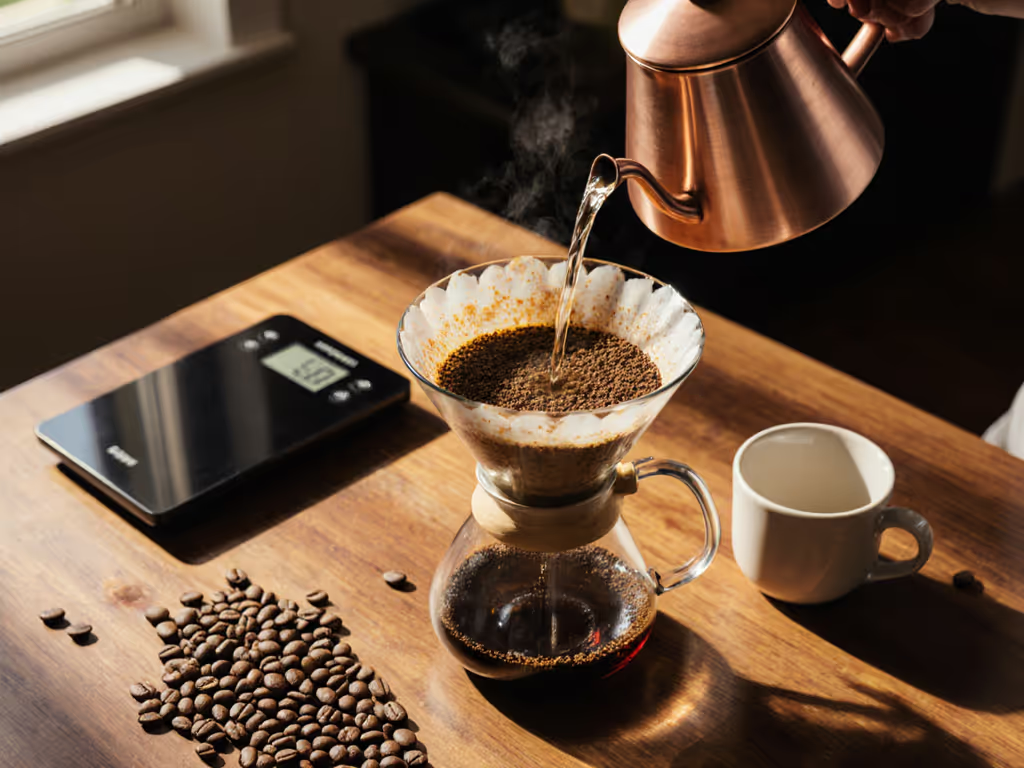
Why they work: The conical geometry is proven. Ridges on the inside wall create turbulence during pour, breaking up the grounds and keeping the brew from stalling. Water flows fast enough to avoid over-extraction but slow enough for grounds to release flavor. It's a formula, not a mystery.
Why they're skeptical: A plastic cone loses heat faster than ceramic or glass, and that matters for brewing. Water poured at 95°C might drop 5-10°C by the time it reaches grounds in a plastic dripper. For most home brewers, that's fine, your grind and pour rate dominate extraction more than temperature precision. But if you're working with a lower-altitude or very cold kitchen, you'll notice flatter cups.
The bigger friction: dose range. Most plastic V60 clones are sized for 12–25 grams of coffee. If you want to brew for two people (40+ grams), you'll hit the bypass problem, water runs through so fast that grounds don't have time to extract evenly. Some brewers use a "bypass technique," pouring water to a 12:1 ratio first, then adding more water after initial contact. It works, but it's fiddly on a weekday.
Real-world setup cost: Plastic V60 ($20-$24) + filters ($4 for 40 papers) = $24-$28 to start. Refill every 2–3 months. Per-cup cost over a year: roughly $0.06–$0.12 depending on brew frequency.
The Bodum Path: Glass + Reusable Filter
The Bodum 34oz Pour Over Glass Dripper with stainless-steel mesh filter sits at roughly $22-$24 depending on retailer. It's a cone-shaped glass dripper with a removable metal mesh filter. See our Bodum vs Hario V60 matchup for real-world clarity, body, and upkeep differences under $25.
Why it's compelling: You buy it once, and you never buy filters again. The math compounds: over five years of daily brewing, you'd spend $60-$100 on paper for a plastic dripper. With Bodum, you wash the mesh and go. The glass also holds heat better than plastic, and you can see water clarity as it brews (a useful diagnostic if you're curious about extraction clarity).
Why it's complicated: Mesh filters are not the same as paper. Paper absorbs oils and removes micro-fines; mesh lets both through. That means your cup will taste fuller - richer mouthfeel, more body - but less clear than paper brews. If you prefer that, great. If you're chasing the bright, tea-like clarity specialty coffee culture celebrates, paper is the baseline.
The second catch: mesh clogs. Coffee fines stick to the metal grid. You have to rinse aggressively, sometimes soak, to keep brew times consistent. A paper filter is grab-and-compost; mesh is a weekly chore on top of daily cleanup.
One more: dose range is 20-40 grams, so it handles brewing for two without bypass tricks. That's practical.
Real-world setup cost: Bodum dripper ($22-$24) = one-time buy. No ongoing filter expense. Per-cup cost over a year: $0.03-$0.04 if you brew daily. Sustainability win: zero paper in the landfill.
The Melitta Classic Option
Melitta Classic cone filters and drippers aren't flashy, and they don't get press. They're the beverage-service supply aisle option, durable, utilitarian, and priced to vanish. Basic plastic Melitta cones run $8-$15.
Why they're underrated: Melitta #4 filters are everywhere - grocery stores, gas stations, office supply chains. If you're traveling or need backups fast, they're foolproof. The dripper geometry is slightly flatter than a V60, which means water pools a bit more and dwell time increases. Extraction is slightly gentler; you get less astringency if your grinder is coarse.
Why the skepticism: Melitta gets treated as the budget option, so reviewers often dismiss it without testing. But it's not cheap because it's bad, it's cheap because it doesn't have marketing hype. A Melitta cone brewed correctly sits in the same flavor range as a V60. The difference is psychology, not physics.
Dose range is typically 15-30 grams, so it's best for single-person brews.
Real-world setup cost: Melitta dripper ($8-$15) + filters ($2 for 40) = $10-$17 entry. Per-cup cost over a year: roughly $0.08-$0.14.
The Lightweight/Collapsible Path
Silicone collapsible drippers (like the Zebrang V60 variant mentioned at $24) target travel and apartment life. They weigh 2-3 ounces, fold flat, and pair with standard #2 filters.
They're honest tools: lightweight enough for backpacks, durable enough for repeated packing, and they accept widely available filters. The tradeoff is the same as plastic V60s: less heat retention, smaller dose range, but the portability justifies it if you brew outside your home.
For a renter moving twice a year or a barista working multiple locations, this is the play. For a permanent kitchen, it's unnecessary complexity.
The Per-Cup Cost Calculation
Here's the math that actually matters:
Plastic V60 (daily brewer, 5 years):
- Dripper: $22 (one-time)
- Filters: ~$50 (assuming $4 every 2.5 months)
- Total: $72
- Cups brewed: ~1,825
- Per-cup cost: ~$0.04
Bodum Glass + Mesh (daily brewer, 5 years):
- Dripper: $24 (one-time)
- Mesh replacement (if needed): ~$10
- Total: $34
- Cups brewed: ~1,825
- Per-cup cost: ~$0.02
- Waste: zero paper
Melitta (daily brewer, 5 years):
- Dripper: $12 (one-time)
- Filters: ~$50
- Total: $62
- Cups brewed: ~1,825
- Per-cup cost: ~$0.03
The Bodum wins on cost and waste. The V60 wins on simplicity (no mesh maintenance). Melitta wins on availability and ease. It's everywhere, and filters are bulletproof simple.
Performance Reality Check
Here's the skeptical bit: all three produce café-quality coffee if you dial grind, water temperature, and pour rate correctly. The dripper isn't your constraint.
Your constraint is your grinder. If you're grinding with a blade grinder or a basic burr, no dripper will extract evenly because your particle distribution is uneven. If you're using hard tap water and your dripper is designed for soft water, you'll get dull cups, not because the dripper is bad, but because your mineral content is muffling flavor.
The dripper accounts for maybe 10-15% of cup quality. Grind consistency, water composition, and pour discipline account for the rest.
Where drippers do matter: repeatability. A cone with tight ridges (like V60) is more forgiving of variable pour rates. A flat-bottom dripper (like Melitta or Kalita wave) is more forgiving of uneven grounds. If you're brewing on autopilot on a Monday morning before work, this matters.
What You're Actually Paying For
Under $25, you're not paying for revolutionary technology. You're paying for:
- Filter availability (plastic V60s beat ceramic for sheer convenience)
- Heat retention (glass and ceramic > plastic, but the gap is ~5°C)
- Dose flexibility (Bodum handles 40g; V60 struggles over 25g)
- Longevity (glass and stainless-steel mesh outlast plastic by 5-10 years)
- Waste profile (mesh eliminates paper; plastic + paper = ongoing consumption)
You're not paying for:
- Extraction superiority (all three extract similarly when dialed correctly)
- Speed (brew time is grind-dependent, not dripper-dependent)
- Taste magic (the beans and water matter infinitely more)
Making the Call
Choose the Bodum if: You brew daily, want to eliminate waste, don't mind mesh maintenance, and value total cost of ownership.
Choose a plastic V60 if: You want the simplest filter experience, change kitchens often, or prefer the clarity paper gives and don't mind the recurring filter cost.
Choose the Melitta if: You want local availability, like slightly longer dwell time, and brew single servings.
Choose a collapsible dripper if: You're mobile, travel frequently, or share kitchen space and need minimal footprint.
Here's the thing: pay once, brew for years. The $20-$24 you spend today on any of these drippers will either outlast you or pay for itself in three months versus single-use convenience. Brew great, spend less, waste nothing; your sink will thank you.
The final step isn't buying the prettiest option. It's testing your current grind and water profile with whichever dripper you choose, then adjusting pour rate and temperature until you hit the flavor you're after. That's the real work, and it costs nothing but attention.
Related Articles